





















(SINGAPORE 2026.1.8) Chinese media report that China’s southern island province of Hainan is making measurable progress toward its free-trade port (FTP) ambitions, but other sources adopt a more cautious tone. Whether Hainan can ultimately reach “world-class” free-port status, comparable to Singapore, Hong Kong, or Dubai, remains a long-term question rather than a foregone conclusion.
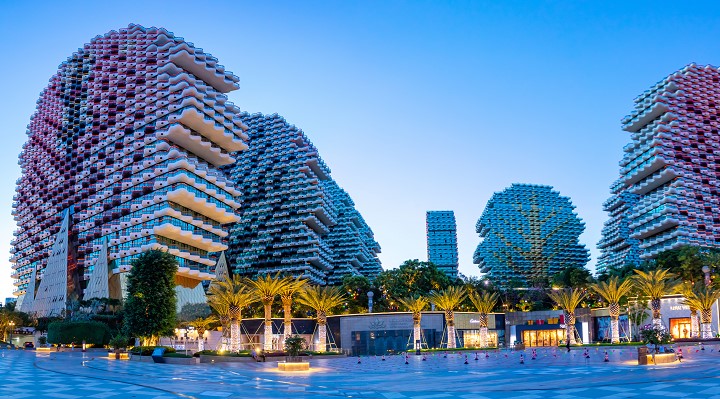
On December 18 last year, China officially implemented island-wide special customs operations across Hainan, taking a major step toward making it a globally competitive FTP. Under this system, goods entering Hainan from overseas are subject to a relaxed customs regime, distinct from shipments moving from Hainan to mainland China—a framework referred to in Chinese as “Hainan separate-customs operation” (海南封关).
Hainan has now broadened its zero-tariff policy from about 1,900 to about 6,600 product categories—accounting for around 74% of all tariff lines—encompassing raw materials and a wide range of equipment to draw in manufacturing and trade. Regulatory procedures have been streamlined to lower compliance costs and simplify transactions for international businesses.
The FTP rollout reinforced Hainan’s reputation as a duty-free shopping destination, with the island’s existing visa-free entry policy continuing to draw international tourists, particularly during holidays. Post-launch Chinese reports highlighted robust import and export activity, especially in duty-free retail, and portrayed local consumer enthusiasm over improved pricing.
In contrast, several international reports claimed that living costs throughout Hainan have in fact increased since the launch, accompanied by tighter political oversight and military shadows, casting doubt on Beijing’s depiction of the port as a truly “free” trade hub.
Zhao Rourou (赵柔柔), a singer from Hainan, publicly expressed frustration on social media that local residents had seen little benefit from the launch, pointing to stagnant wages amid sharply rising prices for vegetables, meat, and everyday services.
Analysts suggest the price surge likely reflects a mix of factors: temporary market distortions from the new system, logistical bottlenecks in importing and distributing goods, and heightened consumer and speculator demand fuelled by duty-free expansion and visa-free access. While Chinese media regard these explanations as plausible, no official data definitively links them to the price increases.
Analysts also argue that Hainan’s strategic location near the South China Sea means that infrastructure built under its “free trade” initiative could also strengthen military logistics and transport capabilities.
Meanwhile, reports indicate that residents and businesses have noticed an increased presence of government authorities in regulatory oversight and security operations compared with the period before the FTP.
Above all, analysts raise doubts about whether the FTP can expand beyond tourism and duty-free retail. Although these sectors deliver visible, rapid economic returns, they remain service-driven and do not inherently cultivate a wide-ranging industrial or technological foundation.
In addition, the FTP, though operating under special policies, remains subject to China’s broader legal and tax framework. Attracting high-tech firms or foreign investors outside tourism may hinge on stronger protections for intellectual property, corporate governance, and cross-border operations—areas still evolving in Hainan.
Some Chinese experts, however, see potential for expansion into areas such as healthcare and medical tourism. Hainan is promoting high-end healthcare services and wellness resorts, with specialized hospitals, rehabilitation centres, and cross-border medical services targeting international patients.
Structural limitations stand out when comparing Hainan to Singapore, Hong Kong, and Dubai. A report from the Law School of China’s University of International Business and Economics noted that while Hainan’s FTP seeks to align tax rates with established free ports, its policies are still embedded within China’s legal framework.
China’s Ministry of Commerce likewise emphasizes that a strong legal system is essential for FTP development, suggesting that, in the long term, a “Free Trade Port Law” granting special legal status and enhanced local legislative powers would be ideal.
Foreign analysts pointed out that Hainan is geographically large but sparsely populated compared with compact city-states like Singapore. They also share the view that the island remains still under China’s centralized legal and regulatory system, making it challenging to replicate Singapore’s strong rule-of-law environment or Dubai’s autonomous governance.
“Hainan is still developing its international profile. Currently, it is primarily known for tourism and duty-free retail rather than as a major financial or logistics hub,” a Bloomberg report observed.
Hainan’s transformation into a free trade zone has long been China’s national priority. The 2020 master plan set ambitious targets: a high-level FTP by 2025 and a globally competitive one by 2035, indicating that the province’s evolution officially continues.