



























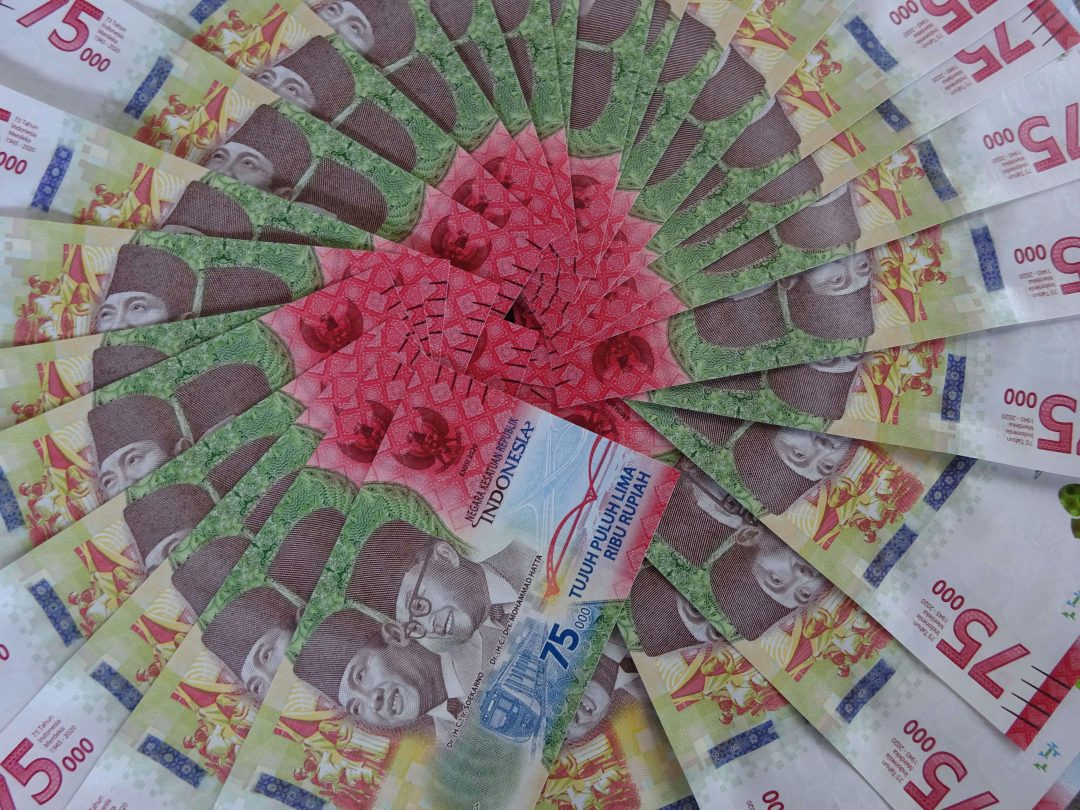
(Singapore, 20.01.2026)Indonesia’s currency has fallen to its weakest level on record, reflecting growing unease among investors over the country’s fiscal position and renewed questions about the independence of its central bank.
On Tuesday, the rupiah slid about 0.3% to around 16,986 per US dollar, breaking past its previous historic low seen in April. That earlier drop had already shocked markets by slipping beyond levels recorded during the Asian Financial Crisis of the late 1990s. The latest move signals that pressure on the currency has not only persisted but intensified as multiple concerns converge.
At the center of investor attention is Bank Indonesia, which issued a statement late Monday reaffirming its commitment to maintaining currency and financial stability. Despite those assurances, markets remain cautious, questioning how much room the central bank has to act amid mounting fiscal and political pressures.
A key trigger for the latest bout of volatility was President Prabowo Subianto’s decision to nominate his nephew, Thomas Djiwandono, as one of the candidates for deputy governor at Bank Indonesia. While the nomination must still pass a parliamentary fit-and-proper test, the move has unsettled investors who worry it could blur the line between fiscal policy and monetary independence.
Those concerns are not entirely new. Last year, Bank Indonesia agreed to help shoulder part of the debt costs linked to the government’s priority programs, an unusual step that raised eyebrows in financial markets. At the same time, lawmakers have been discussing possible revisions to the central bank law, including expanding its mandate and lowering the threshold for removing senior officials. Taken together, these developments have amplified fears that political influence over monetary policy could increase.
The rupiah’s weakness also reflects deeper, longer-running fiscal challenges. Indonesia operates under a legal budget deficit cap of 3% of gross domestic product, a rule introduced after the Asian Financial Crisis to safeguard stability. In 2025, the budget shortfall came in at around 2.92% of GDP, uncomfortably close to that ceiling. With tax revenue growth remaining sluggish, investors are increasingly questioning whether the government can stick to the limit this year without resorting to creative or “unorthodox” measures.
Economic growth has also been cooling, adding another layer of complexity. Slower domestic momentum could push Bank Indonesia toward easing policy again later in the year to support activity and lending. While rate cuts might help growth, they would likely put additional pressure on the currency at a time when global investors are already wary.
For now, expectations are that Bank Indonesia will hold steady. The central bank is set to announce its first interest-rate decision of the year on Wednesday, and all analysts surveyed expect no change. Officials have been using a mix of tools to manage volatility, including foreign-exchange intervention, adjustments to central bank bill issuance and purchases of government bonds in the secondary market. Still, many analysts believe these measures can only slow, not reverse, the rupiah’s decline if fiscal worries remain unresolved.
Market pricing suggests further weakness is possible. Some banks forecast the currency could fall to 17,000 per dollar within the first quarter, while more bearish projections see levels as low as 17,300 later in the year. The rupiah has already dropped more than 1% this month, making it one of the weakest-performing currencies in Asia, second only to the South Korean won.
Bond markets are also showing signs of strain. Yields on Indonesia’s benchmark 10-year government bonds have edged higher, reflecting rising risk premiums as investors demand more compensation to hold local assets. Currency strategists warn that any signal suggesting Bank Indonesia is drifting away from its core mandate could trigger a broader reassessment of Indonesia’s appeal among global funds.
Government officials, however, have pushed back against the criticism. Finance ministry leaders have dismissed concerns about political interference as speculation, stressing that fiscal and monetary authorities remain clearly separated, even as they coordinate closely. They argue that personnel changes at the central bank are part of a normal institutional process and should not be overinterpreted.
Yet for investors, perception matters as much as policy. In an environment where global capital is quick to move, even the appearance of weakened central bank autonomy can have tangible consequences. As one portfolio manager noted, markets tend to favor countries where monetary policymakers are seen as free to act solely in line with their mandates.
For Indonesia, the coming weeks will be critical. A steady hand from Bank Indonesia at its policy meeting may offer temporary relief, but lasting confidence is likely to depend on clearer signals that fiscal discipline will be maintained and that the central bank’s independence remains firmly intact. Until then, the rupiah may continue to test new lows, keeping investors on edge.