




















(Singapore, 20.02.2026)A quiet office on the 30th floor of Bangkok’s Chartered Square building has unexpectedly become part of a fast-growing global trade story.
The office belongs to Skyhub Technologies Ltd., a little-known Thai company with almost no visible activity. According to building staff, the company’s sole director rarely visits, and there is no public contact number listed. Yet trade records show that Skyhub is now one of Thailand’s biggest importers of drones from China.
Where those drones ultimately go is not clearly documented. However, official trade data reveals a striking pattern: Thailand’s exports of drones to Russia have surged since 2022 — the year Russian President Vladimir Putin launched the full-scale invasion of Ukraine. At the same time, Thailand’s imports of drones from China have jumped sharply.
According to a report by Bloomberg, which analyzed official Thai trade data and shipment records, Russia imported US$125 million worth of drones from Thailand in the first 11 months of 2025. That accounted for 88% of Thailand’s total drone exports and was eight times higher than the previous year. Meanwhile, China shipped US$186 million worth of drones to Thailand during the same period — almost all of Thailand’s drone imports.
Before the Ukraine war began, this trade was nearly nonexistent. In 2022, Thailand exported less than US$1 million worth of drones, and none went to Russia.
A New Route in a Sanctions Era
Russia is under multiple rounds of Western sanctions over its war in Ukraine. Many goods that could potentially be used for military purposes — known as “dual-use” items — are restricted.
China has repeatedly said it does not provide military assistance to Russia. However, Chinese-made technology, including drones, has frequently been found on the battlefield in Ukraine. First-person view drones, which allow operators to see real-time footage, have transformed modern warfare.
Western officials have accused China of supplying around 80% of the dual-use components Russia uses in the war. While most sanctioned goods typically enter Russia via China or Hong Kong, Moscow has increasingly relied on transshipment routes through third countries to avoid restrictions.
Southeast Asia has now emerged as one such route.
Last year, Western governments tightened controls on previous trade pathways through countries such as the United Arab Emirates and Kazakhstan. In October, the European Union sanctioned two Thailand-based firms for supporting Russia’s military operations. The Thai government has not publicly commented on those sanctions.
Experts say the methods are familiar.
“Countries may change, but the methods do not,” said Maria Shagina, a Berlin-based sanctions specialist at the International Institute for Strategic Studies. “Rerouting via third countries using shell companies.”
The Companies Involved
Skyhub Technologies was originally registered as a geology-related business and is now listed as a car rental firm. Despite this, trade data shows it imported US$25 million worth of drones in 2025.
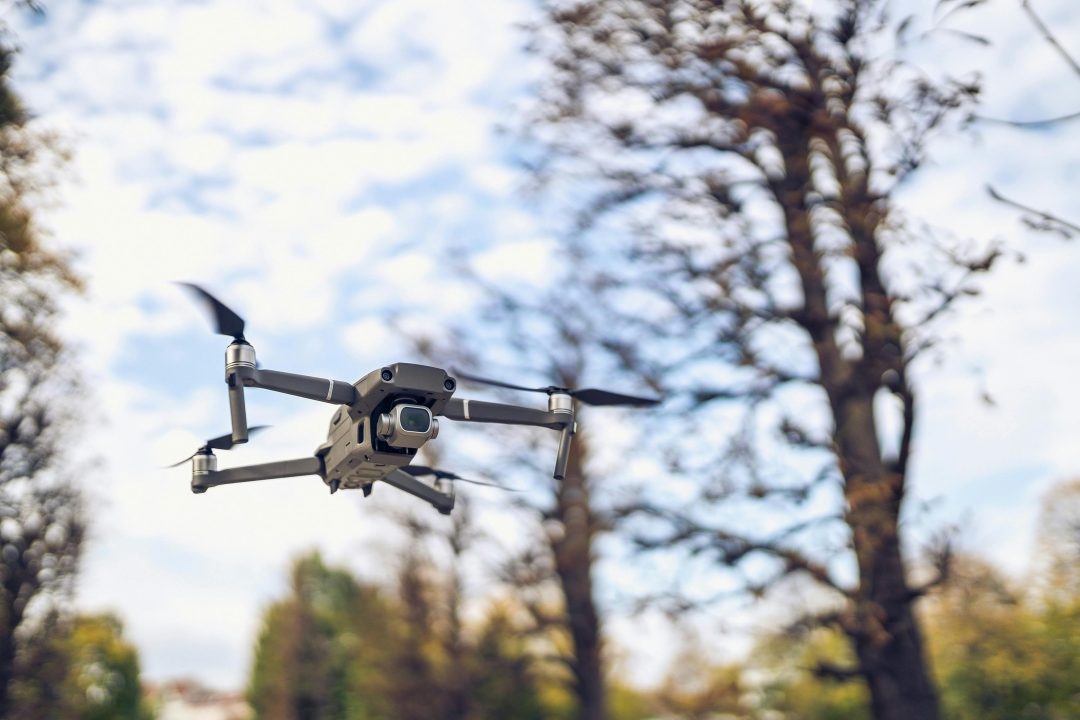
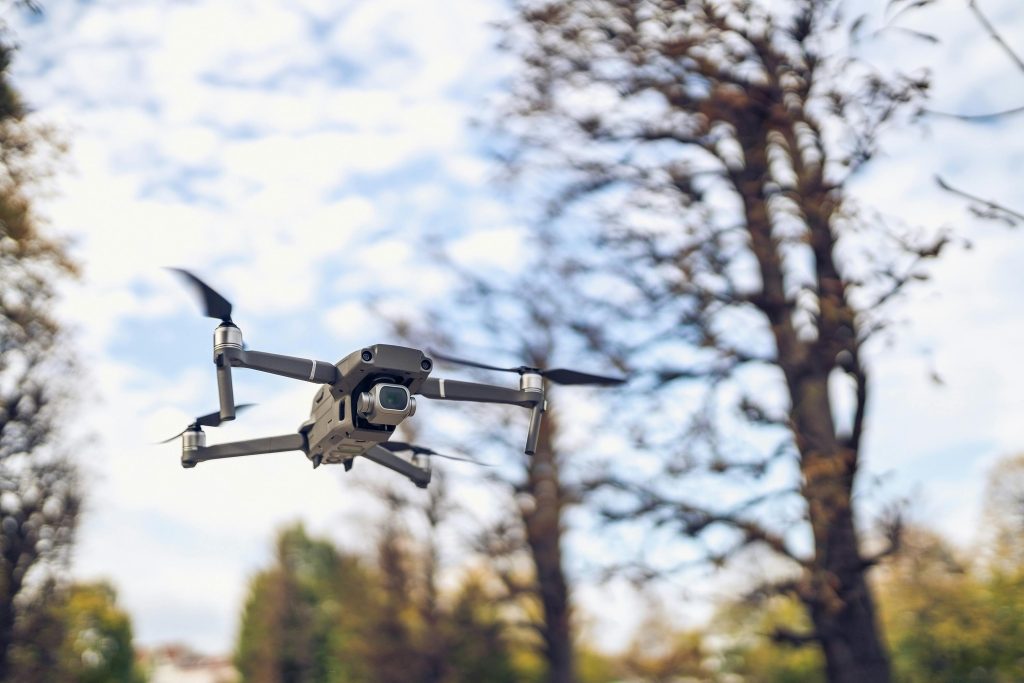
Most of these shipments reportedly came from Autel Robotics, one of China’s leading drone manufacturers. Records show that 976 drones carried the same model code as Autel’s EVO Max 4T — a model that sells for around US$9,000 per unit and is designed primarily for civilian use.
The EVO Max 4T has drawn attention because of its advanced features, including high-resolution imaging and long flight time. Although marketed for commercial applications such as search and rescue or infrastructure inspection, similar models have been used in combat zones.
Autel Robotics said it complies with international sanctions regulations and that its drones are equipped with a “no-fly geofencing system” to prevent operation in restricted conflict areas. The company declined to comment on specific clients.
Skyhub Technologies has made no public statements about its drone imports.
Another Bangkok-based company appears to play an even larger role. China Thai Corp., located near the capital’s main international airport, imported US$144 million worth of drones from China in the first 11 months of 2025 alone.
In October, the United Kingdom sanctioned China Thai Corp. for supplying technology to Russia’s military.
Financial filings show that the company’s revenue jumped dramatically in recent years — from just 14,000 baht annually between 2020 and 2022 to 17.8 million baht in 2023 and 25.3 million baht in 2024. During a recent visit, signage indicated the firm is being rebranded as Lanto Global Logistics. Staff declined to comment but acknowledged awareness of sanctions.
China Thai Corp. had previously acted as a freight forwarder for shipments of electronics to Russia, including iPhones and semiconductors linked to companies later sanctioned by the European Union.
Legal but Sensitive
Thai customs officials say the trade remains within the legal framework. According to Thailand’s customs department, there is currently no requirement for importers to declare the end use of drones when bringing them in from China.
“We are ready to act, but a law has to be in place first,” said a senior customs official, adding that the Commerce Ministry is reviewing the situation.
For now, exporting drones from Thailand to Russia is not illegal under Thai law.
The growing trade highlights how difficult it has been for Western authorities to cut off Russia’s access to technology. As one sanctions expert noted, modern conflicts are battles of resources as much as territory.
“Russia is scaling up,” Shagina said.
Thailand’s total trade with Russia remains relatively small — about US$2.3 billion last year. However, economic and cultural ties have been expanding.
Tourism is a major factor. A record 1.9 million Russian visitors traveled to Thailand last year. Russians are also increasingly active in Thailand’s property market, purchasing over US$30 million worth of real estate in the first quarter of 2025 alone.
On the resort island of Phuket, Russians reportedly make up a significant share of expatriate residents. Moscow is also planning to open a cultural center known as “Russia House” in Thailand and is offering scholarships to Thai students.
As the Ukraine war approaches its fifth year, Thailand’s focus appears to be on economic engagement rather than geopolitical alignment.
Analysts say the rise of Thailand as a drone transit hub illustrates how global supply chains can quickly adapt in response to sanctions — shifting routes, changing intermediaries, but continuing to move goods across borders.
Whether further regulations will follow remains to be seen. For now, a quiet office in downtown Bangkok sits at the center of an increasingly scrutinized trade corridor.