























(Singapore, 2.12.2025) — For years, Sony was virtually synonymous with high-end televisions in China. But its once-dominant presence has steadily diminished. By 2024, the combined market share of the four major foreign TV makers — Sony, Samsung, Sharp and Philips — had fallen below 5 per cent, leaving each with only about 1.25 per cent of the market.
Sharp exited the conventional TV segment last year amid fierce global competition and shrinking margins, pivoting to a smaller range of specialised, feature-heavy models. Philips, meanwhile, has long outsourced the production of “Philips” TVs to a partner firm. Samsung remains the world’s leading TV maker, yet its position in China has weakened considerably.
Sony, too, has been overtaken by Chinese domestic giants such as Hisense (海信) and TCL. As a result, it has leaned increasingly on the premium, large-screen segment, targeting a niche of more discerning buyers.
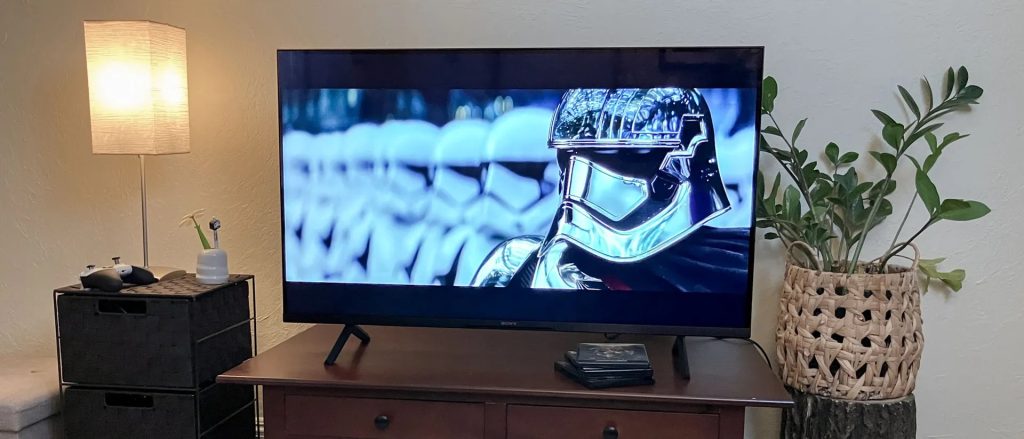
A report by Sina.com’s technology desk suggests that quality issues may now be weighing on Sony’s performance in China. Across social media, owners of Sony TVs — many priced upwards of 10,000 yuan — have voiced anger that their sets “failed the moment the warranty expired,” leaving them with repair bills running into the thousands. Complaints have centred on at least three popular Sony models, with users arguing that “so many failures at once can only point to a design flaw.”
In recent weeks, multiple Sony owners have contacted Sina’s “BUG” column alleging that their televisions had suddenly lost all sound — a problem symptomatic of deeper quality defects.
One customer, who purchased a Sony XR-65X90J from Sony’s official JD.com store in June 2021, found last month that the TV abruptly fell silent while the video continued to display normally. After eliminating settings or external-device issues — and finding that restarts and factory resets failed — Sony’s after-sales team diagnosed a motherboard failure and quoted a 2,000-yuan (about S$370) repair fee.
Online, he discovered that the same issue had hit many owners. “This isn’t an isolated incident — every set of this model has the same problem,” he said, adding that a durable household appliance should last far longer than three years.
In response Sony China’s customer service team said that malfunctions of electronic products cannot be predicted or completely controlled. If a performance-related issue occurs, it said, Sony will follow China’s warranty policy and provide repairs as quickly as possible. The company reiterated that Sony TVs come with a one-year warranty for the entire unit and a three-year warranty on major components, and that repairs outside that period require payment.
Industry analyst Liang Zhenpeng told Sina’s BUG column that Sony should avoid defensiveness and instead acknowledge the issue, apologise to affected customers, and commit to investigating the root cause. He added that Sony must strengthen its quality control and after-sales support to prevent repeat incidents, warning that the controversy could hurt both its reputation and sales in China.
Sina noted that Sony TVs once held a strong reputation and solid sales in China, thanks in part to in-house chip design and excellent gaming performance. But in recent years, its position has continued to erode.
Data from October show that China’s top eight TV brands — TCL, Hisense, Xiaomi, Skyworth (创维), Changhong (长虹), Haier (海尔), Konka (康佳) and Huawei — accounted for more than 95% of market shipments. Whereas Samsung, Sony, Sharp and Philips each shipped only in the tens of thousands, far below the scale of domestic rivals. Globally as well, Sony’s TV business is losing ground to Chinese competitors.
According to Liang, the decline stems from several factors. Chinese brands such as Hisense, TCL and Xiaomi have rapidly advanced in technology, features and price-to-performance. Sony’s smart systems, content ecosystem and overall user experience have also lagged behind Chinese consumer expectations — particularly in supporting local streaming platforms. After-sales service has also become another notable weakness.
Yet many international surveys still rate Sony among the most reliable TV brands. One 2025 ranking of “most trustworthy smart TV brands” placed Sony in the top spot. Multiple reports indicate that while Chinese TVs have dramatically closed the gap with premium brands like Sony — especially in value for money — perceptions that domestic brands now surpass Sony “across the board” may be overstated.
Variability in build quality, occasional QC issues and compromises in processing and firmware mean that Chinese TVs can still be hit-or-miss. For buyers who prioritise consistency, longevity and high-end tuning, Sony remains a conservative and dependable choice, one survey concluded.