

























(Singapore, 28.01.2026) Global logistics provider Dachser expects air and sea freight markets to move toward a more balanced environment in 2026, even as geopolitical risks, cost pressures and structural shifts in trade flows continue to challenge global supply chains.
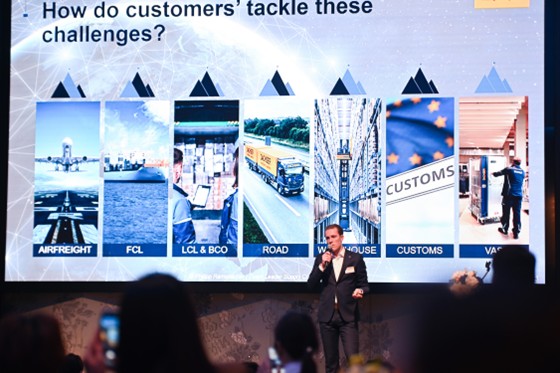
Speaking at a customer and industry event hosted by Dachser in Bangkok on 26 Jan , company executives outlined their outlook for air and sea freight markets in 2026, alongside growing demand for data-driven supply chain optimisation as companies adapt to a more complex global trade environment.
According to Dachser, air freight demand is expected to grow at a single-digit rate in 2026, supported by moderate capacity expansion and a gradual normalisation of rate patterns after several years of volatility. While overall demand fundamentals remain positive, Dachser cautioned that forecasting accuracy and disciplined capacity planning will be increasingly important as the market stabilises.
“After several years of volatility, the air freight market is gradually moving toward a more balanced environment,” said Daniel Chua, Head of Air Freight, Air & Sea Logistics Asia Pacific at Dachser. He noted that growth will continue to be driven by e-commerce, electronics — particularly AI-related components — and pharmaceuticals, alongside a structural shift of trade lanes toward Southeast Asia.
In sea freight, Dachser expects global demand growth to slow to below three percent in 2026, despite continued resilience in intra-Asia trade and Asia–Europe volumes. While fleet growth remains significant, supply and demand are expected to remain relatively balanced through measures such as blank sailings and vessel scrapping.
“Even as rates soften, the market remains far from predictable,” said Eunice Yu, Head of Ocean Freight, Air & Sea Logistics Asia Pacific at Dachser. She said flexibility in routing, diversified service options and realistic lead-time planning will be critical for shippers navigating continued uncertainty in 2026.
Beyond market outlooks, Dachser said companies are increasingly shifting focus from short-term rate management to the design and optimisation of supply chain networks. According to the company, today’s supply chains have become too complex to rely on historical patterns or assumptions alone.
“Data-driven simulation allows companies to create transparency, align stakeholders and design logistics networks based on real operational conditions,” said Philipp Ramsbacher, Team Leader Supply Chain Optimisation at Dachser. He added that structured optimisation can help improve resilience, efficiency and sustainability across logistics networks.
Dachser said projects presented at the Bangkok event demonstrated measurable improvements in areas such as cost efficiency, delivery performance and carbon emissions, reflecting growing interest among companies in supply chain optimisation as a strategic capability rather than a tactical tool.
As freight markets enter a more stable but still uncertain phase, Dachser said logistics performance in 2026 will depend less on reacting to short-term disruptions and more on building supply chains that are flexible, data-driven and resilient to ongoing global volatility.