



























(Singapore, 12.02.2026)The US dollar has long been viewed as a safe haven in times of crisis. But in 2026, the forces unsettling the global economy are coming from within the United States itself — and the dollar is feeling the pressure.
According to reporting by Bloomberg, the greenback has fallen about 9% over the past year against a basket of major currencies, sliding in January to its weakest level since March 2022. President Donald Trump has openly welcomed the decline, saying recently that he sees the drop as “great.”
The weakening currency is rippling through global markets, reshaping trade flows, influencing inflation expectations, and raising questions about the long-term dominance of the dollar.
Why the Dollar Is Under Pressure
A mix of political, economic and policy factors is weighing on the US currency.
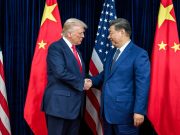
One key issue is political uncertainty. Analysts say the Trump administration’s unpredictable foreign policy — including renewed tensions over Greenland and Venezuela — has unsettled investors. Traditionally, global uncertainty strengthens the dollar. This time, however, uncertainty rooted in US politics appears to be weakening it.
Concerns about the independence of the Federal Reserve have also played a role. President Trump has repeatedly criticized Fed Chair Jerome Powell and made clear his preference for lower interest rates. Political pressure on the central bank has raised doubts among investors about whether monetary policy decisions will remain insulated from politics.
Lower interest rates typically reduce the appeal of holding dollar-denominated assets. Investors seeking better returns may move funds elsewhere, putting downward pressure on the currency.
At the same time, some officials argue that the dollar had been overvalued for years. US Commerce Secretary Howard Lutnick recently suggested the current level may better reflect the dollar’s “natural” value. During Trump’s first term, he frequently claimed that other countries had kept their currencies artificially weak, pushing the dollar higher than it should be.
The debate over whether the dollar’s weakness is a problem or a correction remains central to the current discussion.
Strong Jobs Data Clouds the Rate-Cut Outlook
While the dollar weakens, the Federal Reserve faces a different challenge: a surprisingly strong labor market.
In a separate Bloomberg report, January employment data showed the US economy added 130,000 jobs, while the unemployment rate fell to 4.3%. The numbers were stronger than many economists had expected.
The robust data has reduced expectations that the Fed will cut interest rates again by midyear. Traders have scaled back the probability of a June rate cut to below 50%.
“It absolutely complicates the argument for lower rates,” Tim Mahedy, a former senior adviser at the Federal Reserve Bank of San Francisco, told Bloomberg.
Late last year, the Fed delivered three rate cuts amid concerns about rising unemployment. But January’s figures suggest the labor market may be stabilizing rather than deteriorating.
Some economists caution that the data could be revised lower and note that hiring remains concentrated in sectors such as health care. Revisions to 2025 data show job growth averaged only 15,000 per month, much lower than initially reported.
Still, the January rebound has calmed fears that the labor market was on the verge of sharp deterioration.
Kansas City Fed President Jeff Schmid said the central bank must keep rates at restrictive levels to ensure inflation continues to ease. That stance contrasts with President Trump’s call for the US to have the lowest interest rates globally.
The tension between a White House favoring lower rates and a central bank focused on inflation control adds another layer of complexity to the dollar’s trajectory.
Economic Impact and the Dollar’s Global Role
A softer dollar has both benefits and risks.
On the positive side, US exports have become more competitive. Foreign buyers, whose currencies have strengthened against the dollar, can purchase American goods at lower relative prices. This could support manufacturers and exporters.
However, manufacturing accounts for less than 8% of US employment today, compared with over 30% in the 1950s. That means the broader economic boost may be limited.
At the same time, imports become more expensive. American consumers and businesses must pay more for foreign goods and materials. This can contribute to higher inflation, especially if the weakness persists.
If inflation rises, interest rates could climb rather than fall. Higher rates would increase borrowing costs for mortgages, car loans and credit cards. They would also raise the government’s debt-servicing expenses, potentially forcing tougher budget decisions in Congress.
The US public debt has surpassed $38 trillion, with debt now exceeding 100% of gross domestic product — levels not seen since the aftermath of World War II. Rising borrowing costs could further strain federal finances.
Despite the recent slide, the dollar remains the backbone of global finance. It is widely used in international trade and is the primary reserve currency held by central banks. Dislodging it would require a dramatic shift in global economic power. No other country currently offers the same depth and liquidity in financial markets.
As Bloomberg’s reporting highlights, the dollar’s recent decline is not just about exchange rates. It reflects broader debates about US economic policy, institutional credibility and America’s standing in the global financial system.