



























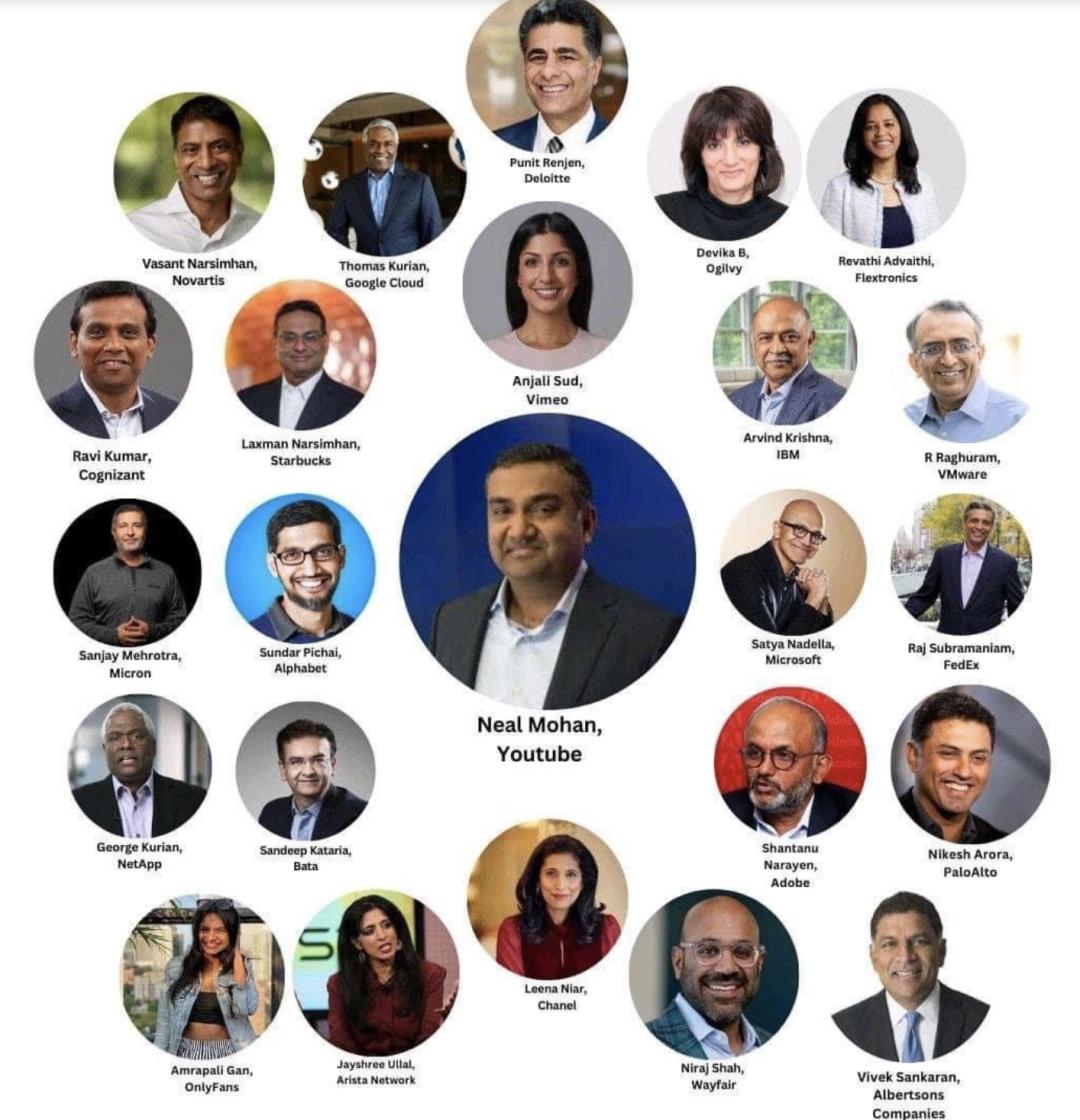

(SINGAPORE 2025.12.16) Over 60% of the world’s top 300 companies are headed by executives of Indian descent, including major names like Google, Microsoft, Adobe, PepsiCo, Deloitte, Starbucks, Novartis, McKinsey, and Chanel. From technology to finance, consumer goods to luxury, Indian leaders have ascended to the top of corporations across nearly every major industry.
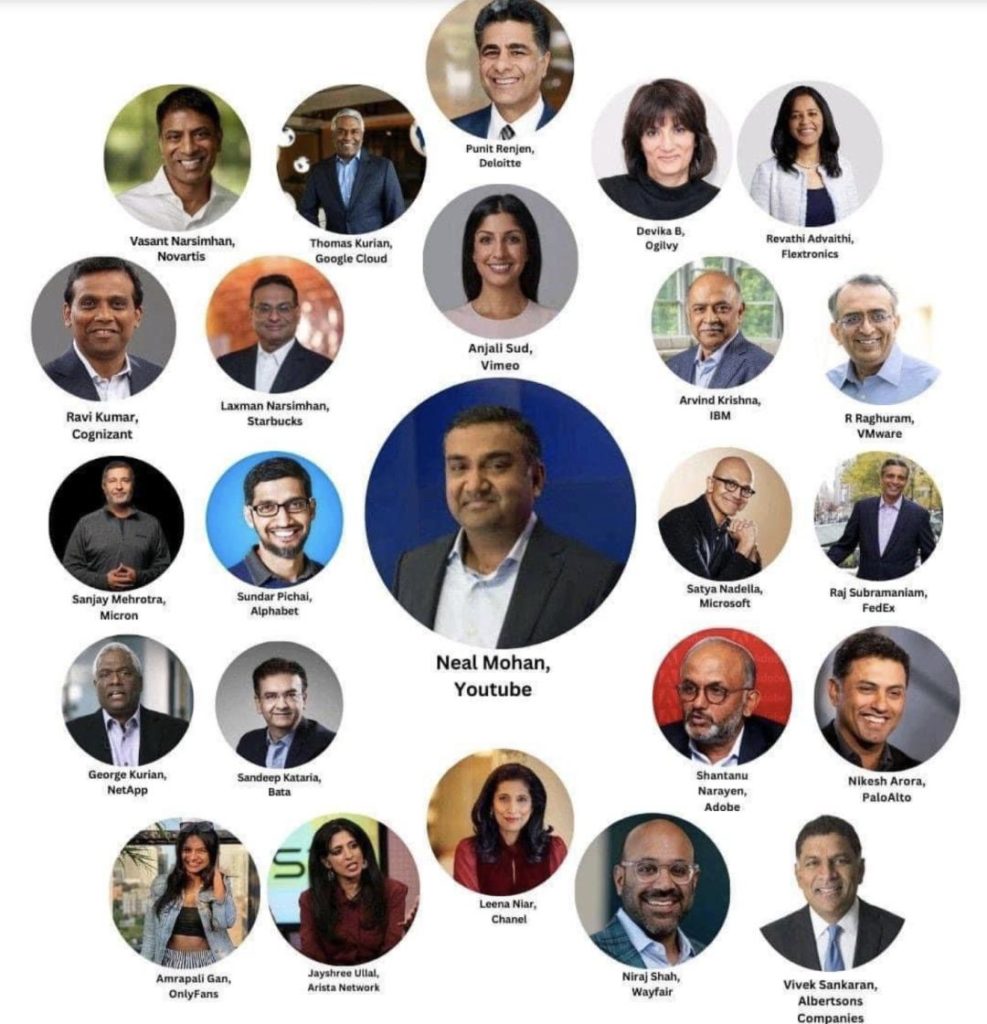
However, as companies rush to reinvent themselves for the digital and AI era, the careers of some Indian-origin executives have slipped over the past two years, according to Hong Kong–based Chinese publication Phoenix Weekly.”
On one hand, a new wave of Indian-origin professionals is steadily ascending corporate ladders. On the other, many long-standing Indian-origin executives were laid off. According to estimates, at least 190 Indian-origin managers in the United States lost their positions last year for various reasons.
For instance, Starbucks CEO Laxman Narasimhan was removed by the board in August 2024, less than two years into his tenure, following underwhelming performance. Under his leadership, the company saw widespread declines in store sales across major markets, including the US and China.
Two months later, Prabhakar Raghavan, Google’s senior vice president responsible for key products, was reassigned from his central operational role to a chief technologist position following a sluggish response in the intensifying AI competition.
After acquiring Twitter in late 2022, Elon Musk dismissed a significant number of Indian employees he deemed “underperforming,” replacing them with many Chinese hires at the newly rebranded social media platform, X.
Although the trend is not about ethnicity, the work styles of many senior Indian executives from earlier generations are less aligned with today’s fast-paced, AI-driven corporate world, making them appear less suited for certain top roles.
Phoenix Weekly highlighted that in 1997, Ramani Ayer became the first CEO of Indian origin to lead a Fortune 500 company when he took the helm at Hartford Insurance. Today, even as Indian executives become less prevalent in corporate America, the US ambassador to India wryly quipped just last year, “If you’re not Indian, rising to CEO in America is nearly impossible.”
How did this come about? Not long ago, in a podcast interview, Microsoft CEO Satya Nadella, an Indian-American, attributed much of his success to his childhood education at The Hyderabad Public School. Nadella described the school founded in 1923 and serving students aged 3 to 17 as virtually a “CEO factory,” producing leaders for some of the world’s top companies.
The school has nurtured not only Nadella but also leading executives at multinational powerhouses like Adobe, Procter & Gamble, and Mastercard. In 2023, to celebrate its centenary, alumni worldwide contributed 275 million rupees (about S$3.9 million) to their alma mater. Such large-scale donations have become a recurring trend, appearing every few years.
The school’s principal, Ramandeep Kaur Samra, told the media, “We have always trained generals, not soldiers—we aim for our students to become leaders in whatever field they choose, driven by passion.” Reflecting this philosophy, the school has never prioritized grades alone. Instead, it empowers students to chart their own paths while providing robust support.
Phoenix Weekly noted that annual tuition at The Hyderabad Public School ranges from 171,000 to 225,000 rupees. While not outrageously high, these fees clearly position the school as an elite institution, catering mainly to middle- and upper-class families.
The school also offers its students a strong network grounded in shared experiences and reinforced by alumni connections. Take Nadella, for example: soon after joining Microsoft, he contributed robotics equipment from the company to his alma mater, helping to inspire the next generation of students.
This alumni-driven culture also flourishes at India’s other premier institutions, such as the Indian Institute of Technology (IIT) and the Indian Institute of Management (IIM). In Silicon Valley, Indian engineers have established networks akin to the “PayPal Mafia,” often referred to as the “IIT Mafia,” where they share resources and back one another. Similarly, the founder of Flipkart, India’s largest e-commerce platform, has largely directed his angel investments toward startups founded by IIT and IIM graduates.
In terms of climbing the corporate ladder, the Indian community often relies on a mentorship practice known as “passing the torch.” Newly hired Indian employees usually start by navigating rigid hierarchies typical of large Western firms, using shared networks and activities—like alumni associations, cricket matches, and Diwali celebrations. These interactions allow them to form personal, out-of-office bonds with senior Indian leaders.
As Indian professionals advanced in their careers, their mentors would leverage personal networks to help them secure highly sought-after roles. In 1995, Kanwal Rekhi, a prominent Indian-American venture capitalist in Silicon Valley, formalized the practice by founding TiE (The Indus Entrepreneurs), an organization dedicated to institutionalizing this “passing the torch” approach.
In recent years, this Indian-style networking has expanded into the US political arena. In Washington, a circle of Indian-American lawmakers—nicknamed the “Samosa Core Group”—has been advocating for visa-related legislation, working to prevent members of their community from being sidelined by stricter immigration policies.
However, Phoenix Weekly observes that the Indian “career mentorship” model emphasizes style over substance, valuing polished presentation more than actual accomplishments.
An article on publishing platform Medium put it bluntly: “Indian managers frequently gain attention for their fluent English and Western-style mindset, yet charisma, confidence, and polished communication often conceal average performance… Showmanship has become an art, but it is no substitute for concrete results.”
Phoenix Weekly noted that this method works well in times of corporate expansion. Yet, when a company undergoes transformation that demands genuine expertise, its weaknesses become apparent. Consequently, over the past two years, assessments of Indian executives have grown more varied.