




















(SINGAPORE 2026.2.3) Jack Ma, the Chinese multibillionaire and founder of multinational technology company Alibaba, is renowned for naming many of the company’s brands, including Tmall (天猫), Ant Group (蚂蚁集团), and Cainiao (菜鸟). He has now added another: the AI health platform “Afu” (阿福).
Ant Group CEO Han Xinyi (韩歆毅) recently revealed that the team initially suggested “Health Fu” (健康福), but Ma felt it sounded more like a product than a companion. Personally picking “Afu,” he emphasized that the name should convey emotional warmth and human care, not just functionality, a philosophy that quickly became a trending topic online, noted Chinese business media platform BT Caijing.
Ant Group, part of the Alibaba ecosystem though a separate entity, is best known for Alipay, one of the world’s largest mobile and online payment platforms. Afu, previously known as AQ, began trial operations on Alipay in September 2024 and was officially launched on June 26 last year. Later rolled out across major app stores, the platform addresses everyday healthcare needs and physical pains of users, offering over 100 AI-powered features such as health education, medical consultations, medical report interpretation, and personal health record management.
Afu mimics real doctor consultations, providing preliminary evaluations for common health issues and guidance on when to seek professional care. It can recognize more than 50 common skin conditions, interpret medical reports with over 90% accuracy, and integrate with health devices and wearables for personalized recommendations. The service was officially rebranded “Ant Afu” on December 15 last year.
At a healthcare conference on January 23, Han said Afu now has over 30 million monthly active users, handling more than 10 million health consultations daily. The platform serves users nationwide, with 55% from lower-tier cities, and one-third elderly. Leveraging Alibaba’s ecosystem, it partners with over 300,000 doctors and 5,000 medical institutions. A recently launched DeepSearch feature provides AI tools for literature searches, clinical decision-making, and research, helping to reduce doctors’ workloads.
Jack Ma’s naming of Afu reflects his broader branding philosophy. From Tmall to Ant Group, Cainiao, Hema Fresh (盒马), Xianyu (闲鱼), Fliggy (飞猪), Shenma (神马), Qianniu (千牛), Xiami (虾米), and Pingtouge (平头哥), Alibaba’s brands often reference animals. Netizens jokingly call the conglomerate the “Alibaba Zoo.” These animal-themed names span e-commerce (Tmall), seller management (Qianniu), finance (Ant Group), logistics (Cainiao), grocery retail (Hema), second-hand goods (Xianyu), travel (Fliggy), online music (Xiami), search engines (Shenma), and semiconductors (Pingtouge).
For Afu, Ma emphasized creating an AI friend offering emotional companionship, not just professional solutions. Public reaction praised the name’s approachable feel compared with the more clinical “Health Fu.” Ma’s naming strategy consistently aims to strike an emotional chord.
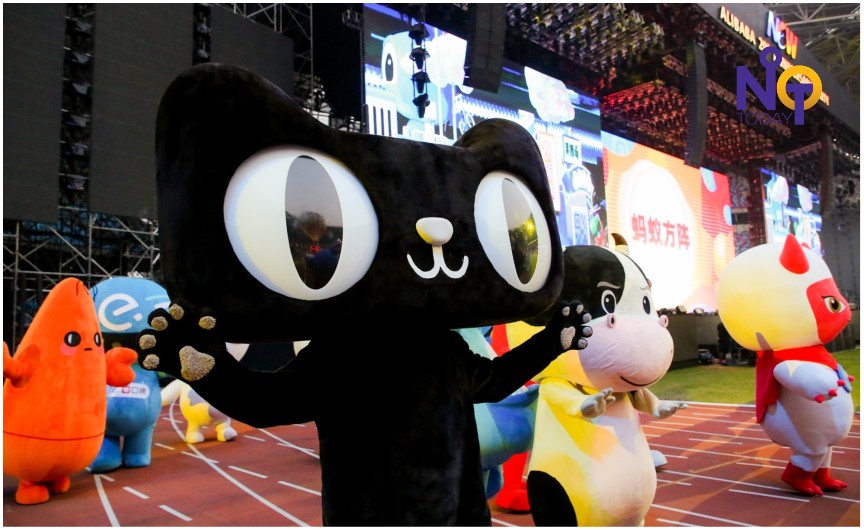
Among his most famous brand namings is Tmall. In 2018, at a gathering, Ma explained that “cats have nine lives,” symbolizing resilience and the ability to overcome setbacks, reflecting Alibaba’s culture. Tmall’s logo, a black-and-white cat with an asymmetrical design, references Deng Xiaoping’s famous quote: “It doesn’t matter whether the cat is black or white, as long as it catches mice.” Former Tmall CEO Daniel Zhang (张勇)added that cats’ pickiness mirrors Tmall’s pursuit of high-quality products and services.
Following Tmall’s success, other Chinese e-commerce companies adopted animal mascots: JD.com’s metallic dog, Meituan’s kangaroo, Suning’s lion, and Gome’s tiger, creating a “digital zoo” in China’s internet sector.
Unlike the typical preference for grand, sophisticated brand names, Ma favored small animals. Cainiao (“Rookie”), initially seen as a strange name, evokes a young, slightly confused bird, emphasizing humility, gratitude, and continuous learning.
Pingtouge (Honey Badger), Alibaba’s semiconductor arm, arose during a 2018 African trip where Ma learned of the honey badger, described by Guinness World Records as the world’s most fearless creature. Its traits—passion, relentlessness, bravery, intelligence, optimism, and toughness—symbolize Alibaba’s ambition in the chip industry, demonstrating its courage despite limited resources. Ma has repeatedly said, “There’s a honey badger inside Alibaba—who are we afraid of?” Pingtouge is preparing for an IPO, while Cainiao and Hema are also expected to list separately.
Digital communications expert Wang Yiran (王一然) says Ma’s animal naming strategy is deliberate: “By using strong memory symbols with spiritual metaphors and brand synergy, Alibaba builds cognitive and cultural moats. It’s systematic branding, not personal preference.”
Animals are memorable from childhood, making them ideal for branding. They carry symbolic traits—ants represent teamwork and resilience, aligning with Ant Group’s focus on serving small businesses. Animal-based logos are visually distinctive, adaptable, and suitable for merchandising, mascots, and IP content. Together, they create a unique “Alibaba Zoo” culture that reinforces group identity, enables differentiation, risk isolation, and softens the commercial feel of tech products, synchronizing with Ma’s vision of inclusive business.
Today, Ma serves informally as Alibaba’s founder and senior mentor. His involvement in corporate matters is advisory rather than tied to an official leadership role, yet his influence—particularly in naming and branding—remains significant. Afu’s success and reception illustrate the continued impact of his personal philosophy: making technology feel human, memorable, and emotionally resonant, while strategically reinforcing Alibaba’s ecosystem.