




























(Singapore, 06.03.2026)The United States is considering sweeping new rules that could reshape the global artificial intelligence (AI) industry and strengthen Washington’s grip on advanced AI chips, one of the world’s most critical technologies.
Under draft regulations currently being discussed within the US Commerce Department, companies may soon need government approval before exporting powerful AI processors made by firms such as Nvidia and Advanced Micro Devices (AMD) to nearly any country.
If implemented, the proposal would expand existing export controls and effectively position Washington as a gatekeeper of global AI infrastructure. The move could carry major financial implications for technological companies, governments and investors worldwide.
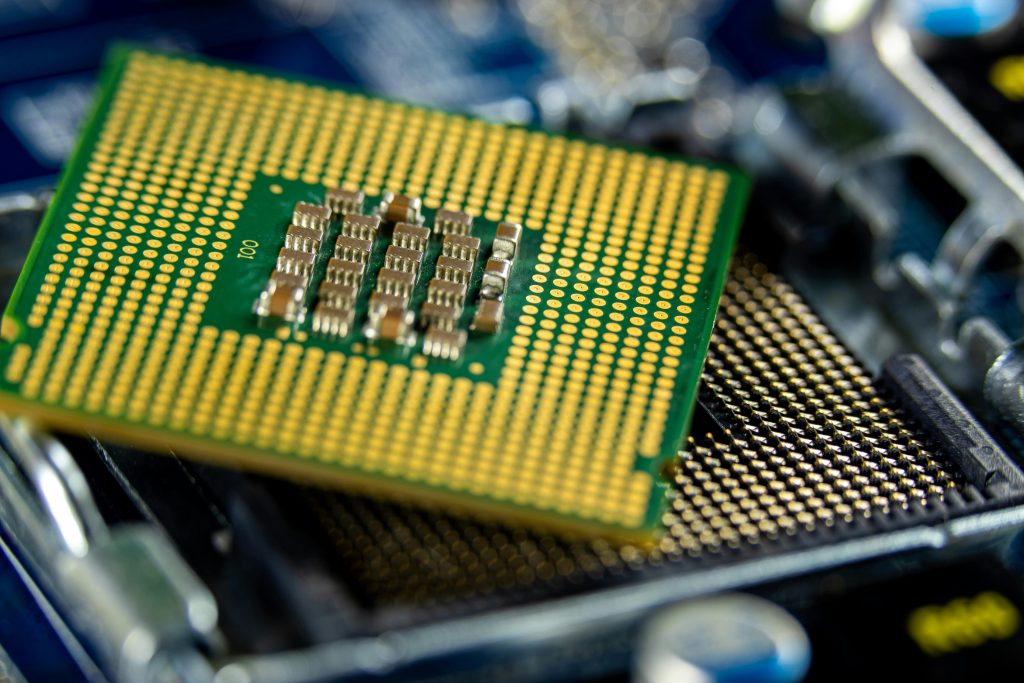
The chips in question, commonly known as AI accelerators, are the backbone of today’s AI boom. Technology giants such as OpenAI, Alphabet Inc., and Microsoft purchase thousands of them to power massive data centers running services like ChatGPT and Gemini.
Currently, US export restrictions apply mainly to about 40 countries considered high risk. The new proposal would dramatically broaden the rules, requiring export licenses for AI chip shipments almost anywhere in the world.
Financial markets reacted quickly to the news. Shares of Nvidia fell as much as 1.9% during trading, while AMD declined about 2.3%, reflecting investor concerns that tighter export controls could complicate global sales.
US officials, however, say the intention is not to block chip exports entirely. Instead, the policy aims to ensure that American technology remains central to the development of global AI infrastructure.
AI Chips Become a Strategic Global Asset
Under the draft framework, approval requirements would depend on how many chips companies intend to purchase.
Smaller orders such as shipments of up to 1,000 of Nvidia’s latest GB300 graphics processing units (GPUs) could undergo a relatively simple review process. Companies might even qualify for certain exemptions depending on the nature of their projects.
However, larger deployments would face tighter scrutiny. Firms planning major AI clusters would need to obtain pre-clearance before applying for export licenses. They could also be required to disclose business models or allow US officials to conduct site visits at their data centers.
For extremely large deployments involving more than 200,000 GPUs owned by a single company in one country, the rules could become even stricter. In those cases, the host government may need to participate directly in negotiations with Washington.
Such large clusters represent some of the most powerful computing systems ever built. A cluster of 200,000 AI chips can support enormous AI models and large-scale data centers.
For example, a recent agreement between AI infrastructure company NScale and Microsoft involves deploying roughly that number of chips across several facilities in the US and Europe, making it one of the largest AI infrastructure contracts ever signed.
Governments increasingly view these facilities as critical national assets. Advanced AI computing power is now seen as essential not only for economic growth and corporate competitiveness, but also for national security and military capability.
By controlling access to these chips, Washington could influence where future digital infrastructure is built and which countries gain technological advantages.
Trade, China Competition and Investment Implications
The proposed rules could also introduce financial negotiations tied to AI infrastructure development.
In previous export agreements involving countries such as the United Arab Emirates and Saudi Arabia, access to advanced AI chips was linked to investment commitments in US based AI projects. Under those arrangements, foreign governments were required to match some of their domestic AI spending with investments in the United States.
If similar conditions become part of a broader global licensing framework, countries hoping to build large scale AI data centers including projects in India, France, and other regions could face significant financial commitments.
Some analysts warn that tying AI chip access to trade negotiations may create uncertainty for global technology investment.
According to a Bloomberg report, Bernstein semiconductor analyst Stacy Rasgon cautioned that the approach could open the door for access to AI technology to become part of broader diplomatic bargaining.
At the center of Washington’s strategy is the growing technological rivalry with China. US policymakers have already restricted exports of advanced semiconductor manufacturing equipment and high-end chips in an effort to slow China’s AI development.
At the same time, the Trump administration is considering allowing limited exports under strict conditions.
One proposal being discussed would cap the number of Nvidia’s H200 chips that any single Chinese company can purchase at 75,000 units. Total exports to China could still reach as many as one million chips, but the per company cap would prevent any individual firm from building extremely large AI supercomputers.
The limits would affect Chinese technology giants such as Alibaba Group and ByteDance, both of which have strong ambitions in artificial intelligence and cloud computing.
The policy highlights a delicate balancing act for Washington, which seeks to maintain economic ties with China while limiting the country’s access to advanced computing power.
Beyond geopolitics, the proposed rules could reshape how AI infrastructure projects are financed and built worldwide.
If approvals are granted quickly, global AI expansion may continue largely uninterrupted, though companies would face additional regulatory procedures.
However, slower approvals or prolonged negotiations could delay large data center investments and reshape where global AI infrastructure is developed.
For many countries now racing to build AI capacity, access to advanced chips from companies like Nvidia may ultimately depend not only on market demand, but also on geopolitics and international trade strategy.