













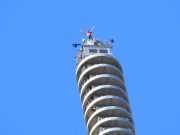







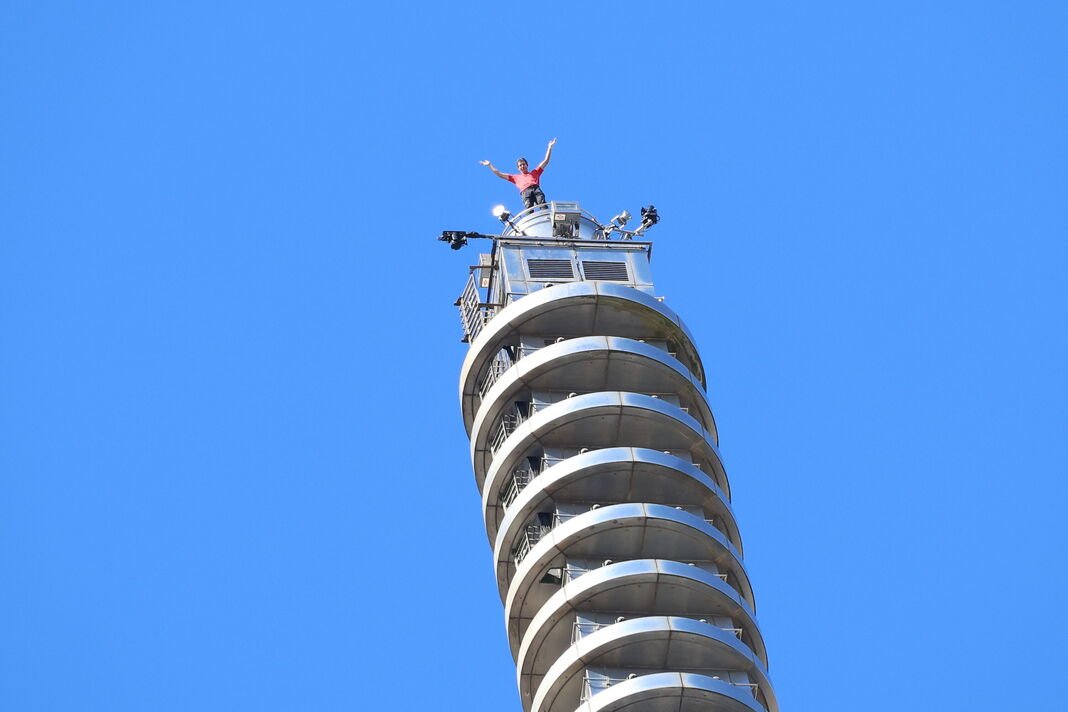

(Singapore, 27.01.2026) China’s media have underscored the historic significance of Alex Honnold’s free-solo ascent of the 508-meter Taipei 101 on Sunday, 25 Jan 2026. While there is no concrete evidence yet of a surge in new climbers nationwide, several reports noted that the globally livestreamed feat is certain to push the extreme sport of rock climbing further into the public eye.
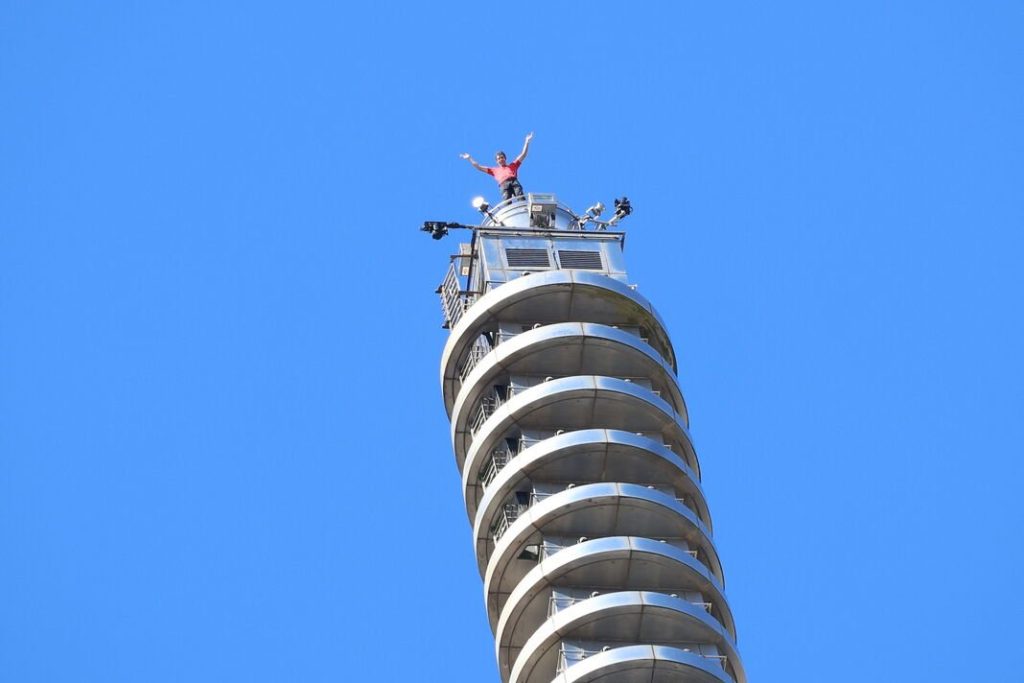
Videos of Honnold’s dramatic climb quickly circulated online, with many Chinese netizens suggesting that domestic climbing gyms create Taipei 101–style climbing routes to draw more climbers riding the wave of Honnold’s fame. In climbing, “routes” refer to the specific sequences of holds that climbers follow up a wall or rock face.
After the 40-year-old American reached the summit at 10:43 a.m., Chinese social media users clipped footage of his final push and shared congratulatory posts. Comment sections filled with praise, calling the feat “absolutely awesome,” “legendary,” and “godlike,” with one Weibo user writing, “Alex has made history.” Another joked, “The building’s construction quality is insanely good too!” One popular comment read, “Maybe Taipei 101 could charge people to climb it— with harnesses, of course.”
Even though politically sensitive, Chinese netizens often express pride in cultural or architectural symbols from the broader Chinese-speaking world. Taipei 101 is iconic not just to Taiwan but recognized internationally as a “Chinese-language world” achievement.
According to Sportsmoney, a Chinese sports industry media and business information platform, rock climbing in China has been steadily moving from niche to mainstream since making its Olympic debut at Tokyo 2021. That momentum accelerated further after Chinese athletes won medals at the 2024 Paris Olympics.
Climbing gyms continue to proliferate in China, youth programmes are booming, and the climbing gear industry is gradually becoming complete and well-organized supporting all aspects of the sport. The China Climbing Industry Development Report shows that by January 2025, China had 811 commercial climbing gyms nationwide, a year-on-year increase of 27.5 per cent. Concentrated in major cities such as Shanghai, Beijing, and Shenzhen, this total now surpasses the number of climbing gyms in the United States—a major milestone for global climbing infrastructure.
Celebrity influence has also played a role. Actor and pop star Wang Yibo’s participation in the outdoor reality program Exploring New Horizons and his visible passion for climbing have sparked interest in the sport among viewers. In August last year, Wang completed a professional-level route graded 5.12b, considered difficult even for experienced climbers. Earlier this month, he scaled North America’s 520-meter Liberty Cap wall in Yosemite.
Data shows that within 10 minutes of the premiere of Exploring New Horizons Season 2 in 2025, viewership surged to record levels for Tencent Video documentaries, driving a noticeable spike in foot traffic at domestic climbing gyms.
Sportsmoney suggested that, given climbing’s strong base growth and appeal among young people, Honnold’s high-profile ascent is likely to further boost interest in gym memberships and gear sales—particularly among urban youth and social media users captivated by his headline-making feat.
Even prior to the Taipei 101 climb, gyms across China had reported increased traffic and bookings, especially from younger climbers and weekend visitors, signalling that climbing is becoming a mainstream recreational activity rather than a niche pursuit.
Official data from 2023 estimated more than 500,000 climbers nationwide, up from around 10,000 a decade earlier. Independent industry analyses indicate indoor climbing participation grew by about 45 per cent from 2022 to 2024, with youth programs expanding the fastest. New climbers—those with less than a year of experience—now make up a growing share of the community, reflecting recent interest leap.
At the same time, Sportsmoney noted that Honnold’s Taipei 101 ascent was also a masterclass in sports marketing. Netflix teased the climb months in advance, and Honnold released promotional posters on his personal social media in December.
Sportsmoney recounted that Hannold’s ambition to climb Taipei 101 dated back 14 years: as early as 2012, when he was still emerging on the international climbing scene, Honnold had set his sights on the landmark. The plan was ultimately shelved at that time due to safety concerns raised by Taiwan’s television networks.
While free-solo climbing may appear recklessly dangerous to outsiders, Sportsmoney emphasized that, from Honnold’s perspective, it represents a near-zero-risk challenge carefully calibrated to his abilities. Since taking up climbing in 2004, the UCLA (University of California, Los Angeles) -educated athlete has honed his skills through relentless training, aided by his exceptional natural talent. As documented in the film Free Solo, medical studies found that Honnold’s amygdala responds differently from most people’s, requiring unusually high stimulation to trigger fear—giving him a unique ability to manage risk.
During the Taipei 101 climb, Honnold wore headphones, listened to music, and occasionally waved to spectators. Upon reaching the top, he exclaimed, “Sick, I’m so psyched!” Crowds gathered throughout the building and in the surrounding area, holding signs reading “Godspeed” and “See you at the elevator.” The contrast between his calm demeanor and the sheer exposure of the climb made the livestream irresistibly compelling—exactly the intensity Netflix had hoped to capture.
Despite a one-day weather delay that caused the broadcast to coincide with UFC 324, viewership remained strong. Media reports estimate the livestream drew around 120 million online viewers worldwide, setting a new record for Netflix’s non-series live broadcasts, while many Chinese viewers followed the event through unofficial channels. UFC 324 is a major Ultimate Fighting Championship mixed martial arts event that took place on January 24 local time in USA.
The climb also delivered significant brand exposure. Sponsored by The North Face, Honnold wore a red T-shirt and custom black pants with the brand’s logo, giving the company a lot of publicity. He climbed in La Sportiva’s TC Pro shoes—designed for long routes and crack climbing—and carried a custom Black Diamond chalk bag featuring a picture of Taipei 101. Throughout the broadcast, banners and health supplement advertisements appeared, making the event an unexpectedly sophisticated showcase of integrated marketing.
As for compensation, Honnold told The New York Times: “Compared with mainstream sports, this is an embarrassingly small amount.” While reportedly earning around US$500,000 (about S$645,000) —his largest single payout for a personal climb—the sum fell short of his agent’s expectations. For Honnold, the primary motivation remained the challenge itself; money, he said, was only a minor factor.