



















(Singapore, 18.02.2026)Japan and the United States have launched the first round of projects under their landmark $550 billion (S$695 billion) trade agreement, with Tokyo committing up to $36 billion (S$45.5 billion) in investments focused on energy and critical minerals.
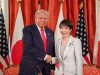
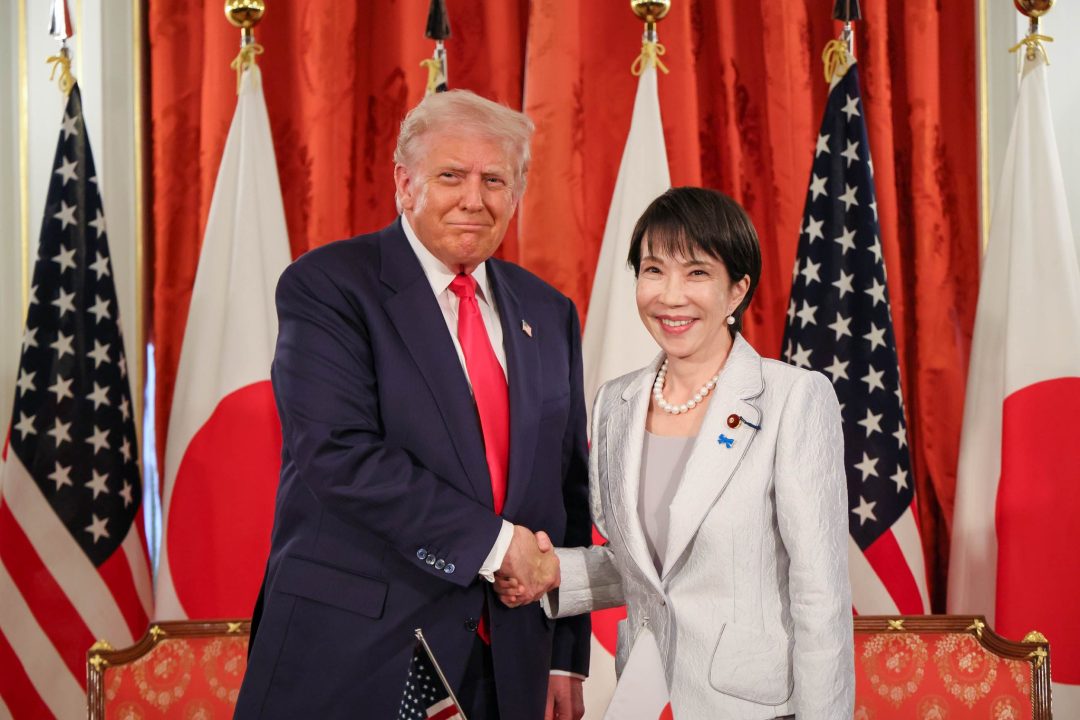
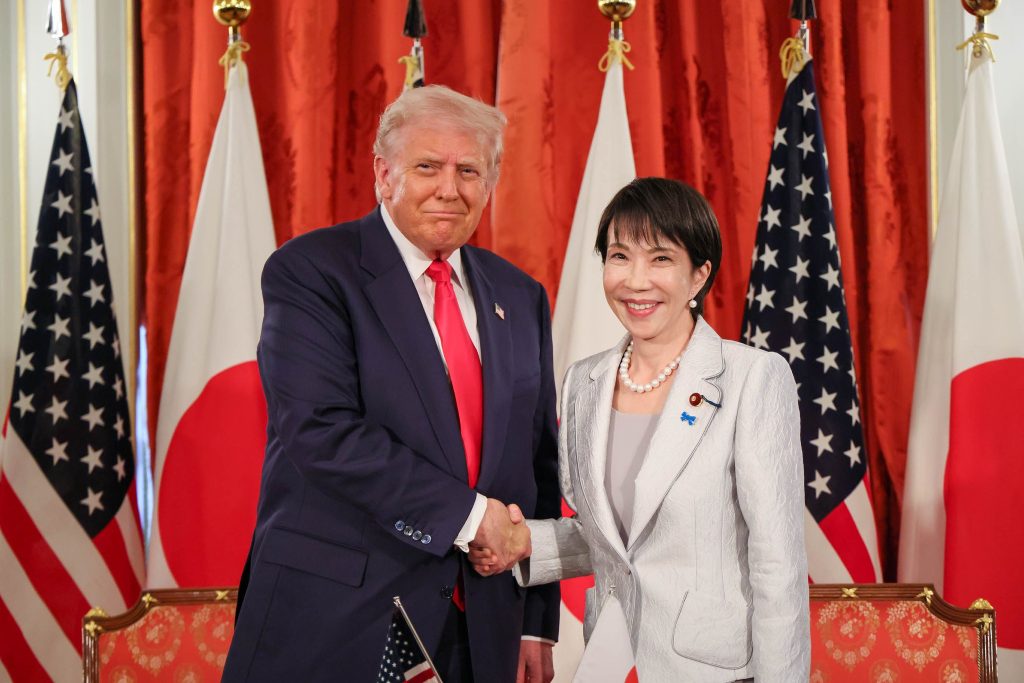
The move marks a significant step in the economic pact negotiated last year between US President Donald Trump and Japanese Prime Minister Sanae Takaichi. The initial investments will target large-scale projects in natural gas power generation, crude oil exports and advanced industrial materials — sectors considered vital for economic and national security.
President Trump welcomed the announcement on social media, describing it as a “MASSIVE Trade Deal” and crediting tariffs as a driving force behind the agreement.
Prime Minister Takaichi said the projects are designed to build resilient supply chains in areas crucial to both nations, including energy, critical minerals and artificial intelligence infrastructure. She emphasized that the initiative promotes mutual economic benefit while strengthening long-term strategic cooperation.
Massive Energy Projects Take Center Stage
The largest project in this first investment wave is a $33 billion natural gas power facility near Portsmouth, Ohio.
Known as the Portsmouth Powered Land Project, the facility will be operated by SB Energy, a subsidiary of SoftBank Group Corp.. Once completed, it is expected to generate 9.2 gigawatts (GW) of electricity, making it the largest natural gas power generation project in the United States.
At full capacity, the plant could supply power equivalent to about nine traditional nuclear reactors and generate enough electricity for roughly 7.4 million homes connected to the PJM Interconnection grid, the largest US power network serving regions from Washington to Chicago.
US Commerce Secretary Howard Lutnick described the project as a strategic initiative to provide reliable, large-scale energy at a time when US electricity demand is rising sharply. The surge is driven largely by expanding data centers — especially those supporting artificial intelligence — as well as growing manufacturing activity and broader electrification of the economy.
Japanese firms including Toshiba Corp. and Hitachi Ltd. have also expressed interest in participating in the gas project.
The second major energy initiative is a $2.1 billion deepwater crude oil export terminal in Brazoria County, Texas.
The Texas GulfLink terminal will be operated by Sentinel Midstream. Once operating at full capacity, it is expected to generate between $20 billion and $30 billion in annual US crude exports — potentially totaling up to $600 billion over two decades.
US officials say the facility will strengthen America’s trade balance and expand its position as a major global energy exporter. Several Japanese companies have indicated interest in supporting the project through supplies and services.
Critical Materials and Strategic Industries
Beyond energy, the third project focuses on advanced manufacturing. Japan is expected to invest about $600 million in a high-pressure, high-temperature synthetic diamond grit facility in Georgia.
The facility will be operated by Element Six, a subsidiary of De Beers. Synthetic diamond grit is an essential industrial material used in semiconductor production, automotive manufacturing, oil and gas drilling and other high-tech industries due to its extreme hardness and durability.
US officials describe diamond grit as critical to economic and national security because it supports advanced technology supply chains. Japanese firms such as Asahi Diamond Industrial and Noritake have expressed interest in purchasing materials from the plant.
Together, the three projects reflect shared US-Japan priorities in energy security, artificial intelligence infrastructure and semiconductor-related industries.
Tariffs, Investment Structure and Political Timing
The $36 billion investment package represents the first tranche of Japan’s broader $550 billion commitment under the trade agreement with Washington.
The deal was closely tied to tariff negotiations. Under the agreement, the US set import levies on Japanese goods at 15%, including reduced duties on automobiles — a crucial sector for Japan’s economy. Earlier, tariffs had been threatened at levels as high as 25%.
Most of the $550 billion mechanism is expected to come in the form of loans and loan guarantees rather than direct cash injections. After a project is selected, Japan has 45 business days to fund it. If Tokyo declines to finance an approved project, the US could claw back certain revenues or potentially raise tariff levels.
Prime Minister Takaichi is scheduled to meet President Trump in Washington on March 19, and implementation of the agreement is expected to be a key topic of discussion.
Analysts say the announcement helps build momentum ahead of that meeting and signals that Japan intends to follow through on its commitments.
For the US, the projects promise expanded industrial capacity, greater energy dominance and strengthened supply chains. For Japan, they provide investment returns while deepening economic ties with its most important ally.
With the first $36 billion now set in motion, attention will turn to how quickly the projects move from plans to construction and how the broader $550 billion framework reshapes US-Japan economic cooperation in the years ahead.