























(SINGAPORE 2026.3.24) China’s Laopu Gold (老铺黄金) is rapidly reshaping the domestic luxury landscape. Once seen as a “dark horse,” the high-end gold jewellery brand has emerged as a credible challenger to established names such as Cartier and Bulgari in China, supported by soaring revenues and exceptional store productivity, according to Chinese business outlet 36Kr.
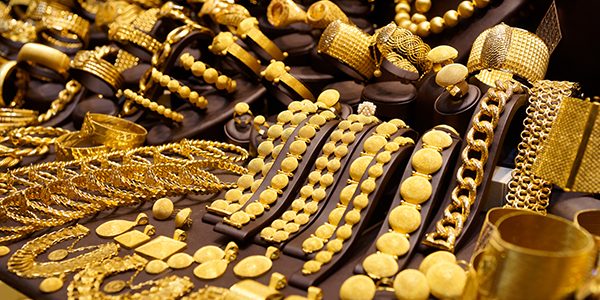
A central factor in Laopu’s rise is its fusion of Chinese cultural symbolism and craftsmanship with gold’s intrinsic value. This positioning aligns with a broader shift among Chinese jewellery consumers toward wealth preservation, as noted by 36Kr columnist Bigenguo (碧根果).
The company’s financials underline its momentum. For full-year 2025, Laopu Gold reported revenue of 31.4 billion yuan (around S$6 billion), up 220% year-on-year, with adjusted net profit rising 235% to 5 billion yuan. Growth has continued into 2026: first-quarter sales are expected to reach 20 billion yuan, with net profit of up to 3.8 billion yuan—already exceeding 70% of 2025’s total net profit.
Founded in Beijing in 2009 by gold retailer Xu Gaoming (徐高明), Laopu, which literally means “Old Shop”, has expanded quickly while achieving an unprecedented breakthrough for a domestic Chinese luxury brand. US market research firm Frost & Sullivan ranks Laopu second in China’s luxury revenue for 2025, surpassing Hermès and narrowing the gap with LVMH (Louis Vuitton), the world’s largest luxury conglomerate.
Laopu’s rise is remarkable in a market historically dominated by Western brands. While international luxury groups focused on capturing China’s post-pandemic recovery, Laopu quietly engineered a structural shift: a homegrown brand emerging as a critical force. Some analysts suggest that competition between Laopu and leading global players in China will shape the sector in coming years.
European financial institution Rothschild echoes this view. Its updated report notes that Laopu’s 2025 revenue in China exceeded Richemont’s jewellery business, which includes Cartier and Van Cleef & Arpels.
In China, Laopu now competes directly with global luxury groups for market share. Its challenge extends beyond scale to operational efficiency. Louis Vuitton, which entered China in 1992, operates around 60 stores in 32 cities. Laopu, with 45 stores in 16 cities, achieves significantly higher sales per location, reflecting striking productivity.
This efficiency contrasts with stagnation among some established luxury brands, many of which are revamping or closing stores amid slowing growth. By contrast, Laopu appears poised for further expansion domestically and internationally.
Rothschild describes Laopu as disruptive, highlighting its integration of traditional craftsmanship with contemporary design. Economist Peter Howitt cites Laopu as an example of innovation through “new combinations”—blending heritage, cultural symbolism, and modern business practices to create a differentiated luxury offering. This approach, also called “creative destruction”, has enabled Laopu to penetrate a market long dominated by European brands, particularly by producing designs that resonate strongly with Chinese consumers.
Pricing strategy has reinforced this positioning. In February 2026, Laopu raised domestic prices by 20–30%, following three increases in 2025. Demand has remained robust, and its price range now overlaps with those of international jewellery brands, indicating burgeoning acceptance of its premium status and pricing power.
What powers this success is a broad shift in consumer behaviour. Amid global economic uncertainty, high-net-worth individuals are increasingly focused on preserving value rather than expressive consumption. Traditional luxury categories, such as leather goods, face challenges in this context, as their pricing depends largely on brand narrative and supply control rather than intrinsic value.
Laopu’s model addresses this gap. Rather than selling jewellery primarily by weight, it emphasizes design, craftsmanship, branding, and fixed pricing—closer to luxury fashion houses while retaining a tangible value anchor in gold. Industry observers see this hybrid model as key to its appeal. Yu Yan (余燕), founder of Chinese fashion platform Luxe.co (华丽志), notes that Chinese consumers have long sought strong domestic luxury brands, and Laopu rose to satisfy this unmet demand.
Consumer data verify this trend. Frost & Sullivan reports that overlap between Laopu customers and those of Louis Vuitton, Hermès, Cartier, and Bulgari rose from 77.3% in mid-2025 to 82.4%. Consumers who previously favoured global brands are increasingly including Laopu in their purchases.
International competitors are seriously taking notice. Richemont CEO Nicolas Bos acknowledged that Laopu’s culturally rooted approach has energized the jewellery market, prompting innovation among rivals. Bulgari CEO Jean-Christophe Babin points to rising cultural confidence in China as Laopu’s wager, drawing parallels with Bulgari’s grounding in Roman heritage.
Research from the Hurun Institute highlights Laopu’s differentiation across branding, design, service standards, and retail experience. Built around the proposition of “classic, exquisite, heirloom,” the brand has carved a distinct identity appealing to consumers seeking cultural meaning alongside long-term value, said the institute which is noted for its ranking of Chinese companies by wealth
However, expert voices caution against assuming Laopu’s ascent will continue unabated. US-based digital news outlet Wire China notes that comparisons with global luxury groups largely apply only within China; meanwhile, LVMH, for instance, operates across multiple categories and regions. Strong domestic performance does not guarantee global parity.
There are also gaps in the Bigenguo narrative. Unlike heritage brands with decades or centuries of history, Laopu is relatively young. Public data on margins, customer retention, and repeat purchases are limited, making the sustainability of its future growth harder to assess. Much of the praise highlights favorable comparisons, leading to confirmation bias.
Applying the concept of “creative destruction” may also be more rhetorical than analytical. While Laopu innovates in branding and positioning, it does not represent technological disruption in the conventional sense. Its impact is better understood as a reconfiguration of value within the jewellery segment rather than a wholesale transformation of luxury.
At the micro level, Laopu’s performance is compelling: rapid revenue growth, strong profitability, and high retail efficiency. At the macro level, claims of industry-wide disruption remain less certain. Global luxury remains complex, with incumbents retaining significant advantages in scale, heritage, and international reach, remarked Baiguan (百观), a China-based analysis platform.
Nevertheless, Laopu Gold’s trajectory highlights an important shift. By moving beyond commodity-based gold retailing toward a model centred on design, culture, and branding, it has redefined high-end gold jewellery in China. Whether this approach can be sustained—and extended internationally—will determine if Laopu represents lasting widespread market transformation or just a localised success.