




















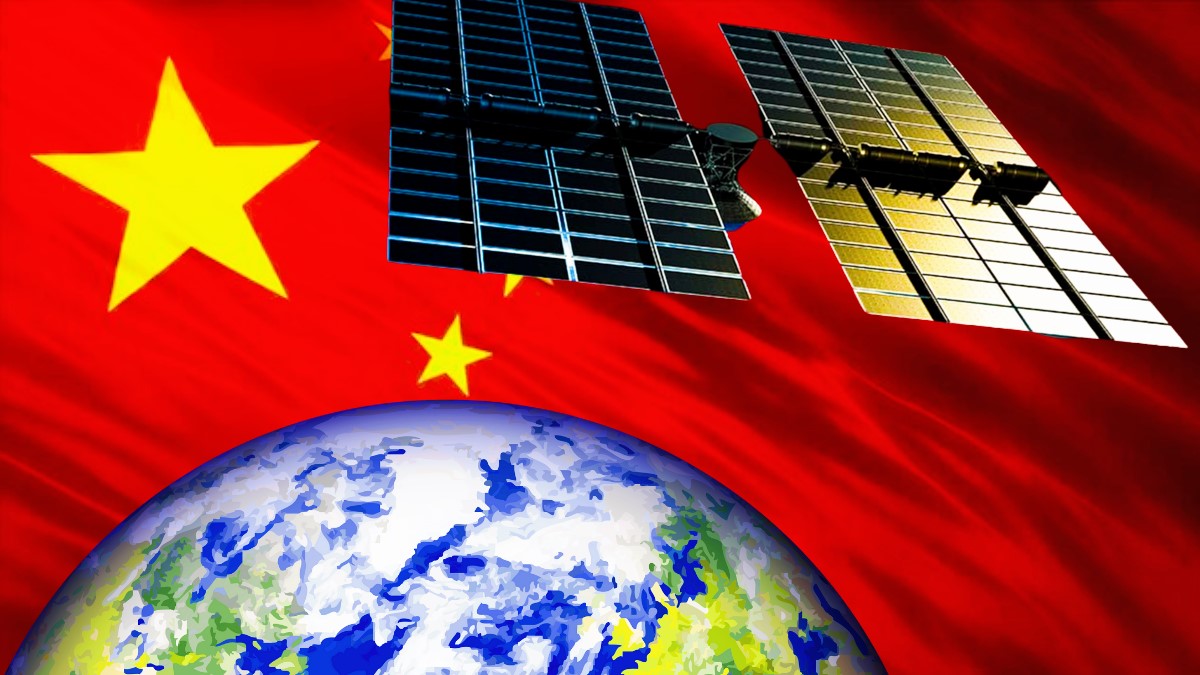

(SINGAPORE 2026.2.5) American futurist entrepreneur Elon Musk has recently proposed deploying solar-powered satellites as orbital data centres to support AI workloads. Operating above the atmosphere, these systems capture sunlight that is five to ten times more intense than on Earth, circumvent day-night cycles, and are not affected by weather, allowing for continuous 24-hour power generation without relying on large-scale energy storage.
On February 2, Musk’s aerospace company SpaceX announced the acquisition of xAI, his AI startup, signaling a strategic push to make space the world’s lowest-cost hub for AI computing within two to three years.
Chinese industry observers note that Musk’s vision could translate into a massive new market for Chinese photovoltaic (PV) companies. SpaceX targets manufacturing enough panels annually to generate 100 GW of electricity under full sunlight. That makes up only a quarter of China’s projected 435 GW new installations in 2026. According to Chinese media Jiemian News (界面新闻), Musk’s team recently visited TCL Zhonghuan (TCL 中环), JinkoSolar ( 晶科能源 ), and Jing Sheng Machinery ( 晶盛机电)to explore collaborations.
Qingcheng Caijing (青澄财经), a column on China’s leading tech platform 36Kr, highlighted that Chinese PV companies now command almost all key technology pathways for space-based solar power, including those involving the essential perovskite materials. This technological edge places them at the heart of any global initiative to deploy solar panels in orbit.
Some leading Chinese PV companies have unveiled concrete strategies targeting space applications. In his 2026 New Year address, JinkoSolar Chairman Li Xiande (李仙德) emphasized the company’s plans to venture into space PV, including collaboration with Jingtai Technology ( 晶泰科技 ). Over the next two decades, JinkoSolar aims to develop and master several key advanced technologies for space-based PV.
Trina Solar (天合光能) Chairman Gao Jifan (高纪凡) confirmed the company’s intention to fast-track commercialization of perovskite technology and leverage other established expertise. Risen Energy (东方日升) and Junda (钧达) have likewise unveiled their own distinctive initiatives.
Chinese PV companies are also at the forefront of the supporting equipment ecosystem. Maiwei (迈为) and Autowell (奥特维), front-runners in perovskite production systems, are said to have received orders from SpaceX, fueling their recent stock surges. Semiconductor doping equipment from Jiejia Weichuang ( 杰佳微创 )and coating machinery from Manz ( 亚智科技 )are reportedly finding new high-value opportunities. Shuangliang Eco-Energy ( 双良生态能源 )is said to be supplying heat exchangers for Starlink bases.
Unlike Apple’s supply chain, where Chinese companies mainly serve as contract manufacturers, the space PV industry casts them as key suppliers of both technology and materials, giving them substantially more leverage in negotiations, Qingcheng Caijing pointed out. In short, China possesses the technological toolkit to make Musk’s space PV ambitions feasible.
Chinese financial markets responded immediately. On February 4, TCL Zhonghuan and JinkoSolar surged to daily trading limits, Jing Sheng Machinery jumped sharply, and earlier this year, Junda rose 80%, Risen Energy nearly 40%, and Maiwei over 45%, with its single-share prices reaching 300 yuan and its market capitalization approaching 100 billion yuan (S$18.3 billion).
Before this frenzy, the Chinese PV sector has faced consecutive challenges, with ten straight quarters of losses. Among the top three players—LONGi Green Energy ( 隆基绿能 ), Trina Solar, and JinkoSolar — expected 2025 losses exceed 20 billion yuan. Tongwei ( 通威) forecasts losses of 9 to 10 billion yuan, TCL Zhonghuan 8.2 to 9.6 billion, and Trina Solar 6.5 to 7.5 billion. Yijing Optoelectronics ( 亿晶光电) and Quanwei (泉为科技 ) Technology already reported negative net assets. Qingcheng Caijing remarked that Musk’s “trillion-yuan big pie” provides a crucial morale boost amid ongoing cost-cutting pressures.
Chinese financial firms have also highlighted space PV’s potential. Galaxy Securities (银河证券) and Industrial Securities (兴业证券) estimate output 7 to 10 times that of conventional land-based systems, with 24-hour generation at low cost. Changjiang Securities (长江证券) predicts the market for space PV powering data centres could reach 1.33 trillion yuan and potentially 2.38 trillion yuan, implying 600 GW in annual module demand and a market value of 600 billion yuan.
For top players like LONGi and Trina, this is a favorable “high-margin” niche, with limited price wars and competition dictated by technology. For smaller suppliers, incremental demand provides a solution to their overcapacity.
LONGi has set a 2026 target to achieve net profit distributable to common shareholders, while Trina Solar’s 2026–2028 plan outlines combined targets of at least 9.6 billion yuan. While companies remain cautious about predicting precise turning points, Musk’s space PV initiative has dramatically prompted them to think big.
However,in the short term, revenue from space PV will likely be modest. The immediate value lies in technological momentum and capital-market excitement.
Goldman Sachs notes that even if Musk expands US production capacity, Chinese suppliers such as Maiwei and Jiejia Weichuang stand to benefit the most. In effect, the space PV industry may develop a Musk-driven so-called “Ma-chain,” similar to Apple’s supply chain in smartphones or NVIDIA’s in semiconductors—but with China firmly in control of key technologies and equipment.
Ultimately, perovskites, ultra-thin HJT, and tandem architectures may become the backbone of orbital solar power. With proven performance in low Earth orbit and decades of mass-production expertise on Earth, Chinese PV companies are positioned not just to support Musk’s ambitious plans but to shape the future of interstellar energy, concluded Qingcheng Caijing.
Meanwhile, competition between the US and China in space technology is heating up. According to Reuters, Musk’s initiatives are progressing in a highly competitive—not collaborative—manner, offering little friendliness toward China. Musk’s firms are also boosting domestic US solar PV production, aiming for up to 100 GW per year, in a bid to gradually lessen dependence on imports.