


























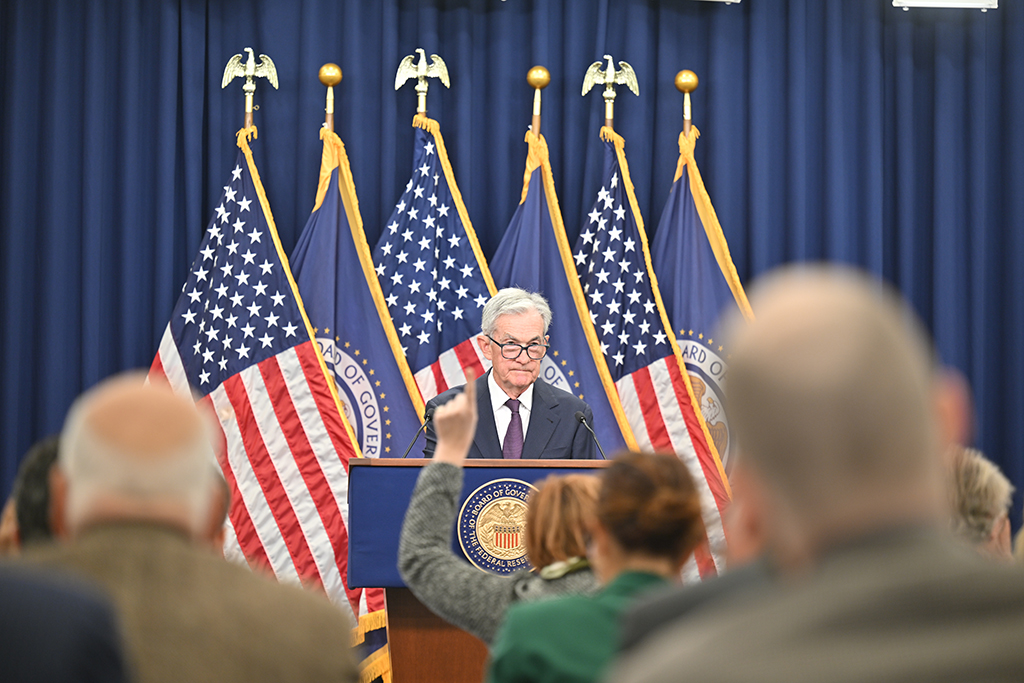
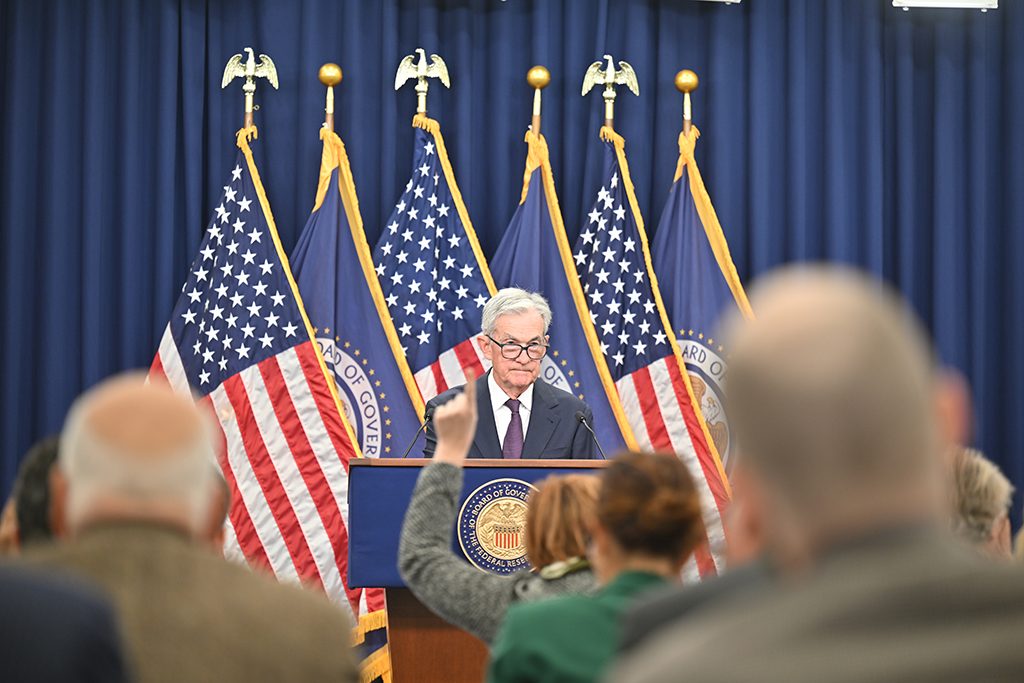

(Singapore, 29.01.2026)U.S. Federal Reserve Chair Jerome Powell on Wednesday declined to address growing speculation about his personal future and a politically charged criminal investigation, but used the spotlight to deliver pointed advice to whoever succeeds him: keep politics at arm’s length and protect the central bank’s independence.
Powell’s remarks came during a press conference following the Federal Reserve’s latest monetary policy meeting, a session that was expected to focus on inflation, interest rates and the economic outlook. Instead, the discussion was repeatedly steered toward questions about whether Powell plans to remain at the Fed after his term as chair ends in May, and about a Department of Justice investigation into cost overruns linked to a renovation of the Fed’s headquarters.
“I really, once again, have nothing for you on that today,” Powell said, repeating the phrase several times as reporters pressed him for clarity. “There’s a time and place for these questions.”
Powell had earlier disclosed the existence of the investigation in an unusual video statement on January 11, saying at the time that he believed it was aimed at pressuring the central bank to cut interest rates in line with the Trump administration’s preferences. On Wednesday, however, he refused to elaborate further, insisting that the press conference should focus on the economy and the policy decisions made at the meeting.
While dodging questions about his own plans, Powell offered unusually direct guidance for the next Fed chair.
“Stay out of elected politics. Don’t get pulled into elected politics. Don’t do it,” he said.
He was careful to distinguish that advice from disengagement with lawmakers. Powell stressed that accountability to Congress is fundamental to the Fed’s role in a democratic system.
“Our window into democratic accountability is Congress,” he said. “It’s not a passive burden for us to go to Congress and talk to people. It’s an affirmative, regular obligation.”
Over his eight years leading the Fed, Powell has prioritized extensive outreach to lawmakers from both parties, arguing that transparency and consistent engagement are essential for maintaining public trust while preserving the institution’s independence.
The issue of independence has taken on added urgency as President Donald Trump weighs his choice for the next Fed chair. Although Trump initially appointed Powell during his first term, he has since become one of the central bank’s fiercest critics, repeatedly accusing it of moving too slowly to cut interest rates.
Trump has openly stated that aggressive rate cuts are a key criterion for his next Fed pick, raising concerns among investors that the central bank could face mounting political pressure in the coming months.
Powell also addressed his recent appearance at Supreme Court arguments related to an effort to remove Fed Governor Lisa Cook, saying it would have been difficult to justify his absence given the stakes.
“I would say that that case is perhaps the most important legal case in the Fed’s 113-year history,” he said. “It might have been hard to explain why I didn’t attend.”
Fed holds rates steady as inflation eases slowly, jobs stabilize
Against this unusual political backdrop, the Federal Reserve’s policy decision itself was largely as expected. The Federal Open Market Committee voted 10–2 to keep the benchmark interest rate unchanged in a range of 3.5% to 3.75%, signaling caution as policymakers assess whether inflation is on a sustained path back to their 2% target.
“The economy has once again surprised us with its strength,” Powell said, describing overall conditions as solid and resilient. He noted that since the Fed’s December meeting—when it delivered a third consecutive rate cut—the risks of both higher inflation and a sharp rise in unemployment have diminished, though they have not disappeared.
“We think our policy is in a good place,” Powell said, adding that the Fed is well positioned to wait for clearer signals before making further adjustments.
The post-meeting statement offered no firm guidance on when the next rate cut might come, saying only that the timing and extent of any additional moves would depend on incoming economic data and the evolving outlook. Two policymakers dissented, favoring an immediate quarter-percentage-point cut, but the majority supported holding steady.
Inflation remains above the Fed’s target, running about one percentage point higher than desired. Powell acknowledged that progress has been slow over the past year, attributing part of the persistence to higher import prices following new tariffs imposed by the Trump administration.
He said he expects the inflationary impact of those tariffs to fade by the middle of the year. If that does not happen, the next Fed chair could face an early and difficult dilemma, balancing stubborn price pressures against political demands for looser monetary policy.
For now, Powell said inflation expectations remain well anchored, giving the Fed room to focus on overall economic stability rather than reacting hastily.
The labor market, meanwhile, appears to be stabilizing. While job gains have slowed, the Fed removed language from its statement suggesting that downside risks to employment had increased. Policymakers now broadly view labor conditions as roughly in balance, with slower hiring matched by slower growth in the labor force.
The unemployment rate fell to 4.4% in December, and officials said tighter immigration policies have contributed to a reduced supply of new workers, helping prevent a sharper rise in joblessness.
Financial markets took the decision in stride. Major U.S. stock indexes closed largely flat, Treasury yields moved only modestly, and interest-rate futures continued to point to June as the most likely timing for the next rate cut.
As attention turns toward a potential leadership transition at the Fed, Powell made clear that his focus remains on the institution rather than his own future. Whether he stays as a governor after his chair term ends remains unanswered.
What he did answer, however, was how he believes the central bank should navigate the turbulent intersection of economics and politics: by engaging openly with Congress, resisting partisan pressure, and preserving the independence that underpins its credibility.