




























(Singapore, 02.12.2025)Samsung Electronics has taken a bold leap in the race to define the future of foldable smartphones, introducing its first trifold model — a device designed as much to showcase engineering ambition as it is to attract early adopters. The new Galaxy Z TriFold, revealed at an event in Seoul, arrives at a time when the foldable category is gaining attention but remains a niche corner of the smartphone market.
The TriFold, priced at 3.59 million won (about S$3,171), will go on sale in South Korea on December 12, with launches in China, Taiwan, Singapore and the UAE planned before year-end. A US release is expected in early 2026.
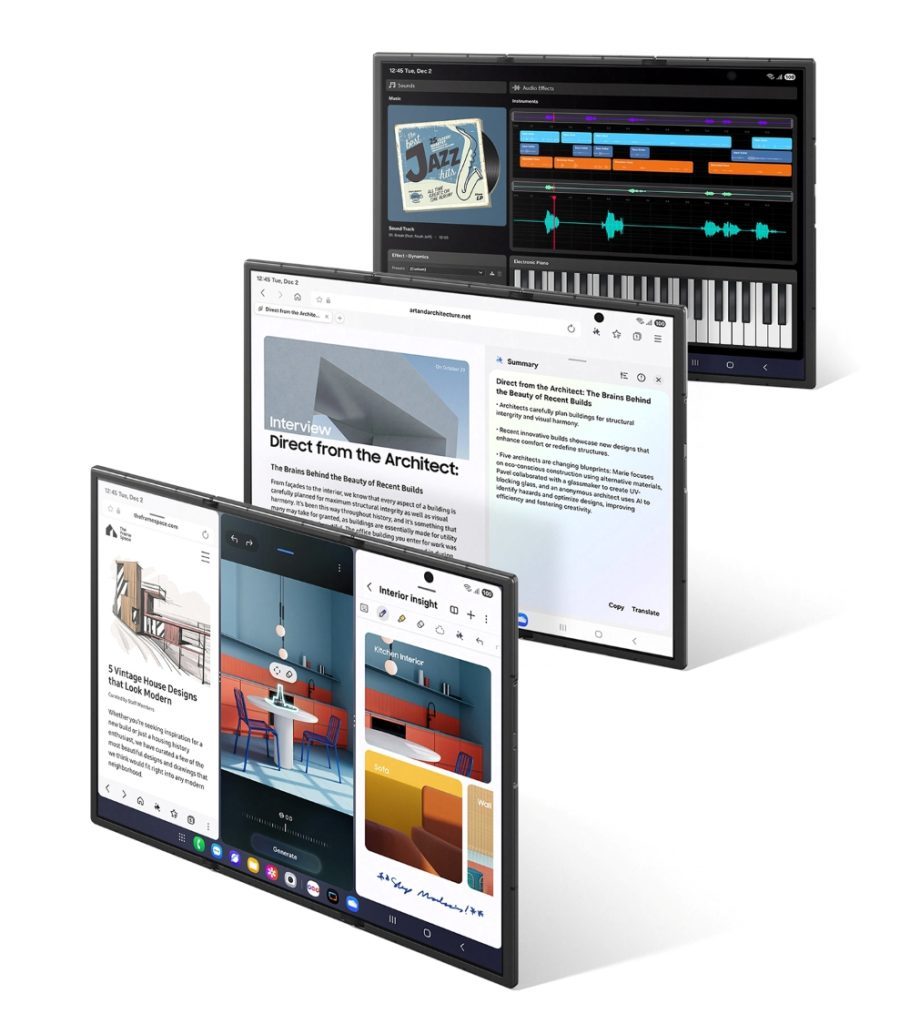
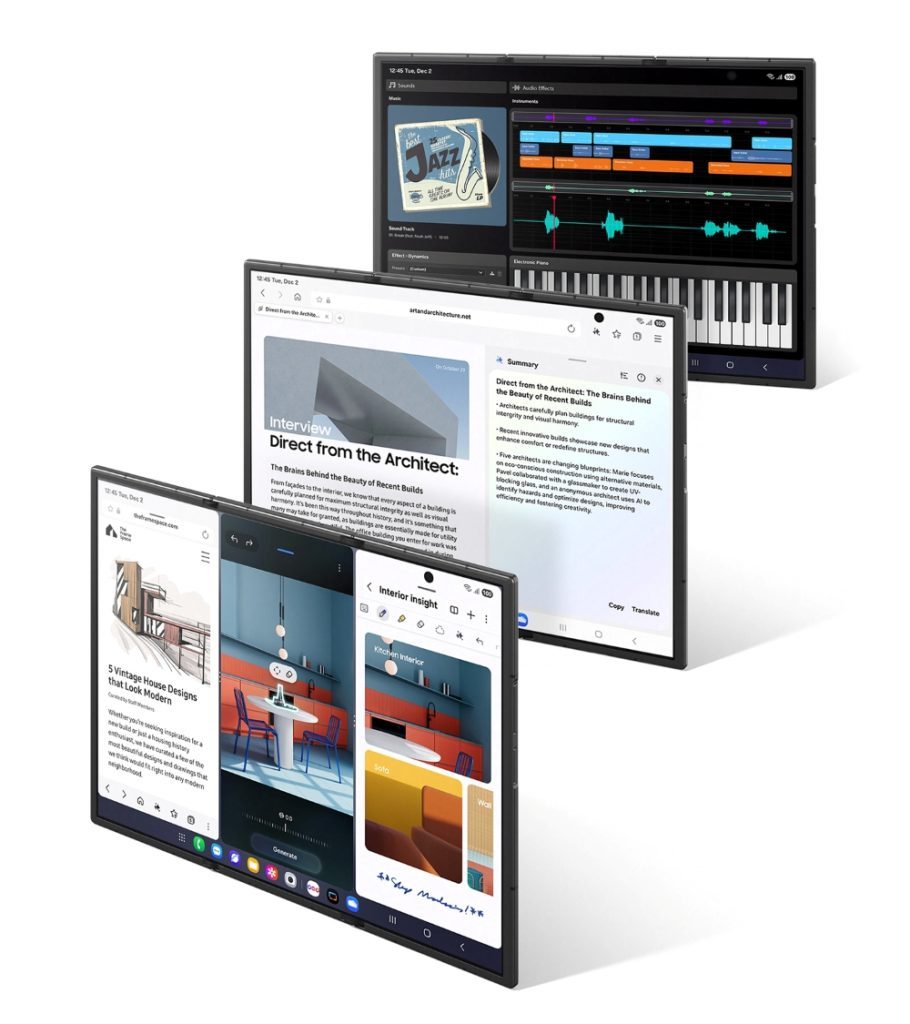
The device features two hinges and three display sections that unfold into a 10-inch screen, significantly larger than the panel on Samsung’s current Galaxy Z Fold 7. When closed, the TriFold resembles an ordinary smartphone, but once opened, it offers a tablet-like workspace that Samsung hopes will appeal to users who want a more versatile and expansive mobile experience.
This launch positions Samsung ahead of Apple, which is expected to introduce its first foldable iPhone next fall. Apple’s debut model will reportedly follow a simpler book-style design, similar to Samsung’s traditional Fold series. For now, Samsung is using the TriFold to emphasize its engineering lead. Analysts say Apple’s eventual entry in 2026 will likely reshape the foldable landscape, but Samsung’s early move helps strengthen its image as the technological pioneer in this category.
Market reaction was immediate. Shares of component suppliers such as LG Innotek and AAC Technologies rose after the announcement, while Samsung’s own stock climbed as much as 2.9%. Although the TriFold is expected to ship in limited quantities, analysts believe the product serves a strategic purpose. According to Counterpoint Research analyst, Samsung is not chasing volume with this model but rather demonstrating innovation at a time when competition is set to intensify.
Foldable phones make up only a small portion of the global market — about 2.5% of shipments in the quarter ending September — yet the segment has reached its highest shipment levels to date. Samsung’s share jumped sharply to 64% after a series of new launches, showing how quickly market dynamics can shift depending on product timing. Even so, the category remains small compared with conventional smartphones, and major price and production hurdles continue to limit mainstream adoption.
Samsung’s new device enters a field where Chinese manufacturers have been advancing rapidly. Huawei, in particular, has already introduced its own trifold design, the Mate XT, in 2024, followed by the updated Mate XTs this year. Huawei’s phones fold into a distinctive “Z” shape and are priced similarly to the TriFold. They are expected to be formidable competitors in China, the world’s largest foldable market, although Huawei’s lack of full Android compatibility poses limitations for some users. Samsung’s approach differs, relying on two inward-folding hinges that lie flat when the device is fully open, creating a seamless large-screen experience.
Samsung has made sure that the TriFold is as functional as it is innovative. The expanded 10-inch display can run multiple apps simultaneously, essentially acting like three separate 6.5-inch smartphones placed side by side. The company has also enhanced its DeX interface so that the TriFold can provide a desktop-style layout directly on its internal screen without the need for an external monitor. In this mode, users can open several workspaces and run numerous apps at once, reflecting Samsung’s attempt to position the device as both a productivity tool and a premium entertainment platform.
Durability — always a concern with foldable phones — is another area Samsung emphasized. The company says it refined the hinges, strengthened the aluminum frame and improved the display structure. The TriFold even alerts users with vibrations and on-screen warnings if they attempt to fold it the wrong way, a simple but useful safeguard for a device with multiple folding points. Buyers will also receive a one-time 50% discount on display repair costs, acknowledging that consumers remain cautious about longevity.
Powering the device is a 5,600mAh battery, the largest Samsung has installed in a foldable model. It supports fast charging that can reach 50% in 30 minutes. Samsung says the battery can deliver up to 17 hours of video playback when the device is fully unfolded, though typical usage estimates were not provided. The TriFold also comes preloaded with several Galaxy AI features, including generative editing tools and writing assistants, along with a six-month trial of Google’s AI Pro subscription service.
Despite its advanced features, the TriFold is unlikely to disrupt the mainstream smartphone market overnight. Analysts expect foldables to remain under 2% of global smartphone shipments this year and to stay below 3% through 2027. Growth, however, is expected to accelerate — potentially reaching annual increases of more than 30% in 2026 and 2027 — especially once Apple joins the segment.
Samsung has seen early improvement in its foldable sales compared with previous generations, but volumes remain small compared to its more affordable and widely adopted Galaxy S lineup. If Samsung maintains its usual schedule, its next flagship series, the Galaxy S26, should debut early next year.
For now, the Galaxy Z TriFold stands as a statement piece rather than a mass-market product. It reflects Samsung’s belief that its future lies in pushing the boundaries of mobile design, even if the wider market takes time to follow. Whether the trifold format becomes the next major evolution in smartphones will depend on how quickly consumers warm to devices that blur the line between phone and tablet — and how effectively Samsung can prove that such innovation is ready for everyday use.