



























(Singapore, 24.03.2026)Oil prices edged higher on Tuesday as traders reassessed supply risks in the Middle East following conflicting signals over possible U.S.–Iran diplomacy. The modest rebound comes after a sharp selloff a day earlier, highlighting how quickly sentiment can shift in a market driven as much by headlines as by physical supply.
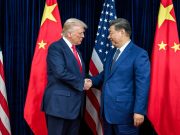
Brent crude climbed back above the $100 per barrel mark, while U.S. West Texas Intermediate (WTI) also gained, recovering part of Monday’s losses. The earlier drop, more than 10% in a single session, was triggered by comments from U.S. President Donald Trump suggesting that negotiations with Iran were progressing and that planned strikes on Iranian energy infrastructure would be delayed.
However, that optimism quickly faded as Iran denied any direct talks had taken place, dismissing the U.S. narrative as an attempt to influence financial markets. At the same time, military actions in the region continued, with fresh strikes targeting U.S. and Israeli assets.
For markets, the mixed messaging underscores a key reality that geopolitical risk remains elevated while the outlook for oil supply stays uncertain.
Analysts say the market is currently pricing in a significant “geopolitical premium”, an added cost reflecting the risk of disruption rather than actual shortages. While the temporary delay in U.S. military action briefly reduced those fears, it did not resolve the underlying threat to global energy flows.
At the center of the concern is the Strait of Hormuz, a critical shipping route that carries roughly one-fifth of the world’s oil and liquefied natural gas. Although a small number of tankers have managed to pass through in recent days, shipments remain heavily constrained.
“The market is trying to find its footing,” one analyst noted, adding that while immediate escalation may be paused, the risks to supply remain firmly in place.
Supply disruptions deepen, keeping upward pressure on prices
Beyond market sentiment, real supply constraints are beginning to tighten global energy balances, particularly in Asia.
Saudi Arabia has cut crude supply to Asian buyers for a second consecutive month, forcing refiners to adapt to reduced availability. To compensate, the kingdom is rerouting more oil through Red Sea export routes, but this workaround is less efficient and cannot fully replace flows through the Persian Gulf.
As a result, refiners in major economies such as China and India may face lower output, potentially pushing up fuel prices across the region. In a sign of tightening supply, traders have even begun offering Iranian crude at premiums to benchmark prices, an unusual shift given that such oil typically trades at a discount.
At the same time, damage to energy infrastructure is compounding the problem. Recent attacks have hit gas facilities, pipelines and other key assets across the region. Industry estimates suggest that dozens of energy sites have been affected, and repairs could take weeks or even months.
This creates a longer-term supply risk that extends beyond the immediate conflict.
From a financial perspective, analysts are increasingly warning that oil prices could remain elevated even if tensions ease slightly. Some forecasts suggest a near term floor around $85 to $90 per barrel, while prolonged disruption, especially if the Strait of Hormuz remains effectively closed, could push prices significantly higher.
Such a scenario would have broader economic implications. Rising oil prices feed into inflation, increasing costs for transportation, manufacturing and daily consumption. This could complicate central bank policy decisions and weigh on growth, particularly in energy-importing economies across Asia.
Governments are already preparing for that possibility. The International Energy Agency is consulting with major economies on potential releases of strategic reserves, while the United States has temporarily eased certain sanctions to allow more oil to reach the market.
These measures may help stabilize prices in the short term, but they do not address the underlying issue of ongoing geopolitical uncertainty.
For now, oil markets remain in a delicate balance. Hopes of diplomacy are preventing prices from surging uncontrollably, but real disruptions and the risk of escalation are keeping a firm floor under the market.
In essence, traders are no longer just reacting to supply and demand, they are navigating uncertainty. Until there is clearer direction on both diplomacy and the flow of oil through the region, volatility is likely to remain the defining feature of the market.