


























(Singapore, 08.12.2025)Tensions along the Thai-Cambodian border surged to their highest level in months on Monday, after Thailand launched airstrikes against Cambodian military sites in response to what it called “repeated and dangerous” attacks from across the frontier. The escalation comes despite a US- and Malaysia-brokered peace deal that both sides had agreed to just weeks earlier.
At dawn, Thai F-16 fighter jets carried out air operations over sections of Cambodia’s Preah Vihear province. Thai officials said the strikes were aimed strictly at military installations after Cambodian forces allegedly opened fire at several Thai positions using small arms, machine guns, mortars and artillery.
But Thai officials also confirmed that one of the targets included a casino complex located near the border. Army spokesperson Winthai Suvaree told reporters the building was functioning as a “command centre for drones”, suggesting it had been repurposed for military use. It is unclear whether anyone was inside the complex at the time, and Cambodian authorities have not commented on that particular strike.
The border region is dotted with large casino developments, many of which have gained notoriety in recent years as hubs for online scam operations that rely on trafficked workers. Thai authorities argue the area has increasingly become a grey zone used by armed groups as well.
The Thai army said one soldier was killed and eight others wounded early Monday during clashes in Ubon Ratchathani province. Cambodia, meanwhile, reported that three civilians on its side had been seriously injured. Each government blamed the other for firing first.
The violence follows a weekend of rising tensions and sporadic gunfire. Fighting intensified around 5am on Monday, prompting Thailand to activate air support for the first time since July’s deadly border confrontation that left nearly four dozen people dead.
Although both sides insist they are acting defensively, neither shows signs of backing down. Cambodia’s defence ministry accused Thailand of “provocative actions,” while influential former premier Hun Sen labelled the Thai military “aggressors” and urged Cambodian troops to show restraint even as he warned that a “red line” had been crossed.
Schools and Hospitals Shut as Evacuations Expand
The escalation has triggered widespread disruption in Thai border communities. Thailand’s Education Ministry announced that all schools in five provinces bordering Cambodia—Surin, Si Sa Ket, Ubon Ratchathani, Buri Ram, and Sa Kaeo—will remain closed until the situation is safe. More than 640 schools in total are affected.
Education Minister Narumon Pinyosinwat said authorities are preparing contingency plans, including shifting some lessons online if the closures need to continue.
Hospitals have also been impacted. In Surin province, two facilities—Phanom Dong Rak Chalerm Phra Kiat 80th Anniversary Hospital and Kap Choeng Hospital—were temporarily shut, with residents urged to use emergency hotlines for urgent care.
Meanwhile, the Thai military said over 385,000 civilians across four districts were being evacuated, with tens of thousands already staying in temporary shelters. In Cambodia’s Oddar Meanchey province, more than 1,100 families have reportedly moved away from the border.
Local residents describe hearing hours of gunfire and explosions. “It startled me,” said one man in Thailand’s Ban Kruat district. “The explosions were very clear—boom, boom!”
The Thai-Cambodian border has been a source of tension for more than a century, dating back to the French colonial administration in Cambodia. A particularly sensitive point is the area surrounding an 11th-century temple that Cambodia attempted to register as a UNESCO World Heritage Site in 2008, sparking fierce objections in Thailand.
Sporadic clashes have erupted at various points along the 800-kilometre border ever since. This year, tensions began rising again in May after a Cambodian soldier was killed in a brief exchange. Diplomatic arguments followed, including import bans and travel restrictions, eventually leading to July’s five-day conflict that displaced over 300,000 people.
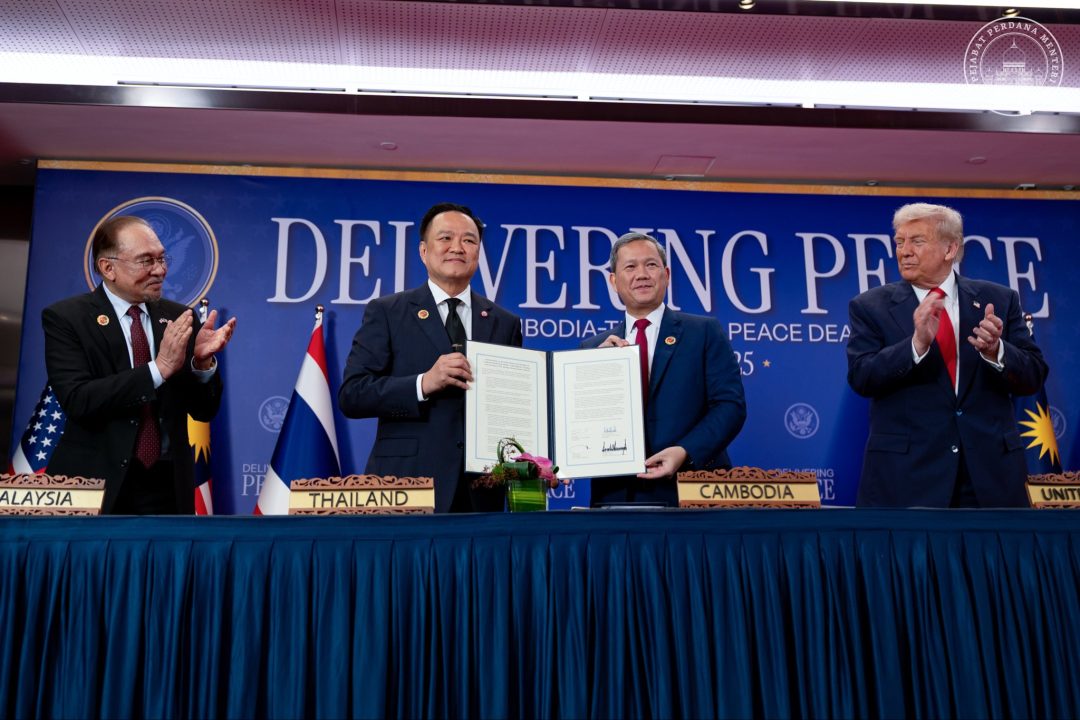
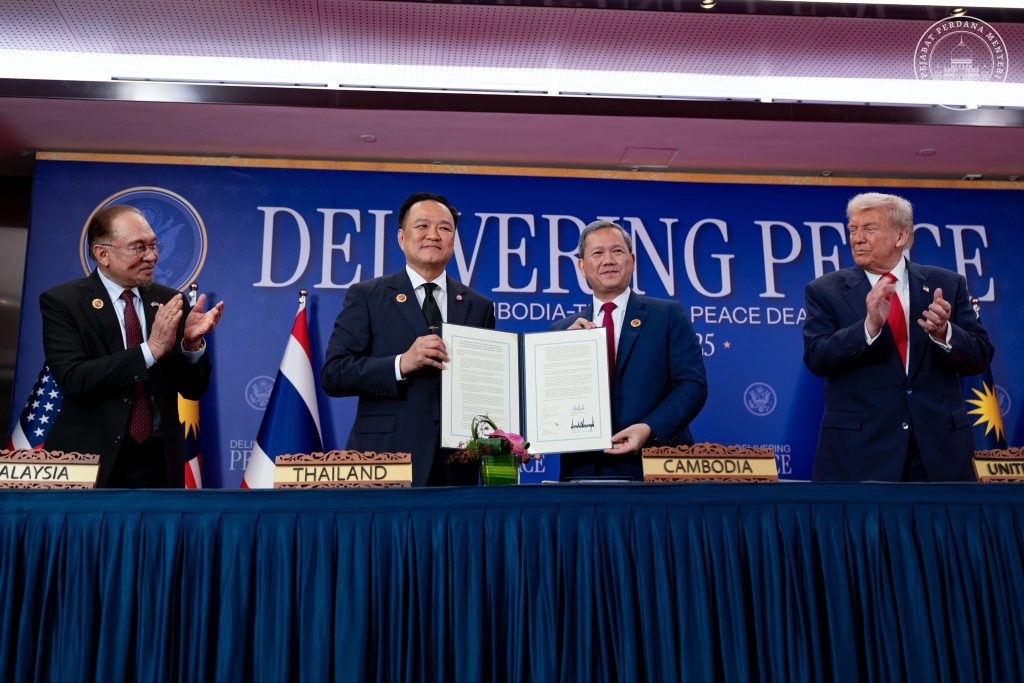
Although the fighting was halted through mediation by Malaysian Prime Minister Anwar Ibrahim and US President Donald Trump, the ceasefire has remained fragile. Thailand suspended parts of the agreement last month after a landmine blast severely injured a Thai soldier. Thailand has repeatedly accused Cambodia of planting new mines—allegations that Phnom Penh denies.
Peace Deal Under Threat
Monday’s airstrikes represent the most serious violation of the peace plan since its signing in October. The agreement had included placing ASEAN observers along the border, but implementation has stalled amid escalating accusations.
Analysts warn the renewed clashes could undermine broader diplomatic and economic issues. Thailand risks jeopardising its ongoing US trade talks, which were partly tied to the peace accord. For Prime Minister Anutin Charnvirakul, who faces upcoming elections, maintaining national security has become a priority. “Thailand will take whatever measures necessary to protect our people,” he said in a televised statement.
Malaysia’s Anwar Ibrahim also voiced concern, saying the renewed fighting “risks unravelling the careful work” that had gone into stabilising relations.
Despite calls for calm, the situation on the ground remains volatile. Heavy gunfire continued into Monday afternoon, and neither side has signaled willingness to return to negotiations immediately.
For residents living along the border—teachers, farmers, business owners and thousands of schoolchildren—the renewed conflict has once again upended daily life. With airstrikes now introduced into the conflict for the first time in months, fears are growing that the standoff could widen if diplomatic efforts fail.