
























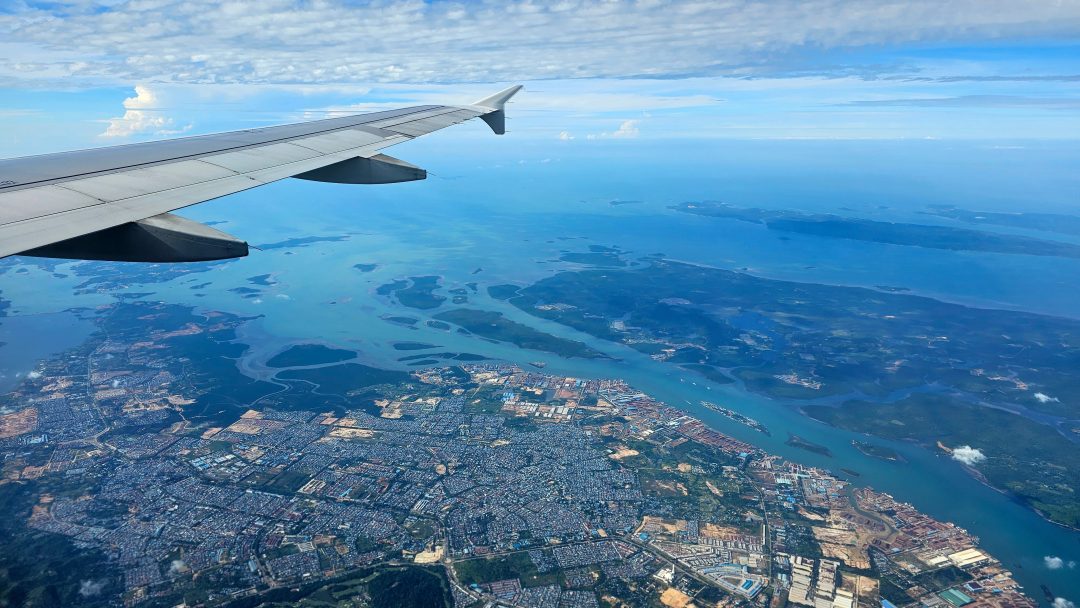
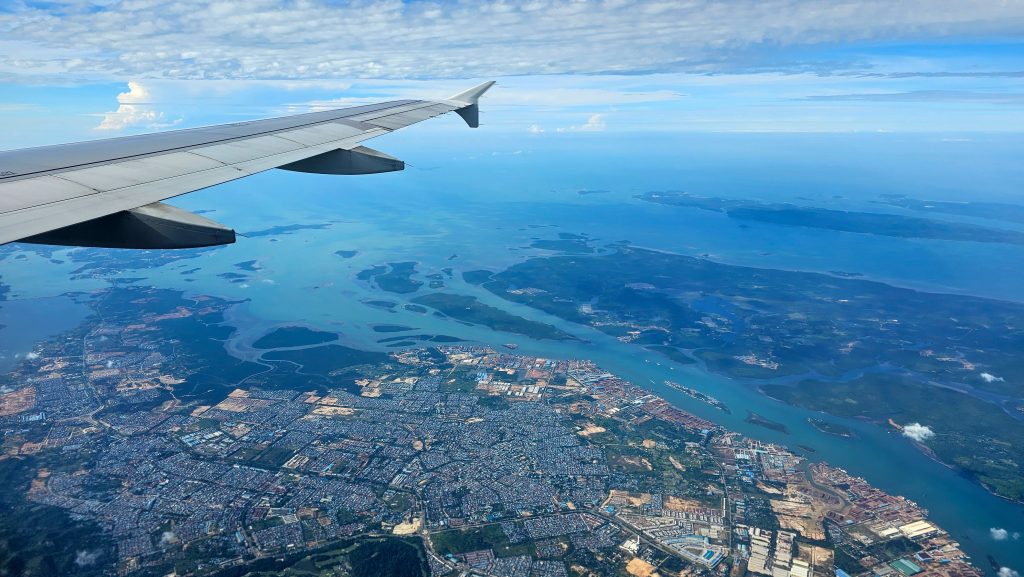
(Singapore, 10.08.2026)Indonesia’s Batam is rapidly moving onto the global manufacturing map as companies look for alternatives to China, drawn by the island’s proximity to Singapore, tax incentives, young workforce and expanding industrial infrastructure.
The shift has accelerated as US-China trade tensions push manufacturers to diversify production across Southeast Asia. One of the latest arrivals is Chinese toy maker Dongguan Welson Plastic Hardware Products, which opened its first factory outside China in Batam in July.
The company supplies products to customers including Walt Disney and Crayola, and its new Indonesian facility will produce more than 30 novelty items for Disney theme park gift shops. Welson plans to start with around 300 workers and increase its workforce to 600 by the end of next year.
“We had no choice but to diversify,” Welson General Manager Andy Yao told Bloomberg, explaining that higher tariffs and rising production costs in China increased pressure on the company to find another manufacturing base.
Batam was not Welson’s first option. The company initially considered Malaysia, Thailand, Cambodia and Vietnam before turning its attention to the Indonesian island. What eventually stood out was Batam’s location, with Singapore only about 40 minutes away by ferry, making it easier to ship goods and allowing customers to travel quickly for factory inspections.
More than half of Batam’s population is under 30, giving manufacturers access to a relatively deep labour pool at a time when some parts of Southeast Asia are struggling with worker shortages.
Batam’s free trade zone status is another major advantage. Companies can import raw materials and machinery without tax, while finished goods can be exported without export duties. Since 2017, Batam’s exports have more than doubled to about US$19.6 billion (S$25.07 billion) in 2025.
Manufacturing, Data Centres and Apple Drive Growth
The island’s economic performance has also outpaced Indonesia’s national growth rate in recent years. Batam’s economy expanded 6.8% in 2025, compared with 5.1% for Indonesia as a whole. In the first quarter of this year, Batam grew 5.8%, slightly faster than the national rate of 5.6%.
Investors are not only interested in manufacturing. Batam is also attracting technology, cloud infrastructure and data centre investments.
Over the past year, Apple has built a large AirTag manufacturing facility on the island that now produces around 70% of global supply, according to Bloomberg. Luxshare Precision Industry, which operates the facility, has hired at least 2,000 local workers and is expected to increase headcount to about 6,000.
Oracle and Hong Kong-based Gaw Capital Advisors have also invested in cloud and data centres, while Australian firm Firmus Technologies plans to develop a 360-megawatt data centre project in partnership with Nvidia.
Batam’s electricity mix is another selling point. More than 80% of the island’s power comes from natural gas, making it less carbon-intensive than many parts of Indonesia that still depend heavily on coal.
The island is also located outside the Pacific Ring of Fire, reducing exposure to earthquakes and volcanic activity compared with much of the Indonesian archipelago.
Indonesia’s government has started paying closer attention to Batam’s potential. The investment ministry opened a permanent office on the island last year to speed up approvals and support companies, while President Prabowo Subianto has called for further development of Batam’s ports to reduce logistics costs and improve export competitiveness.
Mardika Parama, Indonesia director for energy, climate and resources at BowerGroupAsia, said Batam’s strongest promotion may come from companies already operating there.
“If investors genuinely benefit from setting up on the island or sourcing through Batam, they will say so,” he told Bloomberg. “In global investment circles, that kind of word travels fast.”
Singapore Link Gives Batam an Edge
Batam’s connection with Singapore has been central to its development for decades. The island first grew as an oil and shipyard base in the 1970s before expanding into electronics, engineering and tourism.
Today, that relationship is increasingly focused on the digital economy. Nongsa Digital Park, launched in 2018, was designed as a digital bridge between Indonesia and Singapore. The 188-hectare development includes data centre sites that are now fully taken up, with operators including DayOne Data Centers Singapore and BW Digital.
Demand has become so strong that companies are now waiting for space, helped by Batam’s access to 14 subsea cable systems linking the island to regional and international networks.
The area is also home to Infinite Studios, a film and animation complex that has worked on international productions including Westworld and Monkey Man. Its facilities have helped create a small but growing creative technology sector alongside Batam’s traditional manufacturing base.
Local training programmes are expanding as well. Apple and IBM both operate academies that teach digital skills, while Infinite Studios offers free animation training, with top graduates offered jobs.
These developments are beginning to lift local incomes. Batam’s income per capita in 2025 was higher than Jakarta’s, while unemployment fell to 7.6% last year from 11.8% in 2020.
Competition across Southeast Asia, however, is intensifying. Malaysia and Thailand are both pushing to become major data centre hubs, while the Johor-Singapore Special Economic Zone is targeting many of the same manufacturing and digital investors.
Batam is responding by expanding industrial estates and planning more infrastructure. Tunas Prima Industrial Estate, where Apple’s AirTag facility is located, is already around 60% occupied, while two other estates developed by Tunas Group are fully taken up.
Other tenants include Welson and manufacturers producing outdoor furniture for retailers such as Walmart and Costco.
Chrispin Andereas, Head of Business Development at Tunas Group, said the broader shift in global supply chains is likely to continue benefiting Batam and the rest of Southeast Asia.
“I don’t think Trump is aware that he may have boosted Batam’s rise,” he told Bloomberg, adding that supply chain disruption has helped attract more companies to the region and that the trend is likely to stay.