
























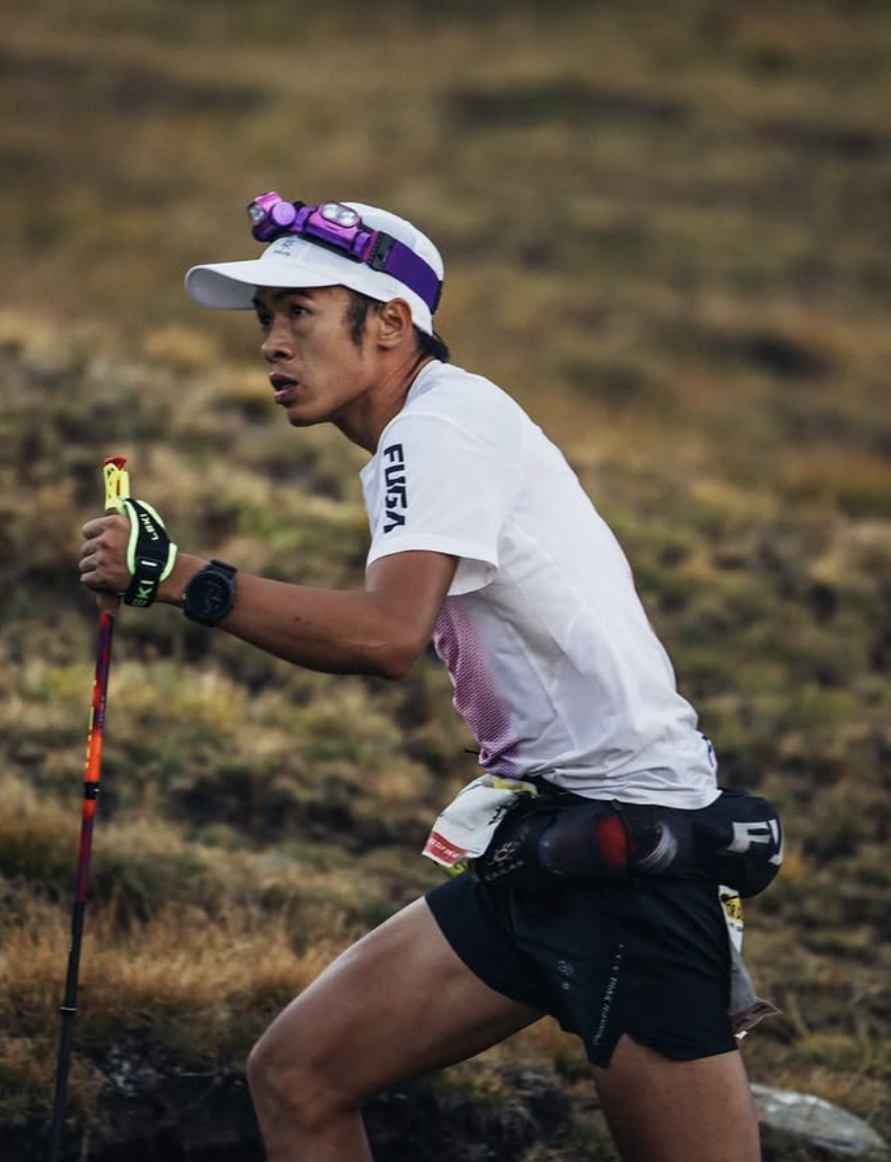
(2026.9.22 Singapore) — By the time Zhao Jiajun (赵家驹)crossed the finish line in Italy, he had been running for almost 66 hours.
He had slept for less than an hour.
His vision had begun to blur. His body was exhausted, his feet were damaged and, during the final stages, he sometimes had to bite his tongue and slap his own face simply to stay awake.
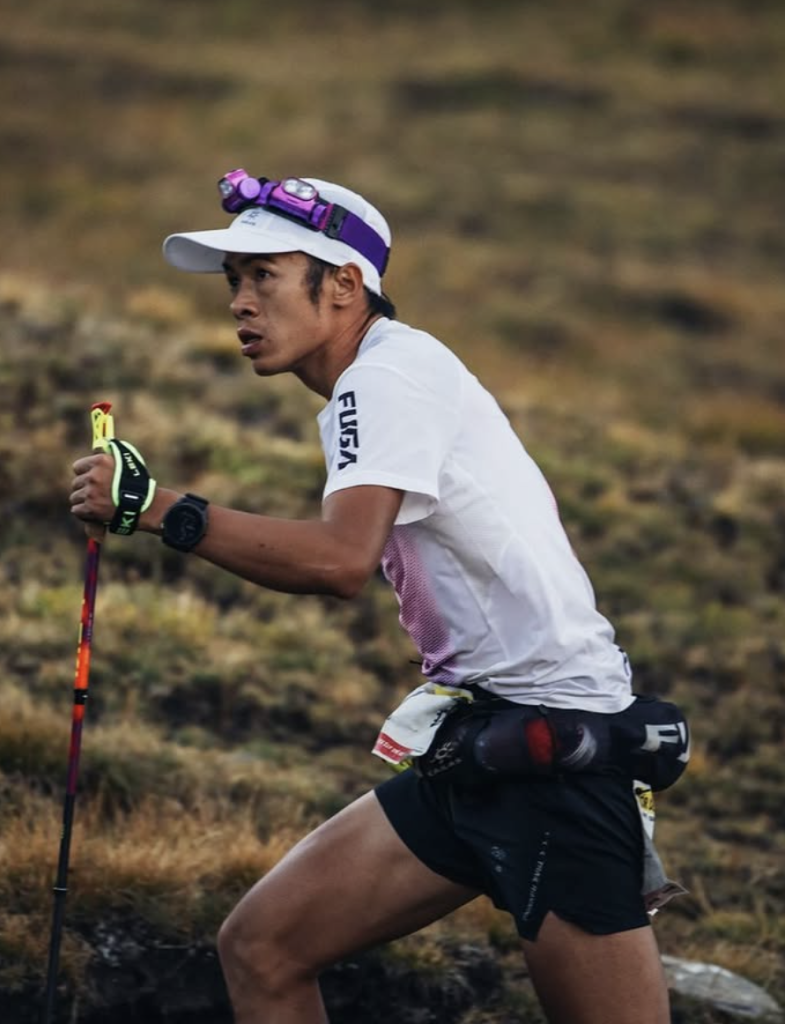
But he kept moving.
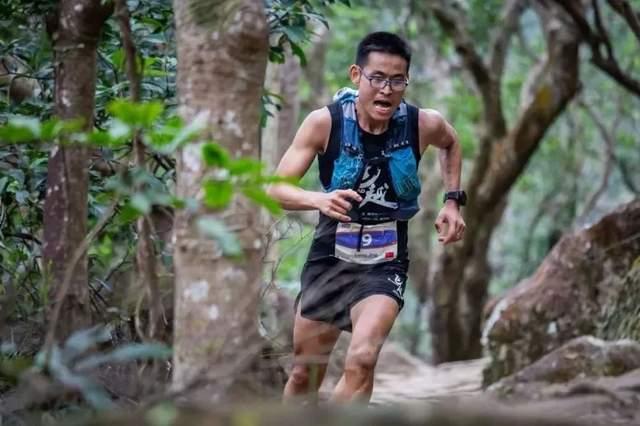
On Sept 16, the 31-year-old Chinese ultramarathon runner from Guizhou, one of China’s less-heralded provinces, completed the 330km Tor des Géants, one of the world’s toughest mountain runs, in 65 hours 55 minutes 22 seconds. He became the first Chinese and first Asian champion in the race’s history, while cutting 13 minutes from the course record.
The numbers are extraordinary. The story behind them is even more so.
Because Zhao was not supposed to become an elite athlete.
He was a factory worker. An odd-job worker. A deliveryman. A florist. A restaurant worker. A hotel receptionist. A security guard. He once spent nights working at KTVs in Chongqing city because the hours left him enough time to train during the day.
At one point in Hangzhou, he delivered food on foot.
Other deliverymen rode electric bicycles. Zhao ran.
He completed about 1,500 deliveries a month, turning the job into what he called a form of “paid long-distance training”. Running was not an expensive hobby for him. It was simply something he could do with the body he had.
His early life was a succession of detours.
He loved martial-arts films and dreamed of becoming a fighter, but training cost money. His father eventually sent him to work in a Zhejiang province hardware factory, where he hammered metal.
Then he found running.
He began entering road races and hiking in the countryside. When he had no money for accommodation, he sometimes built primitive shelters out of branches and plastic bags and slept outdoors.
In 2017, he entered the world of ultramarathons and discovered something important about himself.
He was not necessarily the fastest runner.
But he could endure.
That was when he met Liang Jing (梁晶).
Liang was five years older and already one of China’s best ultramarathon runners. The two men became friends, rivals and eventually something closer to brothers. They trained together, competed against each other and sometimes deliberately divided races between them.
For both, victory meant something different from simply winning.
Liang had more reputation. Zhao was still trying to establish himself. At one race, when they were fighting for the title, Liang slowed near the finish and allowed Zhao to win. At other times, the two would agree beforehand that one would race for the win while the other would compete elsewhere.
They were competitors, but they were also helping each other survive a sport in which survival itself was part of the competition.
In 2018, both entered the 400km “Eight Hundred Flowing Sands” desert ultramarathon, disappearing for days into the vast, desolate Gobi wilderness of northwestern Gansu province. The two ran for almost 30 hours before sleeping for two hours and continuing. By the time they finished, they had spent more than 80 hours on the course and slept only about six hours in total. Zhao later recalled that every muscle in his body hurt.
Then came May 22, 2021.
The race was the Yellow River Stone Forest mountain marathon in Gansu.
Extreme weather struck the course with hail, freezing rain and powerful winds. Twenty-one runners died.
Among them was Liang.
He had been one of China’s most celebrated ultramarathoners and had won the same 100km race three consecutive times.
For Zhao, it was not simply the death of a sporting companion.
It was the loss of the person who had shared the road with him when there was almost nobody else there.
After Liang’s death, Zhao joined others in retracing parts of the course to understand what had happened.
The tragedy also changed him.
The previous Zhao had treated suffering almost as a virtue. If he was cold, he ran. If he was tired, he kept going. If the weather turned bad, stopping felt like failure.
After Liang died, he became more cautious. He paid greater attention to equipment, weather, and pacing.
The lesson was brutally simple: there is a difference between pushing the limits and crossing the line between sport and survival.
And yet Zhao did not stop running.
Instead, Liang became part of the reason he continued.
In 2023, Zhao won the Fuji Mountain Ultra-Trail in Japan. After the race, he said the victory also helped make up for a goal Liang had left unfinished.
There was another unfinished story.
The two men had talked about competing in the Tor des Géants.
In 2025, Zhao finally entered the race.
He did not finish.
After running 203.8km, he was forced to withdraw because his body could no longer continue.
For an athlete whose entire identity had been built around enduring what others could not, the failure was particularly painful.
But he said he would return, despite there being no prize money on offer.
He did.
A year later, Zhao came back to the Alps.
The race was 330km long, with more than 24,000 metres of climbing and 25 mountain passes above 2,000 metres. There were no compulsory rest periods. Runners had to decide for themselves when to eat, sleep and keep moving. Historically, fewer than 60 per cent of participants have finished.
Zhao’s strategy was brutally minimalist.
He ran for 35 hours and 42 minutes before his first substantial stop. He spent about 50 minutes changing clothes, eating and resting, but slept for only about 20 minutes. Later he took naps of about 10 minutes at a time.
Then his body began to rebel.
His vision blurred.
He felt as though he was no longer running normally but simply moving forward.
At moments, the only thing he could clearly see was the small patch of light immediately ahead of his headlamp.
He slapped himself.
He bit his tongue.
He kept going.
His wife Yawei (亚薇)was waiting at the aid stations.
She prepared food for him, helped him change, and massaged his body when he stopped. After the race, Zhao said she had worked incredibly hard and promised to buy her a gift.
It is an easily overlooked detail in a story dominated by numbers: 330km, 24,000m, 66 hours, less than one hour of sleep.
But it may be the most human part.
Because Zhao was not actually running alone.
His wife, a former model, married him long before he had any taste of fame, when he was still weighed down by debt.
His coach Wei Biao (魏彪) was by his side during his darkest moments.
And, somewhere in his mind, there was still Liang.
After the finish, Zhao described the experience as looking back over his entire life. He remembered leaving home more than a decade earlier, his years of odd jobs and the many disappointments that came before running became his profession.
“Life is like a dream,” he said.
He also said he had come to believe that people never really know where their physical and mental limits lie until they reach them.
That message has significance beyond ultramarathon running.
China is entering a complicated period in sport.
The country remains a formidable sporting power. Official data says Chinese athletes won 519 world titles and set 68 world records from 2021 through 2024, while China expanded the number of Olympic disciplines in which it had won gold medals from 21 to 24 at the Paris 2024 Games.
So it would be misleading to describe Chinese sport simply as being in decline.
But there is a growing debate about what comes after the era of medal accumulation: whether China’s sporting success can continue to depend on a concentrated elite system, whether participation and grassroots sports are keeping pace, and whether athletic achievement should be measured only through medals.
Zhao represents almost the opposite model.
He did not emerge from a conventional sporting pipeline.
There was no obvious institutional path from his childhood to the world’s most difficult ultramarathons.
His sporting education came from factory floors, delivery routes, mountain trails and repeated failure.
His training partner died.
He lost races.
He changed jobs.
He failed at the Tor des Géants.
And then he came back.
That makes his victory particularly striking against the backdrop of China’s changing sporting landscape.
The old image of Chinese sporting excellence is often collective: national teams, Olympic villages, coaches, medals, rankings, and podium ceremonies.
Zhao’s achievement is radically individual.
There is no stadium full of spectators in the Alps. There is no packed grandstand chanting his name.
There is mostly darkness.
A headlamp.
A mountain.
A body that wants to stop.
And a runner who keeps moving.
Perhaps that is why the most important number in Zhao’s victory is not 330.
It is 1.
Less than one hour of sleep.
For almost 66 hours, he repeatedly negotiated the narrow territory between exhaustion and collapse.
He survived the race.
But the deeper story is that he has spent much of his life doing exactly that.
Surviving one setback after another.
And now, at the top of a mountain in Italy, he finally had the chance to finish something that had once belonged to two friends.
Liang Jing never made it there.
Zhao did.
And when he crossed the line, he was not simply carrying the flag of China into a foreign sporting arena.
He was carrying the memory of a friend who had once run beside him.
The finish line, in that sense, belonged to both of them.