


























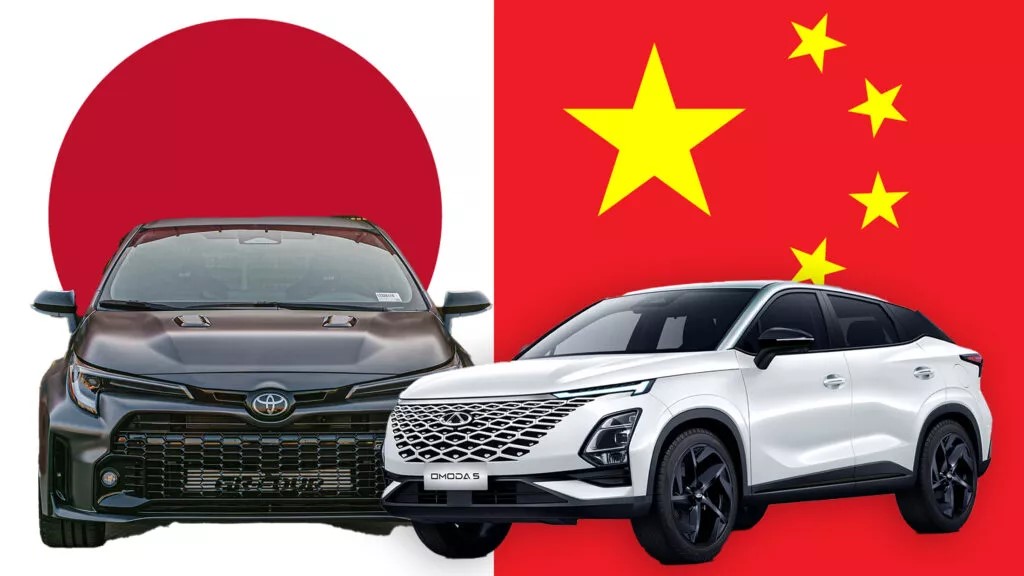
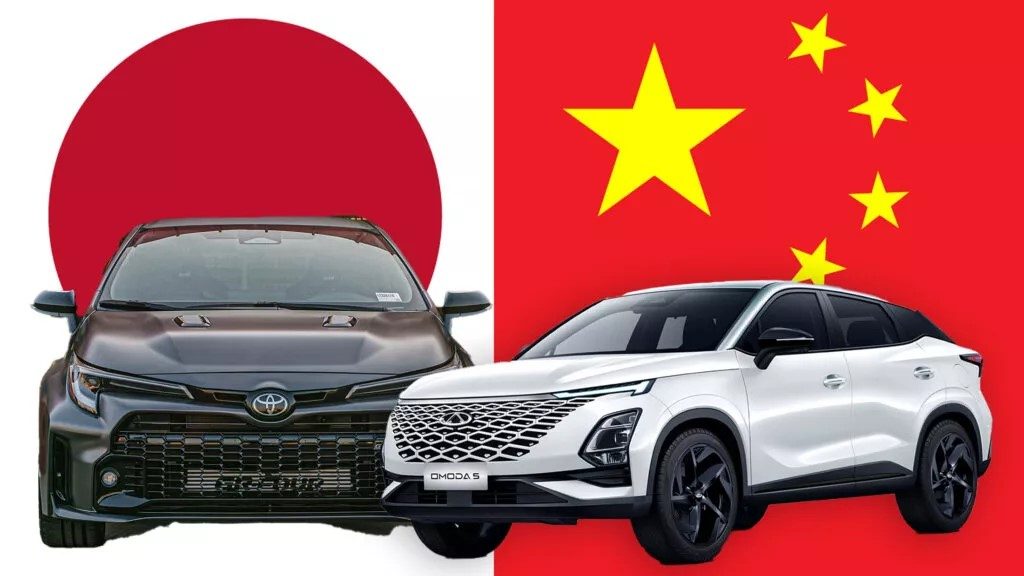
(SINGAPORE, 10.03.2026) — Across Southeast Asia, long dominated by Japanese automakers, a quiet shift is taking place as Chinese carmakers rapidly catch up and may even pull ahead. However, given Japan’s deep entrenchment in the region over the past 60 years, dislodging it may prove difficult—if not futile.
In January 2026, Thailand’s car market reached a turning point. According to the Federation of Thai Industries, Chinese brands dominated the country’s pure electric vehicle (EV) segment that month. EV sales reached 31,860 units—up 354% year-on-year—and Chinese brands accounted for more than 75% of the segment.
The brand rankings highlighted the shift: Toyota still led in overall sales—counting both non-EVs and EVs combined—with 19,113 units, but Chinese automakers were suddenly everywhere: BYD ranked second with 12,812 units, Chery entered the top three with 9,714 units, and six Chinese brands appeared in the top ten.
Altogether, Chinese automakers captured 47.34% of Thailand’s car market, narrowly surpassing Japanese brands’ 47.338%. It was the first time Chinese brands had collectively outsold their Japanese rivals in the country.
Thailand is not an isolated case. Across six major Southeast Asian markets—including Indonesia, Thailand and Vietnam—sales of Japanese cars have fallen 22% since 2019, according to Nikkei Asia. In Indonesia, Chinese brands’ market share rose to 14%, and BYD climbed to third place in October 2025.
For decades, a common joke in the region was that Southeast Asian roads had only two kinds of cars: Japanese and “every other nation.” That may no longer be true.
Japanese automakers built their dominance over more than six decades. Toyota opened a Bangkok office in 1957 and established Toyota Motor Thailand in 1962 to begin local assembly, recounted the Chinese technology online media 36Kr’s column Cool Play Lab. Early entry, products suited to local needs, and deep localization created a formidable competitive moat for Toyota.
Chinese automakers, by contrast, are challenging that dominance now through EVs rather than traditional gasoline cars. Their rise has been driven by lower prices, advanced technology features and cheaper usage costs compared with gasoline vehicles, the column remarked.
Yet the speed of the Chinese expansion raises questions about whether rapid growth can substitute for deep local roots—particularly in areas such as transferred manufacturing, service networks and supply chains.
For many Southeast Asian drivers, reliability still matters most. Imelda, an Indonesian driver quoted by Cool Play Lab, bought a Toyota Terios in 2011 and still uses it today. “The Terios is sturdy and reliable. It works perfectly for both daily commuting and long trips across provinces,” she said.
Such attitudes remain widespread. A survey by the London-based global market research company YouGov found Japanese brands still dominate Indonesian consumers’ perceptions of quality and value: 90% say Japanese cars have high quality, and 83% consider them good value for money.
Another factor is after-sales service. A Thai driver who has used Japanese cars for more than a decade said he hesitates to switch to Chinese EVs partly because of inadequate repair networks. Japanese brands have service centers across the country, allowing repairs to be done relatively quickly, while some EV repairs still require parts to be shipped from China.
Japanese automakers also spent decades embedding themselves in local economies. In the 1960s, they built factories, trained workers and established supply chains at a time when Southeast Asia had almost no automotive industry.
Over time they also cultivated goodwill through community programmes. In Vietnam, Toyota launched a programme turning used tires into playground equipment for schools. In Cambodia, the company partnered with the government to train mechanics. Such initiatives reinforced the perception that Japanese automakers are long-term partners in the region.
Chinese carmakers are approaching the market differently, the Cool Play Lab pointed out.
In Indonesia, one driver said government EV subsidies prompted him to buy a Wuling Air EV in 2024. The compact car suits Jakarta’s narrow streets and travels about 400 km per charge. But the biggest difference is cost: electricity is about one-tenth the monthly expense of gasoline.
Aggressive pricing has also helped Chinese brands gain traction. In Singapore, some buyers say BYD models cost significantly less than comparable EVs from Tesla or European brands while offering features such as 360-degree cameras and driver-assistance systems as standard.
Price cuts have further accelerated adoption. In Thailand, BYD reduced the price of its Seal model by 38% in October 2025, while MG Motor, part of China’ SAIC Motor group,cut the price of its MG4 by 27%. Promotions pushed EV sales up more than 20%, drawing younger first-time buyers.
Chic technology is another selling point. Chinese EVs often offer large infotainment screens, app connectivity, remote air-conditioning and automated parking systems—features that appeal to younger consumers. A survey by the New York-based data-collecting group Deloitte found that 75% of Thai consumers believe artificial intelligence in vehicles as something that adds value or safety.
Despite these gains, Chinese automakers still face structural challenges.
Localization remains limited. In Malaysia, 21 Chinese automakers had entered the market by the end of 2025 with 58 models, but only five were assembled locally. Most are still imported or semi-assembled.
Governments are also tightening requirements. Thailand’s EV subsidy programme requires manufacturers to produce vehicles locally to qualify. Indonesia has ended EV import tax exemptions and now requires companies to increase local production and raise the share of locally sourced parts.
These policies highlight a key gap. Japanese automakers spent decades building factories, supplier networks and service centres across Southeast Asia. Chinese brands are only beginning to establish similar infrastructure.
Surpassing Japanese brands in sales may be the first milestone. Building the same depth of local presence, however, could take far longer, the column lamented.
The race for Southeast Asia’s car market, after sixty years of Japanese dominance, has entered a new phase—but its outcome is far from decided, it concluded.