




























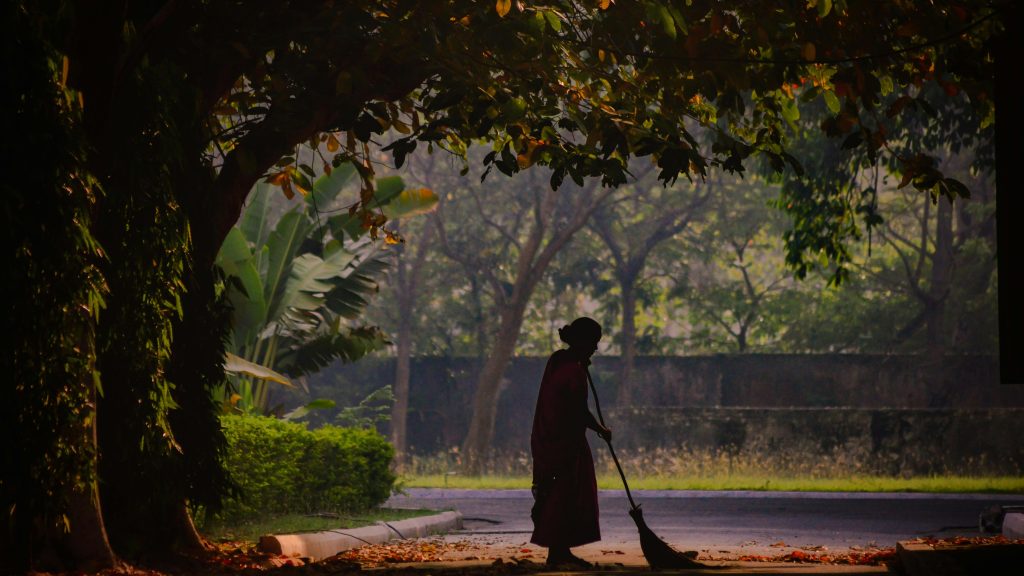
(Singapore, 14.04.2026)A new wave of ultra-cheap, app-based housekeeping services is sweeping across India’s major cities, offering home cleaning help for as little as $1 (S$1.27) an hour. The trend is rapidly gaining popularity among both urban consumers and low-income workers, but it also raises serious questions about safety, sustainability, and the true cost of convenience.
At a training center run by startup Pronto in Mumbai, women are trained in everyday household tasks such as mopping floors and chopping vegetables. Alongside these skills, they are also taught how to trigger an emergency SOS alert if they feel unsafe while working inside a customer’s home, according to a report by Reuters.
For many, the opportunity is life-changing.
Indu Jaiswar, a 35-year-old mother of two, recently joined the program in hopes of earning enough to support her son’s dream of becoming a doctor. Like millions of women across India, she has spent years doing unpaid domestic work in her own home.
“This is what we’ve always done,” she said. “Now at least we can earn from it.”
A Fast-Growing Market Driven by Cheap Convenience
India already has a deeply rooted culture of hiring domestic help, and startups are now digitizing and scaling that system. Companies like Snabbit and publicly listed Urban Company are training thousands of workers and connecting them with customers through mobile apps.
The potential market is vast. Urban Company estimates that India’s cleaning services sector is worth about $9 billion (S$11.44 billion) and spans over 53 million households.
The model is straightforward, with workers receiving job requests through an app, travelling to nearby homes, and beginning tasks using a timer that tracks their working hours. For customers, the appeal is clear, offering quick and reliable service at extremely low prices.
For workers, the earnings can also be attractive. Those working full-time may earn up to $5,000 (S$6,357) annually, significantly higher than India’s per capita income of around $3,000 (S$3,814).
Several factors are driving this boom. India has long lacked a strong do-it-yourself culture, particularly among urban middle-class households, where many prefer to outsource chores rather than spend time on them. The rise of dual-income families and increasingly busy lifestyles has further fueled demand for flexible, on-demand help.
Low prices are another key factor. While similar services can cost about $30 (S$38.13) per hour in the United States and around $7 (S$8.89) in China, Indian startups are offering rates below $1, sometimes even lower through promotions.
In Bengaluru, a 30-year-old customer named Dhruv said he paid just 100 rupees (about S$1.27) per hour to get help unpacking after moving homes.
“It saved me a lot of time and effort,” he said, adding that he would not be willing to pay four or five times that amount.
Startups are also targeting younger users, with demand especially strong among singles and young couples who prefer scheduled services instead of hiring full-time domestic workers, who may be less predictable. Some marketing campaigns highlight how convenient and even quirky these services can be, with customers hiring helpers for tasks as small as peeling potatoes or sorting LEGO blocks.
Safety Concerns Loom Over Rapid Growth
Despite the excitement, the model comes with serious risks, particularly for women, who make up most of the workforce.
Unlike delivery workers who spend only a few moments at a customer’s doorstep, housekeepers may spend hours inside private homes, often alone. In a country where cases of harassment are widely reported, this creates a significant safety challenge.
Companies say they are aware of the issue and are taking steps to address it. Features such as in-app SOS buttons, emergency helplines, and even self-defense training are becoming standard. Pronto’s CEO, Anjali Sardana, says the company also provides legal and medical support if workers face problems.
However, critics argue that these measures may not be enough. Women’s rights activist Shabnam Hashmi points out that while companies carefully verify workers before hiring them, customers face far fewer checks.
“How can these jobs truly be safe?” she asked. “What happens behind closed doors is impossible to monitor.”
Some workers are finding their own ways to reduce risk. Jaiswar, for example, calls customers in advance and only accepts jobs if a woman is present in the home.
Rapid Expansion Raises Questions About Sustainability
Even as safety concerns persist, demand continues to surge.
Urban Company reported a record 50,000 daily bookings in February, while Snabbit handles around 35,000 orders each day. Pronto has seen especially rapid growth, jumping from 2,500 daily bookings in October to 22,000 in March. The company recently raised $25 million (S$31.8 million) in fresh funding.
But behind the growth lies a costly business model. To attract both customers and workers, companies are offering deep discounts and paying workers more than what customers are charged. This means many services are currently operating at a loss.
Urban Company, for example, disclosed that it lost about 381 rupees (roughly S$5.08) per order in late 2025.
Industry investors believe this will change over time. As the market matures, prices are expected to rise toward a more sustainable “earn-as-you-go” model.
For workers like 22-year-old Nisha Chandaliya, the opportunity still outweighs the risks. After leaving a call centre job that paid just $180 (S$228.78) a month, she now earns more than $500 (S$635.50) monthly through housekeeping gigs. The work is physically demanding, requiring her to clean multiple homes each day, but it offers something she values more, stability.
“I can’t afford to go back,” she said.
India’s $1 housekeeping boom reflects both innovation and inequality, a tech-driven solution built on a vast pool of low-cost labor. If companies can strengthen safety standards while moving toward profitability, the model could reshape how domestic work is delivered and valued.
For now, its rapid rise continues to create both opportunity and debate, raising a fundamental question of how much convenience should truly cost.