























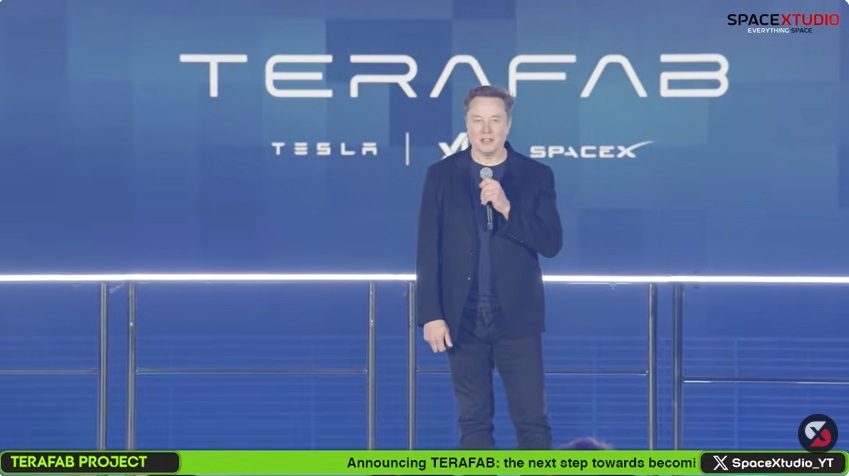
(Singapore, 23.03.2026)Elon Musk has laid out an ambitious new plan to build advanced semiconductor factories in Austin, Texas, bringing together Tesla and SpaceX in a bold push to secure the computing power needed for artificial intelligence, robotics and even space-based data centers.
The project, known as “Terafab”, will form a sprawling chip manufacturing complex designed to produce next-generation semiconductors at a scale rarely seen in the industry.
Speaking during a presentation over the weekend, Musk said the facility will effectively consist of two specialized factories, each dedicated to producing a single type of chip.
One will focus on chips for use on Earth, powering Tesla’s electric vehicles, autonomous driving systems and its Optimus humanoid robots. The other will be designed specifically for space, producing high-performance chips capable of operating in harsher environments and supporting a new generation of orbital AI systems.
The announcement marks a significant expansion of Musk’s involvement in semiconductor manufacturing, an area he has increasingly identified as a bottleneck for future growth.
While Tesla and SpaceX currently rely on suppliers such as Samsung, Taiwan Semiconductor Manufacturing Company (TSMC) and Micron, Musk believes global chip production will not be able to keep pace with the demands of his companies.
“We either build the Terafab or we don’t have the chips,” he said. “And we need the chips.”
Musk has long argued that the rapid growth of artificial intelligence and robotics will require far more computing power than is currently available. The Terafab project is intended to address that gap directly by giving his companies greater control over chip design, production and scaling.
At full capacity, Musk said the facility could eventually produce up to one terawatt of computing power per year. That figure underscores the scale of the project. It is roughly double the total computing capacity currently generated across the United States.
The Austin site will also begin with a smaller “advanced technology fab”, which Musk said will be capable of designing, manufacturing and testing chips before scaling up to larger production levels.
Although he did not provide a timeline for the project, the long-term goal is to support between 100 and 200 gigawatts of computing power on Earth, while building toward much larger capacity in space.
A key element of Musk’s strategy is his belief that space could soon become the most efficient environment for running artificial intelligence systems. He suggested that within two to three years, deploying AI chips in orbit could be cheaper than operating them on Earth.
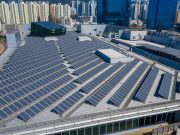
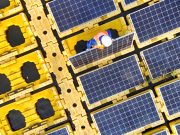
The reasoning lies largely in energy efficiency. In space, solar panels can generate continuous power without limitations of atmospheric interference, weather, or day-night cycles.
Musk noted that solar energy in orbit could be at least five times more effective than on Earth, eliminating the need for large battery systems that are currently essential for data centers.
This vision ties closely to SpaceX’s longer-term plans to build a network of AI-powered satellites.
During the presentation, Musk also revealed a concept for a “mini” data center satellite capable of delivering around 100 kilowatts of computing power, with future versions expected to scale to megawatt levels. Such satellites could eventually form a vast, distributed computing network in orbit, supporting advanced AI workloads beyond the constraints of Earth-based infrastructure.
The push into semiconductor manufacturing also reflects broader concerns within the technology industry about chip shortages. As companies race to build AI systems, demand for advanced semiconductors, particularly memory and high-performance processors, has surged sharply.
While existing chipmakers are expanding capacity, Musk argued that their pace of growth is still insufficient. “There’s a maximum rate at which they’re comfortable expanding”, he said, adding that this rate falls short of what Tesla, SpaceX and his artificial intelligence company xAI will require in the coming years.
Building new semiconductor facilities, however, is both complex and costly. Industry estimates suggest projects like Terafab could require investments of between US$20 billion and US$25 billion, with years needed before full production is achieved. Musk has not disclosed the exact cost or funding structure for the project.
The initiative will be a joint effort between Tesla and SpaceX, and comes as Musk continues to integrate his companies more closely around artificial intelligence. SpaceX recently combined with xAI, while Tesla has been incorporating AI technologies, including xAI’s chatbot Grok, into its vehicles and broader ecosystem.
Despite the excitement surrounding the announcement, Musk’s track record of setting aggressive timelines has led some observers to approach the project with caution. Several of his past initiatives have taken longer than expected to materialize, and Terafab’s lack of a clear timeline raises similar questions.
Even so, the potential impact of the project is significant. If successful, it could not only help alleviate chip supply constraints but also position Texas as a major hub for advanced semiconductor manufacturing.
Beyond its commercial implications, Musk framed Terafab as part of a much larger vision for the future. He described the project as a step toward enabling humanity to expand beyond Earth, supported by powerful computing infrastructure both on the ground and in orbit.
From AI-driven robots to space-based data centers, the Terafab initiative reflects Musk’s belief that the next phase of technological progress will require unprecedented levels of computing power and that building it may demand looking beyond the planet itself.