























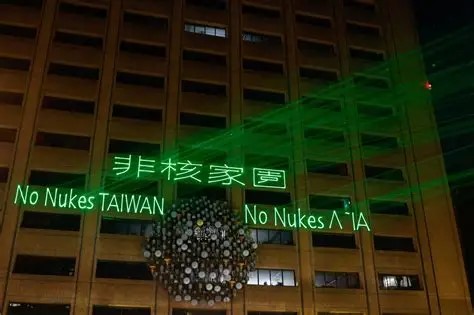
(SINGAPORE, 2 April 2026) Taiwan’s government has recently indicated it may reverse its long-standing “Nuclear-Free Homeland” (非核家园) policy although the island had just shut down its last operating reactor in May 2025. State-owned Taiwan Power Company has submitted plans to the Nuclear Safety Commission to restart two nuclear plants. According to the latest poll, 63.2% of the public believe the benefits of nuclear energy outweigh the risks.
Taiwan imports over 97% of its energy, leaving it highly exposed to global supply disruptions. Concerns over blackouts and power shortages—particularly if semiconductor production is affected—are prompting policymakers to reconsider nuclear.
Singapore is also actively exploring nuclear energy, especially advanced, smaller reactor technologies, though it has yet to commit to going nuclear, according to the Straits Times.
Last month, Singapore’s Energy Market Authority (EMA) and Korea Hydro & Nuclear Power signed a Memorandum of Understanding on civil nuclear cooperation. The agreement spans multiple areas of collaboration, with a strong focus on joint studies of small modular reactors (SMRs), representing Singapore’s latest move in advancing its nuclear energy preparations. EMA is Singapore’s regulator and developer of its electricity and gas sectors.
Globally, nuclear power is experiencing a revival, driven by climate change, energy security, and rising electricity demand from AI workloads, despite ongoing safety, cost, and geopolitical challenges. China is rapidly expanding its nuclear fleet, while the US is restarting retired plants and investing in SMRs.
Not long ago, nuclear energy was widely unpopular. After the Fukushima disaster, Japan’s nuclear share fell from around 30% to single digits within a year. Germany announced a high-profile phaseout in 2022, and several other countries followed suit.
Today, the narrative has reversed. At the COP28 climate summit in 2023, 22 countries, including the US and France, launched the “Tripling Nuclear Energy” declaration, pledging to triple global nuclear capacity by 2050 compared with 2020 levels. By COP29 and COP30, more than 30 countries had signed on, the Chinese tech platform 36 Kr recounted.
Meanwhile, China is advancing construction on 31 reactors; several European countries are restarting previously closed plants; Japan is gradually overcoming its Fukushima baggage; and emerging players such as India and the United Arab Emirates are accelerating nuclear projects, noted the 36 Kr column Jinduan (锦缎).
Safety remains the biggest barrier. Three major disasters —Three Mile Island, Chernobyl, and Fukushima—have left lasting global fear. Costs are another concern. In China, nuclear is only slightly more expensive than hydropower, but in most countries, it is costlier than solar, wind, or even gas. Global financial advisory agency Lazard estimates the cost of electricity consumption by a new US nuclear plant at around US$71 (S$95.9) per MWh—enough to power 30–40 households for one hour.
Years of phaseouts have also weakened supply. Re-building a conventional large reactor can take nearly a decade, far longer than coal (5 years), gas (2 years), solar (months), or wind (1.5 years). Scaling up nuclear power in the US would require hundreds of thousands of skilled workers, and many of the needed skills have to be re-taught.
Yet, the rise of renewables has made nuclear more essential. Nuclear provides continuous, stable electricity, complementing intermittent sources like solar and wind. Nuclear plants can operate at up to 93% capacity nearly year-round, far higher than any other source.
Environmentally, nuclear produces almost no greenhouse gases and is extremely energy-dense: a 1 GW nuclear plant uses about 30 tons of enriched fuel annually—transportable by a single truck—whereas a coal plant of the same size requires daily trainloads. One GW could meet 15–18% of Singapore’s yearly electricity needs.
By the end of 2023, global nuclear capacity reached about 393 GW, supplying about 10% of electricity worldwide. The International Atomic Energy Agency projects global capacity could exceed 1,400 GW by 2050, driven by ongoing construction, planned projects, and national targets.
The US aims to reclaim nuclear leadership through expansion plans, regulatory streamlining, reactor restarts, and strong SMR investment. China, already the global leader in reactors under construction, is expanding rapidly with indigenous designs like the “Hualong One” (华龙一号) — a third-generation reactor — targeting the top spot in nuclear production.
AI-driven electricity demand is boosting interest in nuclear. Data centers need ultra-reliable, stable, and low-carbon power. SMRs are particularly promising: smaller, faster to build (3–5 years), and deployable near industrial zones or data centers. Tech giants are entering the field too —Amazon investing in SMRs, Microsoft exploring nuclear-powered data centers, Google funding advanced reactors, and Meta securing nuclear supply for AI workloads.
Uranium demand is set to surge, Jinduan predicted. The World Nuclear Association projects sharp growth by 2035 and beyond, while supply remains constrained, concentrated in Australia, Kazakhstan, Canada, and Russia. Major consumers like China and the US rely heavily on imports, making uranium a geopolitical focal point akin to oil and gas.
Next-generation nuclear technologies will define the future. Fourth-generation fission reactors aim to be safer, more efficient, and produce less waste, with heavy investment from the US, China, France, and Japan. On the other hand, nuclear fusion could provide virtually limitless, clean energy if commercialized. The ITER (International Thermonuclear Experimental Reactor), backed by global powers, aims to demonstrate fusion’s feasibility and achieve commercialization around mid-century.
Jinduan noted that the move from nuclear phaseout to revival is driven by three factors: energy security, decarbonization, and surging electricity demand fueled by AI. Over the next 20 years, nuclear power is set to expand dramatically, transforming the global energy landscape and carrying substantial geopolitical and economic implications.