








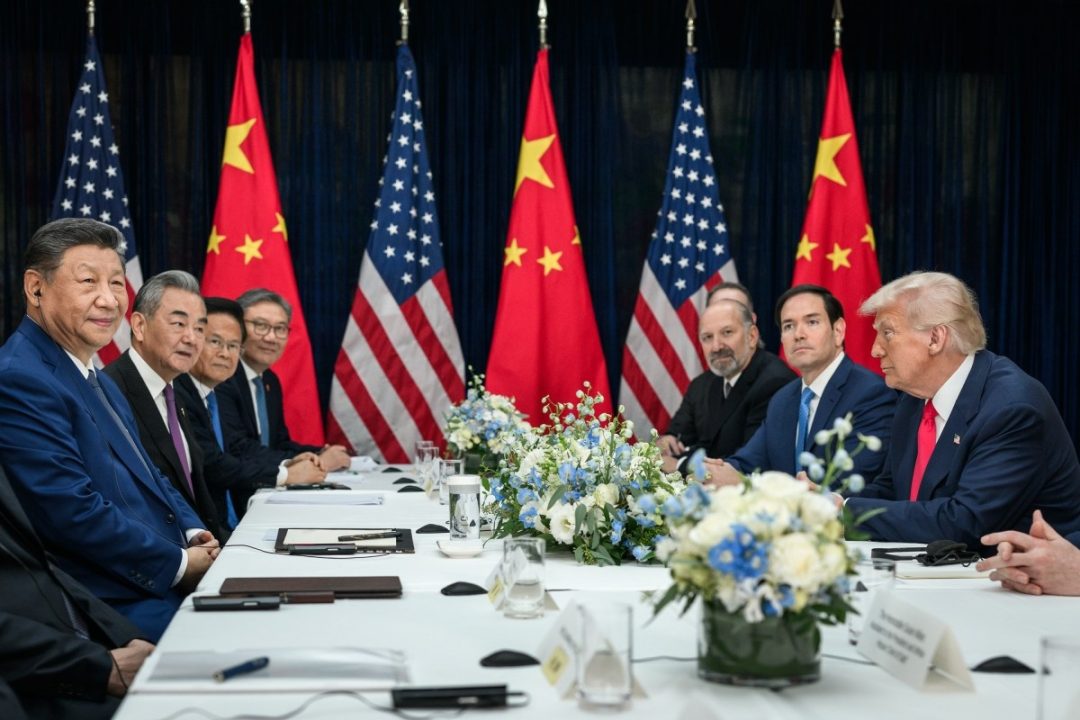
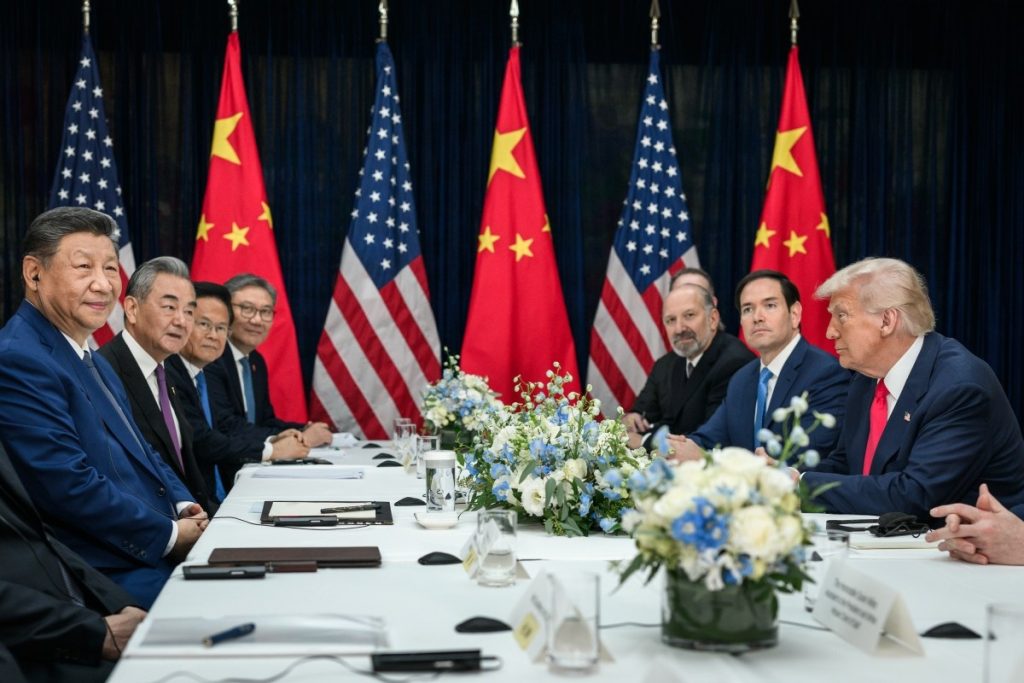
(Singapore, 07.05.2026)Preparations for the upcoming summit between United States President Donald Trump and Chinese President Xi Jinping are already visible across Beijing, days before the two leaders are scheduled to meet on May 14.
Images circulating on Chinese social media this week showed heavily armoured American security vehicles travelling along highways in the Chinese capital, sparking public curiosity and renewed attention on what is expected to be one of the most important diplomatic meetings of the year.
Among the vehicles spotted were black SUVs with tinted windows and US government plates, believed to be part of the US Secret Service motorcade used to protect the American president during overseas visits. Reports said the vehicles were flown into Beijing aboard US Air Force C-17 transport aircraft over the past several days.
The arrival of the convoy highlights the extraordinary level of security surrounding the summit, which comes at a time when relations between the world’s two largest economies remain fragile despite recent efforts to stabilize ties.
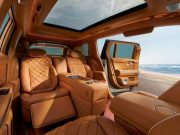
At the centre of the presidential convoy is the famous limousine known as “The Beast”, a custom-built Cadillac widely regarded as one of the most secure vehicles in the world. The limousine functions not only as transportation for the US president, but also as a mobile command centre equipped with advanced communication and defence systems.
According to reports by the South China Morning Post, the vehicle weighs between 6,800kg and 9,100kg and is protected by thick layers of steel, aluminium, titanium and bulletproof glass. It is designed to withstand gunfire, explosions and chemical attacks. The limousine is also said to include secure communications systems, emergency medical equipment and independent oxygen supplies.
The presidential convoy itself is often described as a “White House on wheels”. In addition to “The Beast”, the motorcade typically includes dozens of support vehicles such as decoy limousines, counter-assault units, electronic warfare vehicles, medical teams and motorcycles.
Observers noted that the visible security build-up reflects the importance both Washington and Beijing place on the summit, which is expected to cover trade, technology, tariffs and geopolitical tensions.
Pentagon Blacklist Controversy Reveals Policy Divisions
The meeting also takes place against the backdrop of growing uncertainty within the Trump administration over how aggressively the US should confront China economically and technologically.
A recent controversy involving the Pentagon’s blacklist of Chinese technology firms has revealed internal disagreements in Washington over China policy. Earlier this year, the US Department of Defense briefly added Chinese tech giants Alibaba Group and Baidu Inc. to a list of companies accused of supporting China’s military.
The list was withdrawn only minutes after publication, creating confusion among investors and policymakers. Although the document was quickly removed, shares of both companies fell sharply after the announcement.
The incident exposed divisions within the Trump administration between officials pushing for tougher action against China and others who want to avoid damaging ongoing diplomatic negotiations ahead of the Trump-Xi summit.
The Pentagon blacklist, commonly known in Washington as the “1260H list”, has become increasingly influential in recent years. Companies placed on the list can face restrictions related to government contracts, investment and access to US technology.
Over time, the blacklist has expanded to include several major Chinese companies linked to strategic industries such as semiconductors, artificial intelligence, batteries and telecommunications. Firms previously added include Tencent Holdings, Huawei Technologies and battery manufacturer CATL.
However, Bloomberg reported that the latest attempt to update the list became chaotic after disagreements emerged between the Pentagon and White House officials.
According to the report, some national security officials supported adding Alibaba and Baidu to signal that Washington remained firm on China despite ongoing diplomatic engagement. At the same time, concerns reportedly grew within the White House over plans to remove Chinese chipmakers Yangtze Memory Technologies Co (YMTC) and ChangXin Memory Technologies (CXMT) from the blacklist.
Officials feared that removing the two firms could weaken America’s position in the technology rivalry with China and create political backlash in Washington.
The confusion reportedly led to a rushed withdrawal of the updated list shortly after publication, embarrassing officials involved in the process and leaving businesses uncertain about future US policy.
Analysts say the episode reflects a broader challenge facing the Trump administration: balancing economic cooperation with national security concerns.
In recent months, both Washington and Beijing have attempted to maintain a fragile truce. China has eased some restrictions on rare earth exports, while the US has delayed certain technology restrictions targeting Chinese companies.
Despite this temporary stability, tensions remain high in areas such as semiconductor technology, artificial intelligence and trade policy.
Experts believe next week’s summit could play an important role in determining whether the two countries move toward greater cooperation or return to a more confrontational relationship.
Meanwhile, security preparations in Beijing continue to intensify.
Reports suggest Trump will remain in Beijing throughout his two-day visit due to security and logistical considerations. Sources familiar with the arrangements said limiting the trip to one city would reduce operational risks and simplify coordination between both governments.
The presence of American armoured vehicles on Beijing’s streets has further amplified attention on the upcoming summit, underscoring the high stakes surrounding the Trump-Xi meeting as both countries navigate a complex mix of cooperation, competition and strategic rivalry.