
























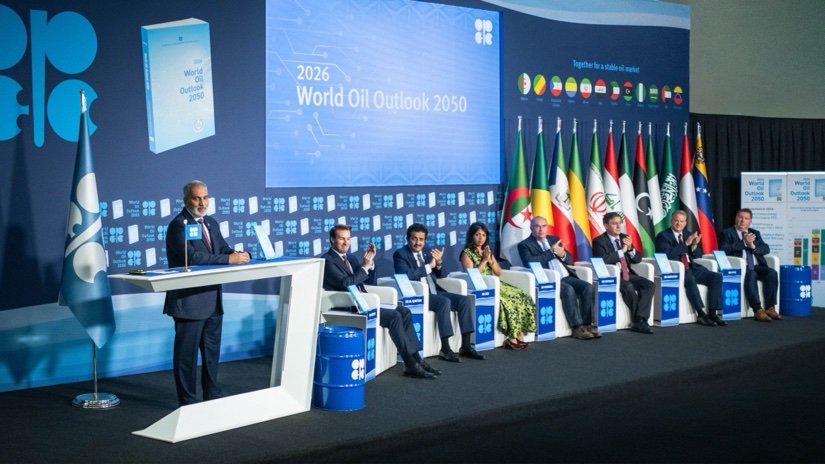
(Singapore, 06.07.2026)OPEC+ has agreed to raise oil production targets again from August, adding more crude to the global market as exports through the Strait of Hormuz gradually recover and oil prices remain under pressure.
According to Reuters, the producer alliance agreed during an online meeting to increase output quotas by 188,000 barrels per day (bpd) from August. The latest increase follows similar quota hikes announced for June and July as the group continues to unwind production cuts introduced in 2023.
The seven core producers involved in the monthly production adjustments, namely Saudi Arabia, Russia, Iraq, Kuwait, Algeria, Kazakhstan and Oman, have restored nearly 800,000 bpd of supply between April and July.
Despite the higher production targets, actual output has remained below expectations because the U.S.-Israeli conflict with Iran disrupted tanker traffic through the Strait of Hormuz, limiting exports from several major Gulf producers.
OPEC data showed the group’s production fell to 33.13 million bpd in May, down sharply from 42.77 million bpd in February before the conflict. Output began recovering in June after U.S.-led efforts helped Gulf producers resume exports, though production has yet to return to pre-war levels.
Oil prices have nevertheless retreated to levels seen before the conflict, reflecting easing supply concerns.
Brent crude traded near US$72 a barrel on Friday, down from highs above US$120 reached during the height of the conflict.
Analysts said the decline has been driven by several factors, including weaker crude imports by China, stronger supplies from producers outside the Middle East and a record coordinated release of strategic oil reserves by members of the International Energy Agency (IEA).
UBS analyst Giovanni Staunovo said the latest OPEC+ decision was widely expected, adding that the market’s immediate focus would remain on how quickly oil exports through the Strait of Hormuz recover and whether demand, particularly from China, improves.
Investors also remain optimistic that oil supplies will normalize following a memorandum of understanding between Washington and Tehran aimed at ending the conflict.
Oil prices edged lower in Asian trading on Monday after the latest OPEC+ decision.
Brent crude futures slipped 0.33% to US$71.88 per barrel, while U.S. West Texas Intermediate (WTI) crude eased 0.16% to US$68.58 per barrel.
Market analysts said the additional production increase is unlikely to have an immediate impact because many producers are still rebuilding exports following the conflict.
IG market analyst Tony Sycamore said the new quotas largely matched market expectations and noted that production targets remain difficult to achieve while output continues recovering after the disruption.
A Reuters survey found OPEC’s oil production rose by 3.3 million bpd in June from the previous month to 19.43 million bpd, rebounding from its lowest level in more than two decades.
Data also showed Gulf oil exports increased by more than 3 million bpd in June to exceed 10 million bpd, although shipments remain about 40% below pre-war levels.
Outside the Middle East, Russia has also boosted crude exports after repeated Ukrainian drone attacks disrupted domestic refining operations, pushing more crude onto international markets.
Beyond production, OPEC+ is also facing internal changes.
The United Arab Emirates formally exited the alliance in May after seeking greater freedom to align production with its own capacity rather than group-imposed quotas.
Meanwhile, Iraq has indicated it wants a higher production quota as output restrictions continue to ease.
Based on Reuters calculations, the seven core producers still have about 379,000 bpd of the original 2023 production cut left to restore.
If OPEC+ approves another increase of a similar size at its next meeting on August 2, the group would have fully reversed the production cuts agreed three years ago.
Separately, Iran has begun discussions with Japanese companies on resuming crude oil exports under a temporary U.S. sanctions waiver, Reuters reported, although potential buyers are seeking a longer waiver and greater assurances over shipping safety.
The current waiver, issued on June 22, is valid until August 21 as part of ongoing peace talks between Tehran and Washington.
Industry sources said three Japanese buyers are evaluating possible purchases of Iranian crude, which would mark Japan’s first imports from Iran since 2019. However, uncertainty surrounding shipping through the Strait of Hormuz, insurance costs and existing supply contracts continues to limit immediate buying interest.
Analysts said developments surrounding Gulf exports, U.S.-Iran negotiations and China’s crude demand are likely to remain the key drivers of oil prices in the coming months.