



















(SINGAPORE 2026.9.24) An international sporting event organized with fewer young volunteers, no traditional Athletes’ Village, fewer wasteful permanent structures built specifically for the occasion, and greater reliance on existing or temporary assets.
That is the unusual model taking shape in Japan’s Nagoya (名古屋) city and elsewhere in Aichi prefecture (爱知县), where the Asian Games opened on Sept 19 after a decade of planning and repeated efforts to contain costs.
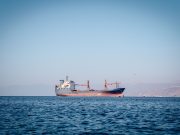
The most visible symbol is in Nagoya Port. Instead of building a conventional Athletes’ Village — a purpose-built residential complex to house thousands of competitors and officials — organizers have hired a cruise ship, booked hotels, and installed temporary container-style accommodation units.
The ship is part of a broader calculation about what a major sporting event should leave behind — not a sprawling complex that may become difficult to reuse once the Games are over.
Aichi Governor Hideaki Omura (大村秀章) has said abandoning the planned Athletes’ Village project alone reduced costs by about ¥60 billion (about S$485 million). Other measures, including moving swimming and equestrian events to Tokyo, reducing football venues, cutting temporary constructions, cancelling marathon swimming, and shortening athletes’ stays, brought identified savings to about ¥102 billion.
Yet the overall bill has continued to grow.
According to Japan’s Nikkansports, the combined cost of the Asian Games, which would end on Oct 4, and Asian Para Games, which would run from Oct 18 to Oct 24, was initially expected to be around ¥100 billion but is now projected at about ¥370 billion, with inflation and successive changes to the plans among the factors.
The Athletes’ Village is among the most expensive pieces of infrastructure associated with a major sporting event. It brings athletes, transport, catering and medical services together in one place, but can leave the host with a costly white elephant after the Games.
Aichi officials said they wanted a more compact and sustainable Games, making greater use of existing facilities, while citing higher construction, labour and material costs after the pandemic.
Nikkansports reported that Qatari table-tennis player Mohamed Abdulwahab posted a video tour of the cruise ship, describing it as a home for more than 5,000 athletes. Some online viewers praised the arrangement.
But the dispersed model has also produced problems.
Thai reports cited accommodation mix-ups, including athletes having to find alternative hotels after heavy rain disrupted access to the cruise ship. There were also room-assignment errors and transport mismanagement.
South Korea’s chef de mission, Lee Sang-hyun, said logistical problems had affected his country’s athletes. Reuters reported complaints about cramped container accommodations, cruise-ship booking errors, and shuttle problems. Lee suggested cost-cutting had contributed to some shortcomings, while Games officials said they would prioritize athletes’ concerns and maintained that the arrangements had broadly functioned.
The episode illustrates a trade-off: eliminating a central village can reduce construction costs while making accommodation and transport more complicated.
The other striking image from Nagoya is not a building but a person.
The oldest volunteer at the Games is 91.
Local CBC Television, through TBS NEWS DIG, reported that he had watched competitions in advance, used AI to study the languages of participating countries and trained physically for the event. His motivation was simple: he wanted to contribute to international friendship.
His participation was not the result of a policy to replace young volunteers with elderly people. The official programme is open to people aged 18 and above, with no upper age limit. About 40,000 volunteers are planned for the Asian Games and Asian Para Games.
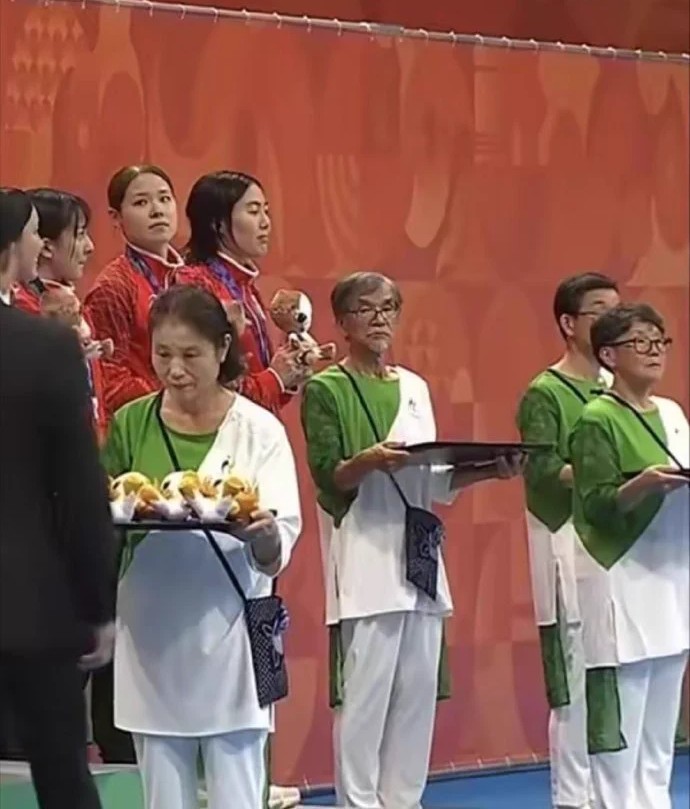
But the sight of white-haired volunteers carrying medals beside young athletes prompted debate in China.
Japan-based Record China reported that some Chinese online commenters saw these images as a symbol of Japan’s aging population and shrinking younger generation. Others questioned the prominent role of older people at a major international sporting event, where young volunteers traditionally dominate ceremonial duties.
There was also defence for the volunteers. Some commenters argued that age should not determine whether people can participate in social events.
Some even contended that Japanese young people are generally occupied with studying, working or building businesses, in contrast to young people in China, where youth unemployment has been a key concern.
The ¥102 billion in identified savings does not mean the Games became cheaper overall.
Nikkansports reported that the event opened with 43 sports and more than 15,000 participants, with additional sports such as padel and teqball added after requests from the Olympic Council of Asia.
That created another source of pressure: it is difficult to control costs when the scope of an international event continues to change.
Accommodation illustrates the problem particularly well. The Athletes’ Village was abandoned because it was too expensive, but athletes still needed rooms, transport, catering and support.
The same principle applies to venues. Existing facilities can reduce the need for new constructions, but they may still require upgrades. Temporary structures avoid permanent legacy costs but have to be installed and removed.
Nagoya is effectively testing whether a major sporting event can rely less on permanent infrastructure and more on what a city already has.
But the experience shows the limits.
A village is not merely a collection of bedrooms; it is a logistics system. Remove it and some of those costs move elsewhere such as to transportation. A volunteer is not simply free labour; volunteers need training, supervision, and appropriate assignments.
The lesson is therefore not simply to spend less, but to decide carefully where spending can be reduced without undermining the systems needed to run a major sporting event effectively.