
























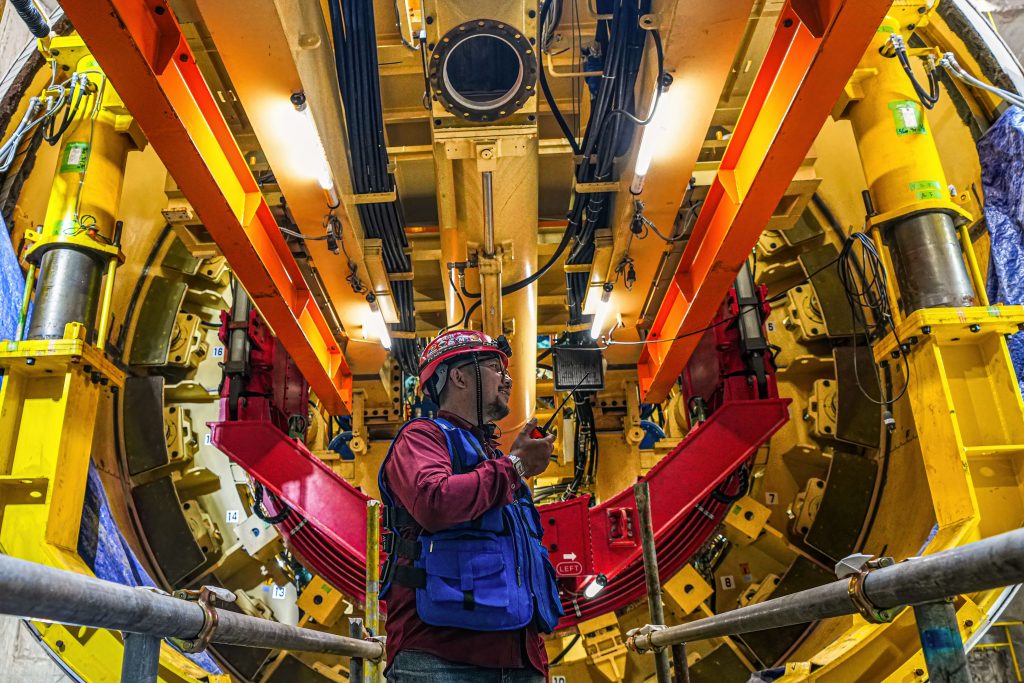
(Singapore, 02.11.2026)China’s latest export restrictions are bringing a new source of uncertainty to India’s infrastructure ambitions, as controls on tunnel-boring machines and specialised construction equipment threaten to complicate projects ranging from urban railways to strategic transport links near the Himalayan border.
The measures, due to take effect later this month, cover equipment used to excavate tunnels and spray concrete at high altitudes, as well as related components. Beijing has cited potential military and civilian uses, saying sensitive countries and regions with disputes with China will face stricter rules.
According to Bloomberg, the restrictions could be significant for India, a major customer of Chinese tunnelling machinery that is expanding road and rail networks near the disputed border to shorten military mobilisation times.
The move shows how trade tensions are spreading beyond semiconductors and rare earths into industrial equipment, where China’s manufacturing scale has made it difficult for buyers to find immediate alternatives.
A Supply Risk That Extends to Spare Parts
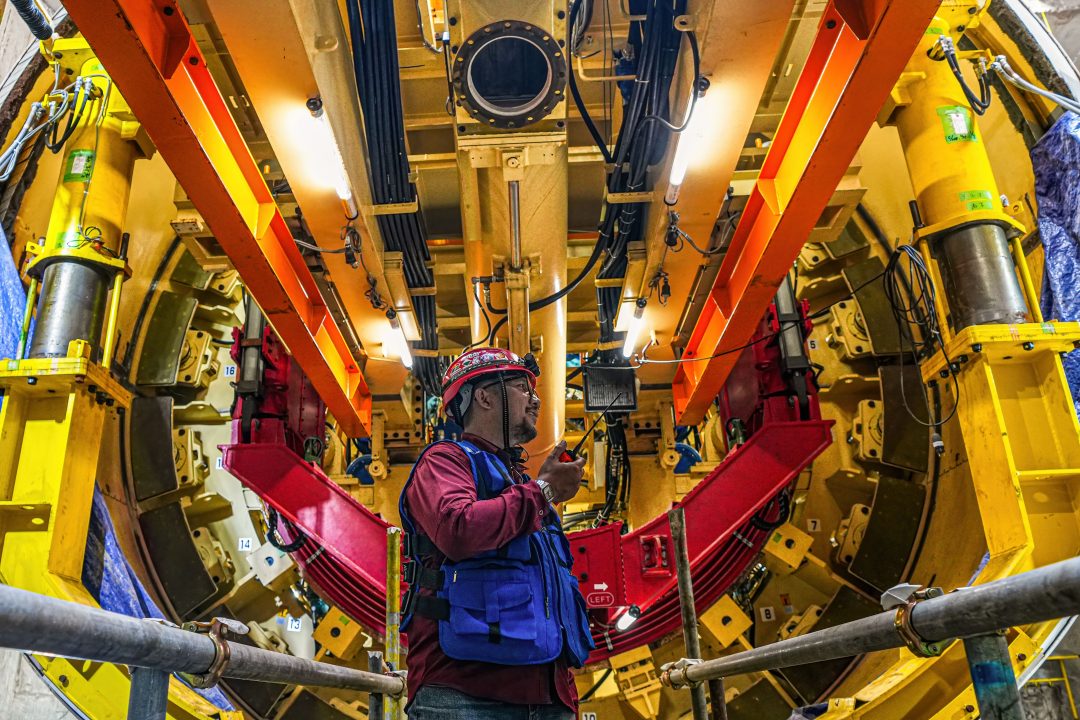
Tunnel-boring machines are among the world’s largest and most complex industrial devices, with some weighing around 5,000 tonnes. They are essential for building underground railways and transport routes through mountainous terrain.
Chinese state media estimates that the country accounts for about 70% of the global industry, while leading manufacturer China Railway Engineering Equipment Group says its machinery operates in 36 countries, including France and Denmark.
That dominance gives Beijing influence over overseas projects, although manufacturers in Germany, Japan and the United States offer alternatives.
Kyle Chan, a fellow at the Brookings Institution, said China increasingly views its role as a major construction-equipment producer in strategic terms, raising dependency risks and encouraging other countries to diversify their supply chains.
For India, the implications extend beyond buying new machines. Tunnel-boring equipment faces heavy wear during operation and requires regular replacement parts, meaning component restrictions could affect machinery already deployed.
Ajay Srivastava, founder of New Delhi-based Global Trade Research Initiative, said India could move equipment between sites to keep priority projects running, but continued access to parts would remain important.
China has previously delayed equipment shipments to India, including efforts in 2024 by German manufacturer Herrenknecht, which produces some of its tunnel-boring machines in China, to supply projects such as the Ahmedabad–Mumbai high-speed railway and Delhi metro. The company said it was studying the latest restrictions.
The inclusion of machinery designed for high-altitude work also draws attention to strategically sensitive areas. Sun Chenghao, a fellow at Tsinghua University’s Center for International Security and Strategy, said Beijing’s concern centres on where Chinese engineering capabilities are used and whether they strengthen another country’s military infrastructure.
Wars in Ukraine and Iran have further highlighted the military importance of underground facilities, adding a security dimension to equipment traditionally associated with civilian construction.
India Seeks Alternatives as China’s Export Growth Slows
India’s infrastructure pipeline provides an incentive to develop domestic manufacturing, but building competitive machinery will take time and investment.
Road Transport and Highways Minister Nitin Gadkari has said India aims to invest up to US$9.6 billion in tunnelling over the next five years and has urged local companies to manufacture boring machines. The government is also reportedly considering a US$1.2 billion incentive programme for construction-equipment makers.
Engineering group Larsen & Toubro is developing a prototype tunnel-boring machine, with president R. Shankar Raman saying a successful trial could allow the company to supply its own projects and sell equipment to others.
Cost remains an obstacle, however, because Chinese manufacturers already produce at scale while India’s industry is at an earlier stage. Raman warned that domestic producers would struggle if buyers continued to benchmark prices against Chinese equipment and sought ways to keep importing it.
Bloomberg Economics said the controls could slow infrastructure projects, including construction near the disputed border, while potentially strengthening India’s appeal as an alternative manufacturing base for foreign equipment suppliers.
For China, the restrictions coincide with signs that the export sector supporting its economy is losing momentum.
The private RatingDog manufacturing purchasing managers’ index eased to 52 in October, remaining above the 50 threshold separating expansion from contraction, but growth in new export orders slowed to a three-month low.
The official survey painted a weaker picture, with manufacturing PMI falling to 49.3 from September’s 50.1 and the non-manufacturing index, covering construction and services, slipping to 49.7.
Exports have helped offset subdued domestic demand, with net exports contributing almost 40% of third-quarter economic growth. Softer overseas orders therefore add uncertainty as Beijing works towards its annual growth target of 4.5% to 5%.
The machinery controls create another balancing act, allowing China to exercise influence through its industrial strengths while giving customers a stronger reason to seek other suppliers.
For Indian contractors, the immediate challenge will be maintaining access to machines and replacement parts, while domestic manufacturers test whether they can turn the push for supply-chain independence into commercially viable production.