



















(SINGAPORE 2026.11.3) The artificial intelligence (AI) boom has reshaped China’s wealth rankings, creating a new generation of female billionaires in electronic materials, optical communications and advanced manufacturing.
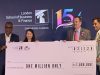
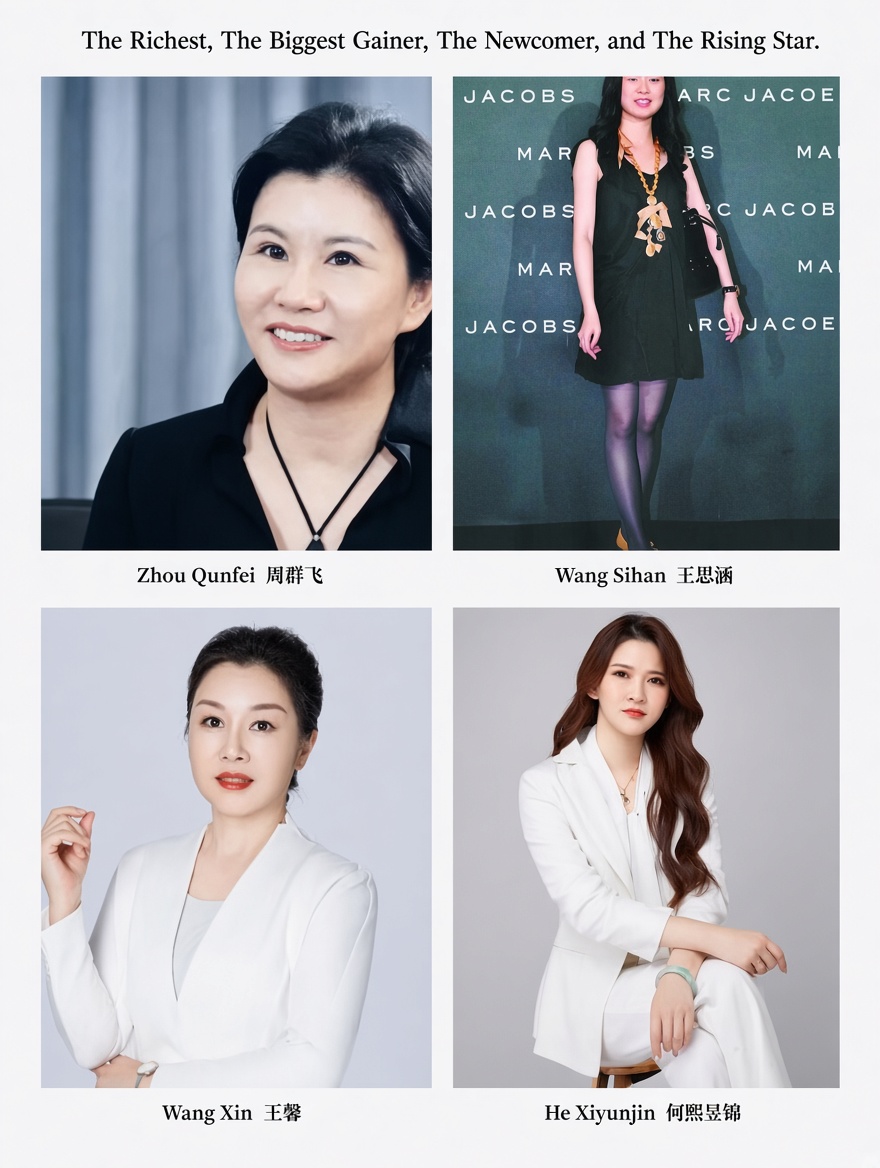
The clearest beneficiary is Zhou Qunfei (周群飞), founder of Lens Technology (蓝思科技), who has reclaimed the title of China’s richest woman after 11 years with a fortune of 127 billion yuan (about S$23.7 billion). Her wealth grew by 17 billion yuan over the past year, showing how AI infrastructure demand is creating fortunes beyond chipmakers and technology giants.
Once dominated by women from real estate, pharmaceuticals, packaging and consumer goods, China’s richest-women rankings now feature more entrepreneurs supplying the hardware and components behind the AI revolution.
This is more than a change in who tops the wealth list. It reflects how China’s technological transformation is redistributing wealth, opening opportunities for female technopreneurs and expanding their influence in business.
AI supply chain produces a new generation of wealthy women
The 2026 Hurun Richest Women in China List (2026胡润女企业家榜) released last week illustrates this transformation. The list includes wealthy women entrepreneurs from Greater China. Hurun, founded by British-born researcher Rupert Hoogewerf, is a China-based wealth research and rankings organisation whose annual lists are widely followed by Chinese media and business circles.
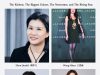
Zhou topped the ranking with 127 billion yuan, followed by Zhong Huijuan (钟慧娟), founder of Hansoh Pharmaceutical (翰森制药), with 124 billion yuan. Hong Kong’s Kwong Siu-hing (邝肖卿) of Sun Hung Kai Properties (新鸿基地产) ranked third with 96 billion yuan, while Wang Laichun (王来春) of Luxshare Precision Industry (立讯精密工业) and Zong Fuli (宗馥莉) of Wahaha (娃哈哈) came fourth and fifth, with 90 billion yuan and 83.5 billion yuan respectively.
But the most striking feature was the sharp wealth growth among entrepreneurs linked to the AI supply chain.
Taiwan’s Wang Sihan (王思涵) of copper-clad laminate ( 覆铜板 ) manufacturer Hong Ren Group (宏仁集团) saw her fortune rise by 55 billion yuan to 79.5 billion yuan, earning her a first-time place in the top 10.
Wang Xin (王馨), founder of PCB drill-bit ( 钻头 ) manufacturer Ding Tai High-tech (鼎泰高科), made an even more surprising debut at seventh place with 76.5 billion yuan. Its small, solid-carbide drill bits, typically 0.1mm to 3.0mm in diameter, are used to make vias, through-holes and mounting holes in printed circuit boards.
Other names included Huang Xiaofen (黄小芬) of PCB manufacturer Kinwong Electronic (景旺电子), and Ou Yang (欧洋) and Zou Yonghang (邹咏航), the mother-and-daughter team behind optical communications component maker TFC Communication (天孚通信). Li Cuixin (李翠馨) of Taiwanese chipmaker MediaTek (联发科技) also featured, reflecting the growing importance of AI infrastructure suppliers.
Although their products differ, these companies benefit from the same underlying demand. As AI models require more computing power, data centres are expanding, driving demand for servers, networking equipment and electronic components. This creates business for suppliers of PCBs, copper-clad laminates, drill bits and optical communications components.
AI-generated wealth is therefore spreading beyond chip designers, internet platforms and technology giants into upstream manufacturing.
Hoogewerf noted that when Zhou first became China’s richest woman in 2015, Lens Technology had just gone public and was primarily associated with the smartphone supply chain.
Eleven years later, she has reclaimed the top spot through businesses spanning AI hardware, smart automotive displays and smart glasses.
Hoogewerf said eight women had taken turns at the top of China’s richest-women rankings over the past 20 years. Their industries have evolved from packaging, real estate, pharmaceuticals and beverages towards electronics, mirroring China’s changing economic and industrial structure.
Zhou’s career illustrates this transition. She started as a glass-processing worker in a Shenzhen factory before founding Lens Technology and building its smartphone glass business into a key Apple supplier.
Today, the company has expanded beyond smartphone screens and cover glass into smart vehicles, AI devices, robotics and AI servers.
For Lens Technology, AI offers both a new market and an opportunity to reduce dependence on the smartphone supply chain.
From manufacturing founders to female leaders in the AI era
Women’s roles in AI are expanding beyond founding supply-chain businesses and benefiting from industrial growth.
Kathy Yang (杨秋瑾), former rotating chief executive of Taiwan’s Foxconn (富士康), represents another kind of female leadership. The first woman to hold the rotating CEO position, she now oversees the group’s factory and facilities operations across more than 240 sites in 24 countries. She is also involved in its AI software and infrastructure initiatives.
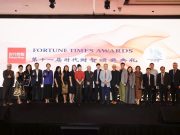
Yang was named among Fortune magazine’s most powerful women in Asia in October.
She believes the challenge for female leaders in the AI industrial revolution goes beyond adopting new technologies. It requires redesigning workflows and investing in skills training so employees can grow alongside technology.
“Five years from now, the best factories will not simply be those with the highest degree of automation. They will be factories where people, AI and robots complement and empower one another,” she said.
While Zhou represents an entrepreneur transforming a traditional manufacturing business to capture AI hardware demand, Yang represents an executive driving technological change within a major industrial group.
Meanwhile, more Chinese women are moving directly into AI and other deep-tech ventures.
A list of 30 female entrepreneurs to watch in 2026, published by business media company Cyzone (创业邦) , points to a new generation entering technically demanding fields such as AI, biotechnology, healthcare and semiconductors.
Some 86.6 per cent hold master’s or doctoral degrees, while about two-thirds are first-time founders with years of industry experience. AI, biotechnology and healthcare entrepreneurs account for nearly 80 per cent of the list.
Their ventures span several fields. He Xiyujin (何熙昱锦), a partner at BrainCo (强脑科技), is commercialising brain-computer interface technology, while Zheng Lingyin (郑灵茵), co-founder of Spirit AI (千寻智能), develops core AI technologies for robotics.
In healthcare, Cao Zhuoxiao (曹卓晓), chief executive of Xianbo Biopharmaceutical (先博生物), focuses on gene therapy, while Huang Min (黄敏), chairwoman and CEO of Chuangxin International (创芯国际), specialises in early cancer detection. In semiconductors, Qiu Yujing (仇雨菁) founded Xinchi Technology (芯驰科技), which develops automotive chips.
Cyzone noted that Chinese women entrepreneurs are moving beyond traditional consumer and service industries to become a force in commercialising technological innovations.
Their paths differ from those of earlier entrepreneurs such as Zhou. The previous generation often emerged from factories, trading or consumer markets, building businesses through manufacturing experience, market instincts and customer relationships.
The newer generation is more likely to come from research institutions, technical professions and large corporations, turning laboratory discoveries into commercial products.
Different stories of female entrepreneurship
However, AI-generated wealth does not mean all Chinese women entrepreneurs follow the same trajectory.
Some face very different challenges. Zong Fuli’s experience highlights the complexities of succession in a family business.
After her father, Wahaha founder Zong Qinghou (宗庆后), died, she took over the beverage group. Her succession was marked by resignation and return, disputes over brand ownership and conflicts with family members over equity and assets.
She has sought to separate some operations from the Wahaha brand structure, develop the Hongsheng Group (宏胜集团) under her control and revive her beverage brand, KELLYONE.
But reforming distribution channels, managing distributor relationships and maintaining factory operations have made the transition difficult.
Financial media outlet Prism (棱镜) reported last week that Zong had restructured Wahaha’s distribution network, removing some smaller distributors. However, the company struggled to establish a new network, leaving some distributors under inventory and sales pressure.
She is also investing in new beverage production facilities to build an independent growth platform for Hongsheng.
Unlike Zhou, who built an industrial empire from scratch, Zong must establish her own management system and authority after inheriting her father’s business.
Another source of female entrepreneurial wealth is the internet and new economy.
Xiaohongshu (小红书) co-founder Qu Fang (瞿芳) entered the Hurun list with 34 billion yuan. Together with her co-founder, she built the lifestyle-sharing platform into a major social media and consumer platform with a vast user base.
He Yi (何一), co-founder of global cryptocurrency exchange Binance (币安), ranked with 18.5 billion yuan, making her the youngest self-made female entrepreneur on the Hurun list.
Their fortunes come from internet platforms and digital finance rather than traditional manufacturing or family businesses.
Wealth rankings reflect China’s industrial transformation
The Hurun list features 50 female entrepreneurs with combined wealth of 1.93 trillion yuan, averaging 38.6 billion yuan each. The entry threshold was 16.5 billion yuan. All three figures were record highs.
Of those listed, 65 per cent built their fortunes themselves, while 35 per cent inherited their wealth.
However, gains were far from universal. Twenty-six women saw their fortunes rise, while 35 recorded declines or no change. Eleven dropped off the list.
Zhong of Hansoh Pharmaceutical saw her wealth fall by 17 billion yuan, while Wu Yajun (吴亚军) of property developer Longfor Group (龙湖) lost 14 billion yuan. Their fortunes show how even billionaires remain exposed to industry cycles and market valuation swings.
The stories differ, but a clear trend is the growing presence of high-value industries, where more women are gaining control over business operations, technological decisions and capital allocation.
For these women, accumulating wealth is only part of the challenge. The real test is maintaining their competitive edge amid technological change, market competition and the inevitable cycles of industrial growth.