
























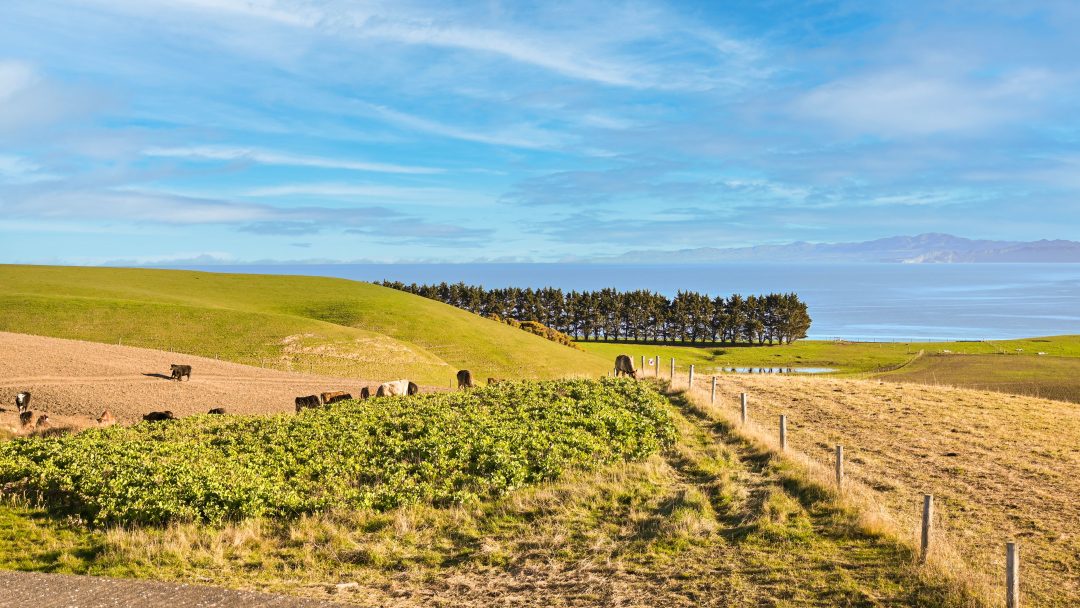
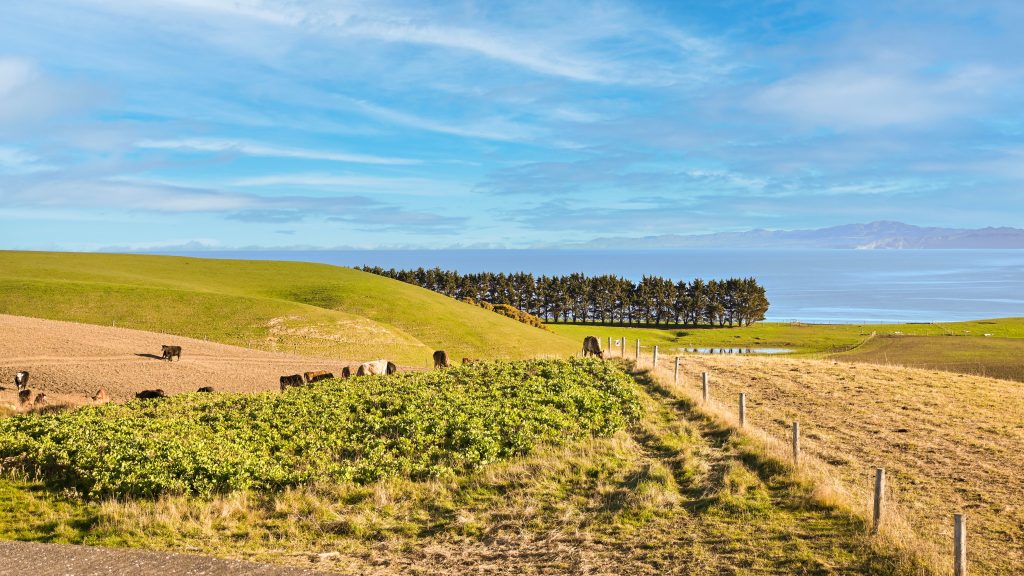
(Singapore, 08.07.2026)New Zealand is turning its farms into a testing ground for new technologies aimed at reducing methane emissions from cows and sheep, as the agriculture-dependent economy seeks to meet climate targets without slowing one of its most important export industries.
According to Bloomberg, years of research and investment have brought several methane-reduction technologies closer to commercial use. They range from capsules placed inside animals and methane-inhibiting compounds extracted from daffodils to probiotics, vaccines and selective breeding.
One of the most advanced projects comes from Ruminant BioTech, an Auckland-based company awaiting regulatory approval for a capsule, known as a bolus, that is placed in an animal’s stomach.
The capsule slowly releases a compound that suppresses methane production, with research showing it could reduce emissions by as much as 70% per animal. Approval could come as early as next month.
The technology is particularly important for New Zealand, where agriculture plays a major role in the economy and export sector.
Methane produced by the digestive systems of cattle and sheep accounts for more than 40% of the country’s total greenhouse gas emissions, making New Zealand one of the world’s highest per-capita methane emitters.
Reducing emissions could also help New Zealand food exporters strengthen their position in international markets. Major customers, including Nestlé and McDonald’s, are under increasing pressure to reduce emissions across their supply chains.
Lower-emission dairy and meat products could therefore help New Zealand producers maintain market access and potentially command higher prices.
At the centre of the country’s technology push is AgriZeroNZ, a public-private partnership established in 2023 to invest in technologies that help farmers reduce emissions.
The organization has committed about NZ$80 million, or S$59 million, to 18 companies, projects and trials. Its first investment included NZ$5.8 million (S$4.3 million) in Ruminant BioTech.
AgriZeroNZ Chief Executive Wayne McNee said all the companies receiving investment are now conducting animal trials, moving the technologies closer to possible commercial use.
The organization operates much like a venture capital investor and has NZ$191 million (S$141 million) available for investment. Funding is provided equally by the government and 10 industry partners, including Fonterra, The a2 Milk Company and Silver Fern Farms.
Among its investments is Agroceutical Products, which is studying the use of methane-inhibiting compounds extracted from daffodils. It has also invested in U.S.-based ArkeaBio, which is developing a livestock vaccine and conducting trials at Texas A&M University.
Another project involves Kowbucha, a probiotic developed by Fonterra to help reduce methane emissions.
The challenge now is proving that these technologies can lower emissions without harming animal welfare or reducing farm production. They must then secure regulatory approval and convince farmers that the benefits justify the costs.
McNee said farmers generally want to see the technology successfully used by other local producers before adopting it themselves. Financial incentives will also be important because farmers are unlikely to carry the additional costs without commercial benefits.
Some global food companies are already prepared to pay premiums for lower-emission dairy products sourced from New Zealand producers. Trade agreements with the United Kingdom and European Union also include commitments to reduce emissions.
To accelerate the use of methane-reduction technologies, the New Zealand government last month announced an additional NZ$51 million funding programme over three years, which will be matched by private-sector partners.
The technology drive comes as New Zealand adjusts its climate policies to reduce pressure on farmers.
Last year, the government lowered its methane reduction target for 2050 to between 14% and 24% below 2017 levels, compared with the previous target of 24% to 47%.
The revised target is based on a “no additional warming” approach, which aims to prevent methane from contributing further to global warming rather than significantly reducing its existing impact.
The move was criticized by some scientists but welcomed by farmers. Prime Minister Christopher Luxon has repeatedly said climate policies should not come at the expense of agricultural production and economic growth.
Alongside new technologies, New Zealand is also turning to genetics.
The Cool Sheep programme is selectively breeding rams that naturally produce less methane, while a similar project is being developed for beef cattle.
At a farm near Taupo on New Zealand’s North Island, state-owned Pamu Landcorp Farming is collecting data from livestock kept in a specially designed barn.
Researchers measure the animals’ food intake, weight and daily methane emissions. The information is then used to develop breeding programmes for livestock that grow faster while producing less methane.
Paul McGill, head of innovation and extension at Pamu, said selective breeding offers a long-term advantage because emissions reductions can be passed through future generations without the recurring costs associated with vaccines and other methane inhibitors.
However, breeding and improved farming efficiency alone are unlikely to deliver all the emissions reductions required.
Pamu, which aims to cut emissions by 30% from 2019 levels by 2031, is also closely monitoring the development of vaccines, methane inhibitors and other technologies.
As these projects move from laboratories to farms, the next challenge will be whether they can deliver meaningful emissions reductions at a cost farmers are willing to accept, while helping New Zealand protect the competitiveness of one of its most important export industries.