

























(Singapore, 30.07.2026)India’s biggest companies are facing growing political and economic uncertainty after a youth-led protest movement forced Prime Minister Narendra Modi into one of the most significant concessions of his 12-year rule.
The resignation of Education Minister Dharmendra Pradhan following nationwide demonstrations over leaked examination papers has not only exposed cracks in Modi’s image as an unshakeable leader but also raised questions about whether India’s corporate sector can continue to rely on the business-friendly environment that has flourished under his government.
For years, many of India’s largest companies have benefited from policies that included lower corporate taxes, generous industrial incentives, relaxed labour and environmental regulations, and easier access to distressed assets. Those measures helped corporate profits reach near-record levels, even as private investment failed to keep pace.
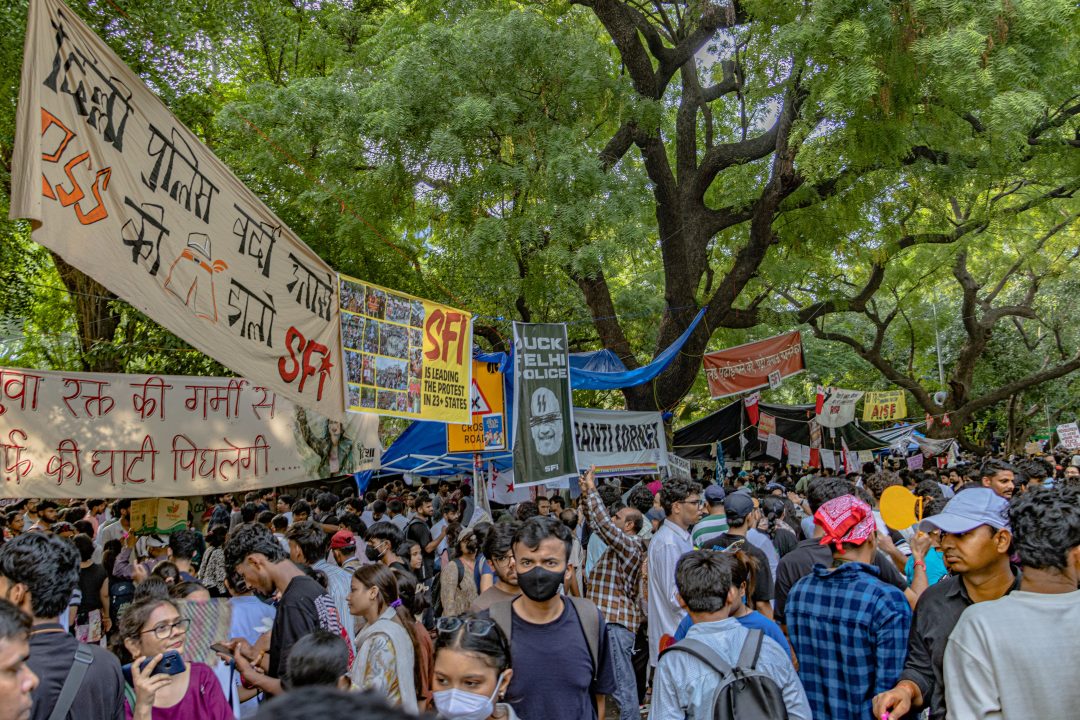
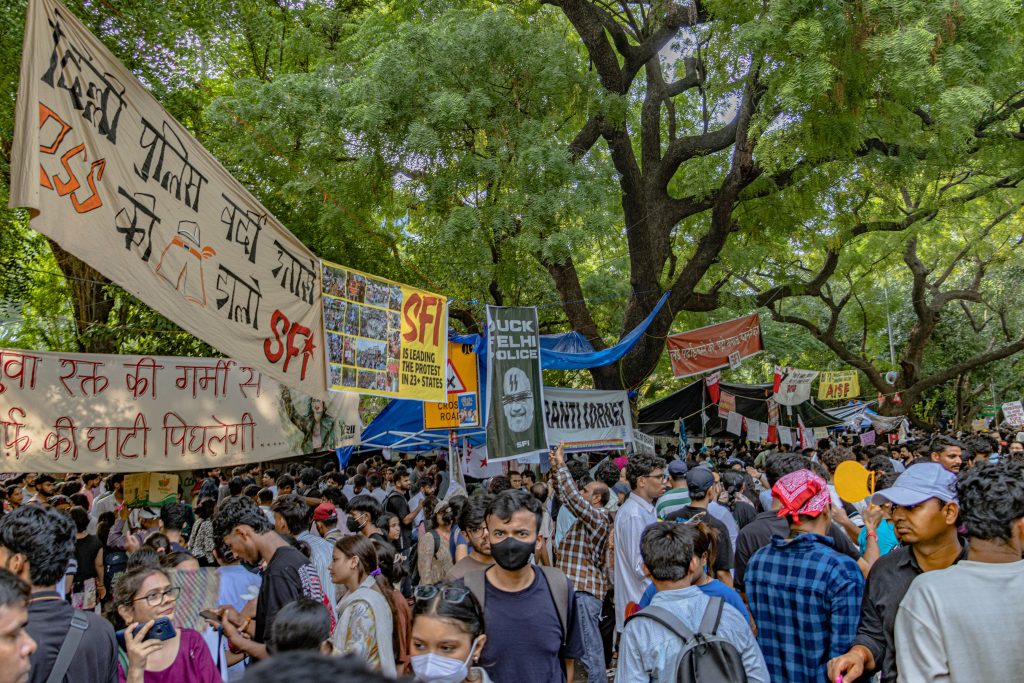
The latest wave of protests suggests that formula may be coming under pressure. Led by the self-styled “Cockroach Janta Party,” a youth movement that began as a social media joke before evolving into one of India’s largest student-led campaigns in years, thousands of students took to the streets across New Delhi and other major cities over repeated examination paper leaks and allegations of systemic corruption, eventually forcing Education Minister Dharmendra Pradhan to resign.
It marked the first time since Modi came to power in 2014 that a cabinet minister stepped down following sustained public pressure.
The movement has since declared victory and suspended its protests, but organisers have vowed to continue campaigning for broader reforms in education, employment and government accountability.
The rapid climbdown has surprised political observers, who had long viewed Modi as one of India’s most politically dominant leaders.
Analysts say the protests also highlight growing frustration among India’s younger generation, many of whom are struggling to find stable employment despite the country’s rapid economic expansion.
India remains one of the world’s fastest-growing major economies, but millions of graduates continue to face intense competition for limited high-quality jobs. Youth unemployment remains close to 40% by some estimates.
That disconnect is becoming increasingly difficult for businesses to ignore, as listed Indian companies continue to post strong earnings while private investment remains weak. Instead of expanding capacity or creating more jobs, many firms have chosen to preserve profits, weighing on wage growth and household purchasing power.
Some economists argue that this has created a cycle in which weak income growth ultimately limits future consumer demand.
Public frustration is also spreading beyond students. Farmers have voiced opposition to a proposed India-US trade agreement that could expose domestic agriculture to greater competition from American imports.
Separately, motorists have criticised government plans to make gasoline blended with 20% bioethanol the standard fuel nationwide, arguing that many older vehicles are not designed to use it efficiently and could face higher maintenance costs.
Digitalisation has become another source of public concern. While the Indian government has expanded digital public services, critics argue that centralised systems have sometimes resulted in welfare payments being denied because of biometric mismatches or administrative errors.
At the same time, privacy advocates have questioned whether consumer data is receiving adequate protection as businesses increasingly collect personal information.
Against that backdrop, India’s close relationship between politics and big business is attracting greater scrutiny.
Large conglomerates have expanded aggressively in sectors ranging from infrastructure and airports to energy, telecommunications and digital services during Modi’s administration.
Recent proposals that could allow private airport operators to run airlines have raised concerns among industry observers about potential conflicts of interest and whether competition could become even more concentrated.
Many of India’s largest business groups have also sought greater government support as geopolitical tensions and global trade disruptions weigh on the economy.
After the United States imposed higher tariffs on Indian exports last year, companies lobbied for additional policy support, while some business leaders also backed longer working hours to improve industrial competitiveness.
Yet India’s corporate landscape is becoming increasingly divided. Large conglomerates such as Reliance Industries, the Adani Group, Tata Group and JSW Group continue investing heavily in infrastructure, renewable energy, electric vehicles, data centres and semiconductor manufacturing.
Many medium-sized business owners, however, are choosing a different path. Instead of expanding, some are selling their companies to private equity investors and shifting their wealth into family offices, reflecting growing caution about the country’s business environment.
Political analysts say last week’s developments could become an important turning point. The student movement has demonstrated that even Modi’s government is vulnerable to sustained public pressure, particularly from younger voters ahead of important state elections, including next year’s vote in Uttar Pradesh, India’s most populous state.
The protests have also provided fresh momentum to opposition parties, although it remains uncertain whether they can convert public anger into electoral gains before the 2029 general election.
For corporate India, the bigger question may be how to adapt if the political landscape becomes less predictable. Some market observers believe companies should take advantage of India’s strong equity markets to raise long-term capital for investment rather than relying heavily on government support, regulatory protection or dominant market positions.
With public frustration increasingly focused on jobs, wages and fairness, businesses may also face greater pressure to invest more aggressively in productive assets and employment.
While the student protests were sparked by examination scandals, they have evolved into a broader warning about rising expectations among India’s younger generation. Whether the movement grows into a lasting political force remains uncertain. But for both the Modi government and India’s business community, the events of the past week suggest that public patience may no longer be taken for granted.