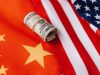






















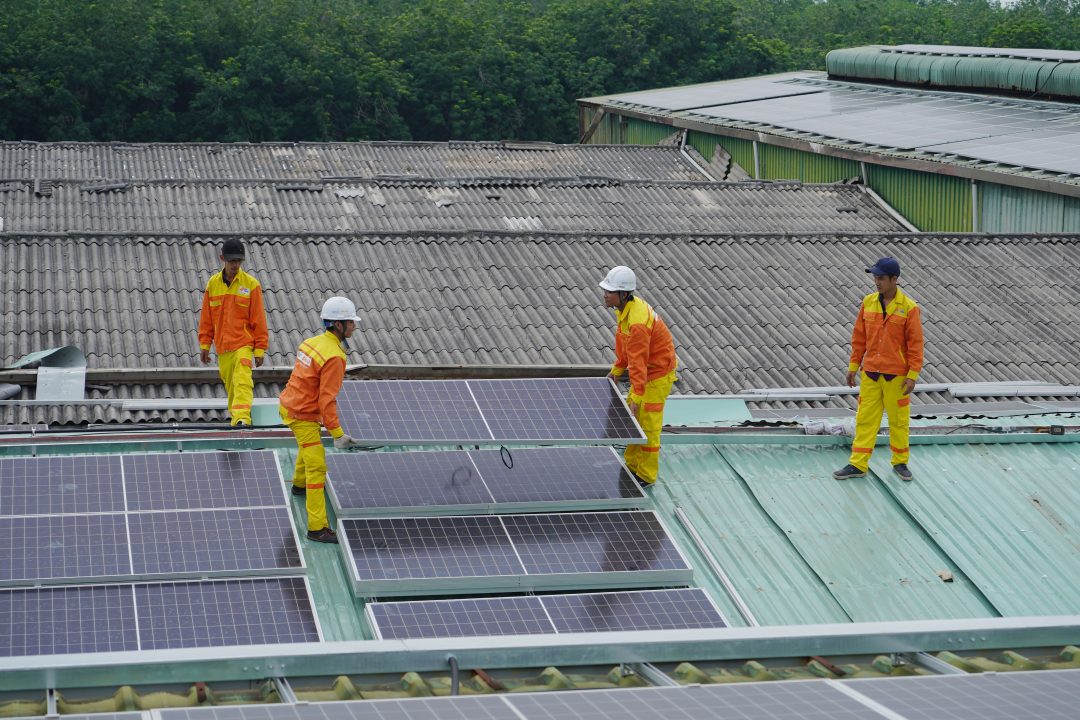
(Singapore, 14.08.2026)As the United States steps up efforts to reshape the global solar supply chain with a new round of tariffs, questions are emerging over what the measures could mean beyond the American market, including for Singapore homeowners considering rooftop solar. The latest US measures reach deeper into the supply chain than many previous trade actions by covering imported polysilicon derivatives such as wafers, cells and modules, as Washington seeks to strengthen domestic manufacturing and reduce its reliance on foreign solar supplies, particularly those linked to China.
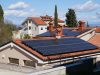
For Singapore, which imports most of its solar equipment, developments in one of the world’s largest solar markets may appear concerning, but Kerr Sun, Chief Executive Officer of 9 Solar FinTech, says homeowners should not assume that US tariffs will automatically make solar panels more expensive here. “Solar is a global industry. When a major market like the US introduces tariffs, manufacturers may redirect supply, change where they manufacture, or adjust their pricing, so indirectly, Singapore can be affected,” he said.
There could also be an upside for markets in Asia, as products that become more expensive to sell into the US could be redirected elsewhere, potentially increasing supply in Singapore and other regional markets. “So a US tariff does not automatically mean solar panels in Singapore will become more expensive,” Sun said, adding that rather than trying to predict whether panels will be slightly cheaper or more expensive from one month to the next, the priority for installers should be securing reliable equipment at a sensible price and delivering long-term value to homeowners.
A Changing Global Solar Supply Chain
China remains at the heart of the global solar industry, producing 86% of the world’s solar panels in 2024 while controlling an even greater share of several upstream segments, including photovoltaic cells, wafers and polysilicon. Such concentration inevitably creates risks when tariffs, trade disputes, shipping disruptions or policy changes affect the supply chain, but Sun believes it is equally important to recognise how China’s enormous manufacturing scale has transformed the economics of renewable energy by driving down costs and making solar accessible to millions of homes and businesses worldwide.
“It has helped bring the cost of solar down dramatically and made solar affordable to millions of homes and businesses around the world. That is a huge contribution to the global green transition,” he said, adding that the next stage of the industry’s development is likely to bring greater diversification as manufacturing capabilities expand across Southeast Asia, India and other markets. China will remain important, but the emergence of more suppliers and production locations could give Singapore greater resilience and more options when sourcing equipment.
Singapore is relatively small as a solar market, but its proximity to major manufacturing countries including China, Malaysia, Vietnam, Indonesia and India puts it in a favourable position as the supply chain becomes more diversified. Sun said the changes are broadly positive for Singapore, although having more choices also makes it increasingly important for homeowners to look beyond price when comparing solar systems, since the cheapest panel may not necessarily offer the best performance or value over the decades it is expected to remain on a rooftop.
The country where a panel is manufactured can be one consideration, but Sun would not make it the deciding factor, arguing that homeowners should instead examine who manufactured the equipment, its quality, warranty and expected degradation, as well as the track record of the installer and whether that company is likely to remain available to provide support years after installation. “A fantastic panel installed badly can still become a bad solar system,” he said.
That distinction matters because residential solar is not simply about purchasing 20 or 30 panels and placing them on a roof, but about installing a long-term energy system in which the panel, inverter, system design, installation, monitoring, maintenance, warranty and after-sales support all contribute to overall performance. For 9 Solar Home, this means resisting the temptation to compete purely on the lowest equipment price even when global supply is plentiful, because, as Sun put it, “Cheap is easy to find. Good equipment that can perform reliably on a Singapore rooftop for many years is much more important.”
Don’t Try to Time the Solar Market
With tariffs, manufacturing shifts and changing supply conditions creating uncertainty over future prices, some homeowners may be tempted to postpone an installation in the hope that panels will become cheaper, but Sun cautions against trying to predict short-term movements in a market influenced by everything from trade policy and shipping costs to labour and raw materials. “Maybe panels become slightly cheaper next year. Maybe tariffs, labour, shipping or materials make them more expensive. Nobody can predict all these things perfectly,” he said.
Panel prices are also only one component of the overall cost of going solar, while labour, construction, installation and maintenance expenses can change over time and households that postpone their decision continue paying for electricity from the grid. Instead of trying to save a few percentage points on equipment by waiting for the perfect moment, Sun believes homeowners should consider whether the economics of a system make sense for their household today and how much value it can generate over its full operating life.
“If the numbers make sense for your home today, the system is reliable, and you are comfortable with the provider, then solar should be considered based on the years of electricity savings ahead, not whether you can save another few percent on the panel price by waiting,” he said, noting that electricity costs can fluctuate while manpower, construction and maintenance costs are unlikely to remain unchanged indefinitely.
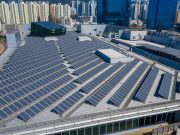
Beyond the financial calculation, Sun sees Singapore’s rooftops as an important resource in a country where land and domestic energy resources are limited, making distributed solar generation an opportunity for individual households to contribute to a broader transition towards cleaner energy. “We don’t have huge amounts of land, oil or gas, but we have rooftops and we have sunshine,” he said.
For 9 Solar Home, that opportunity extends beyond individual installations to its ambition of building a wider green community in which homeowners, businesses and partners play a role in Singapore’s energy transition. “If 100 homes do it, it is interesting. If 10,000 homes do it, it becomes meaningful. If an entire generation starts thinking about where its energy comes from, that is a movement,” Sun said.
Global trade policies will continue to change and solar panel prices will move with supply, demand and manufacturing costs, but for Singapore homeowners, these short-term fluctuations may matter less than whether they choose a reliable system capable of generating electricity and savings for decades. As Sun sees it, tariffs may come and go, but the direction of energy is increasingly clear, with cleaner, smarter and more distributed generation creating an opportunity for Singapore’s rooftops to become part of the country’s energy future.