
























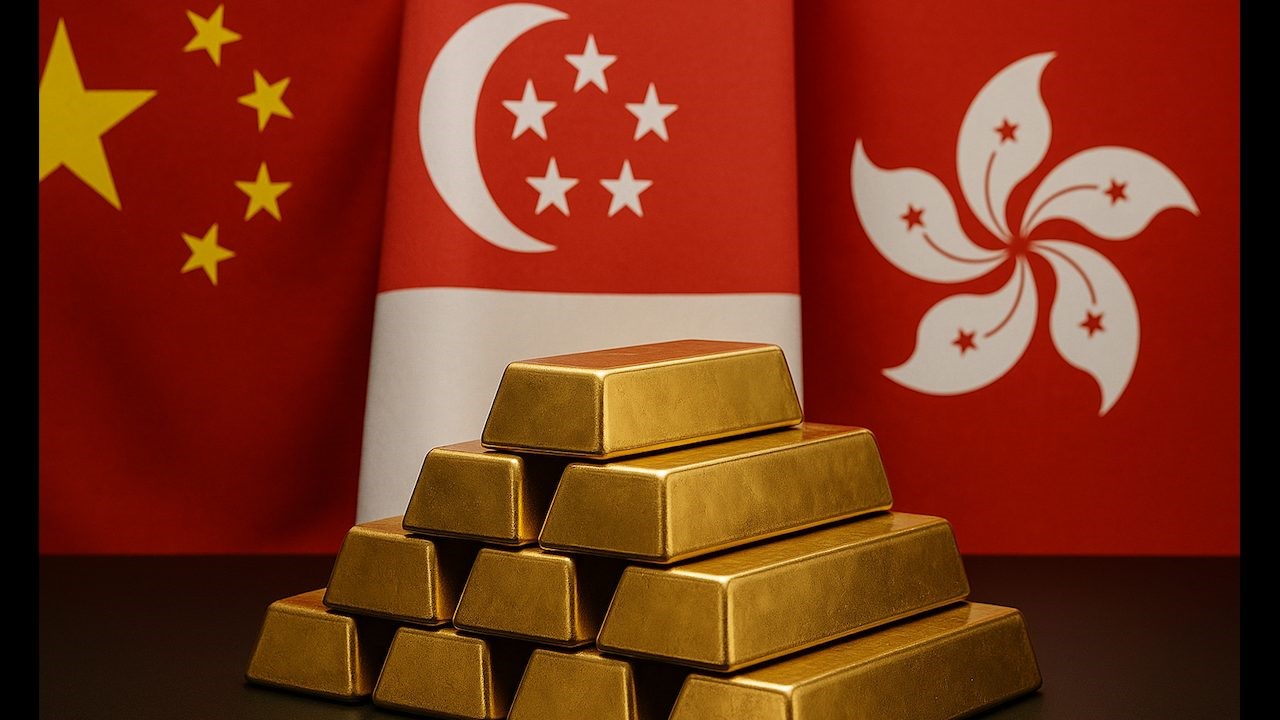
(SINGAPORE 2026.9.8) Consider what is happening to Russian gold.
Since Western sanctions cut Russian bullion producers off from much of the London-centred market after the invasion of Ukraine, Russian gold has steadily moved east. In the first seven months of 2026, nearly 100 tonnes flowed into Hong Kong, almost three times the amount a year earlier.
Much of that gold does not stop in Hong Kong. It ultimately flows to mainland China, where investors, jewellery buyers and the central bank make the country both the world’s largest gold producer and a major consumer.
The route — Russia to Hong Kong, then mainland China — is more than redirected commodity flows. It offers a glimpse of a broader transformation in the global gold market, Hong Kong, China, Singapore and British media reported.
Geopolitical fragmentation is shifting some gold flows from the West as China buys more bullion, builds financial infrastructure around it, and promotes the renminbi in gold transactions.
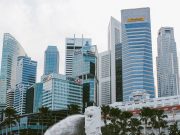
Just across the South China Sea, Singapore is also building its kind of infrastructure, betting Asia’s rising gold demand will need its own financial centre.
The result is a contest that goes beyond vaults and dealers. It is about who trades, settles and stores gold — and in the end, who shapes its price.
For decades, that power has been concentrated in the West.
London remains the dominant over-the-counter gold market, backed by generations of bullion banks, refiners, vaults, and trading relationships. New York leads gold futures, while Shanghai is mainland China’s main physical gold trading centre.
Together, London, New York and Shanghai handle more than 90% of global gold trading. Yet China and India account for over half of global consumption, while Asia represents more than 60% of annual demand excluding central banks.
The imbalance is striking: gold is increasingly bought in the East, while key pricing and trading mechanisms remain in the West.
That imbalance is now beginning to change.
Hong Kong builds the infrastructure
On July 7, Hong Kong began trial operations of a central gold clearing system, linked its physical market with the Shanghai Gold Exchange, and introduced a new price code, HAU, or “Hong Kong Gold”.
If gold is a safe haven for global capital, Hong Kong should be its “safe port,” said Hong Kong Chief Executive John Lee.
Central clearing can improve settlement efficiency and reduce counterparty risk. More importantly, it gives Hong Kong the foundation to become more than a commodity transit hub.
The ambition is to make it a place where gold is traded, cleared, settled, delivered and priced.
The July launch attracted 41 institutions, including 11 direct participants. They include China’s five biggest state-owned commercial banks — Industrial and Commercial Bank of China, Agricultural Bank of China, Bank of China, China Construction Bank, and Bank of Communications — alongside international banks including Citi, JPMorgan, ANZ, UBS, HSBC, and Standard Chartered.
Under the first phase of “physical connectivity,” gold can move between participating Hong Kong and Shanghai accounts. Shanghai taps China’s vast physical gold market, while Hong Kong connects to international capital through its open markets, global banks, and offshore renminbi ecosystem.
Together, they could make Hong Kong a bridge between China’s gold market and global investors.
That is where Russian gold flows matter. Hong Kong’s lighter import regime makes it a gateway for bullion, with entities buying tens of billions of dollars of Russian gold since 2022, some bound for mainland China.
The broader significance is gold’s ability to move quickly when financial channels change. Its portability and value make vaults, clearing and settlement networks strategically important assets.
China wants more influence
China is becoming a bigger force in gold. Chinese bar and coin demand rose 28% to 432 tonnes in 2025, then jumped 67% year on year to a record 207 tonnes in the first quarter of 2026, according to the World Gold Council.
As gold becomes a hedge against geopolitical and currency risks, China has a clear incentive to reduce its reliance on the Western price-setting system.
Hong Kong is building an Asian layer around the existing system. Its HAU price code provides a benchmark during Asian hours, giving regional supply and demand a greater role in price discovery.
The initiative also supports renminbi internationalisation. At the system’s launch, Bank of Communications completed a 76,000-ounce transaction using several currencies, including offshore renminbi.
More gold traded and settled through Hong Kong in renminbi would link China’s physical market to global capital while expanding the currency’s international use.
Shanghai can anchor the physical market; Hong Kong can connect it to the world.
Singapore is making a different bet
Near Changi Airport, precious-metals dealer Silver Bullion operates a vault capable of storing 500 tonnes of gold and 10,000 tonnes of silver, reflecting Singapore’s goal to become a major Asian bullion hub.
Hong Kong offers proximity to mainland China. Singapore offers neutrality and global connectivity, backed by deep networks in banking, commodities, logistics, shipping, and wealth management.
That could appeal to central banks, sovereign investors and institutions seeking to hold physical gold outside their home markets.
Singapore is also developing gold-clearing infrastructure, with the Singapore Exchange preparing an over-the-counter gold clearing system.
The result could be a division of roles: Hong Kong becoming more tightly linked to mainland China and renminbi gold flows, while Singapore serves Southeast Asia, India, and globally oriented investors.
The two cities may compete for the same traders while collectively strengthening Asia’s role in the global gold system.
A new gold geography
That is the significance of the race. A successful gold hub needs more than vaults: it needs liquidity, trading, clearing, delivery, and price discovery.
Hong Kong is building around China; Singapore around international openness; and Shanghai provides the physical market that gives the Asian network weight.
London and New York will not lose their dominance overnight. London retains deep liquidity and relationships, while New York remains central to futures trading.
The more likely future is a multi-centre gold market, with London, New York, Shanghai, Hong Kong, and Singapore more tightly interconnected.
That would still mark a paradigm change. For centuries, gold followed financial power. Now market infrastructure may go with physical demand as Asian buyers absorb more bullion and geopolitical tensions alter reserve policies.
That is already happening.
The region could build something new: an Asian gold ecosystem positioned to influence the global market from within.
London still sets much of the tone. But the gold is moving east — and as more is stored, traded, cleared and settled in Asia, one question becomes harder to avoid:
Will the next chapter of the global gold market be written not in London or New York, but somewhere between Shanghai, Hong Kong, and Singapore?