




















(Singapore, 30.07.2026)Climate change, geopolitical tensions, and rising transport costs are driving up global food prices. Yet beneath the price volatility lies a deeper concern: the fundamental resource that underpins the long-term value of agriculture — land capable of reliably producing safe, high-quality food — is becoming increasingly scarce.
Data from the Food and Agriculture Organization (FAO) shows the global food price index averaged 130.3 points in June 2026, down 0.3% from May but still 1.7% higher than a year ago. Vegetable oils and meat prices rose during the month, while cereals, sugar and dairy products declined. The mixed movements suggest that while short-term food prices will continue to fluctuate with supply-demand dynamics and market conditions, land and soil health — the foundation of long-term agricultural capacity — are drawing more attention.
A global study published in July in the academic journal Nature Food provides new empirical evidence on how land degradation affects agricultural output. The research found that for every 10% increase in land degradation, the gap between actual crop yields and achievable yields widens by about 2% on average, with more pronounced effects in severely degraded regions.
This suggests that land degradation is not merely an environmental issue, but increasingly a drag on agricultural productivity, food security, and business operating costs.
Quality Farmland Cannot Be Replicated
Strictly speaking, land is not entirely “non-renewable” — soil fertility can be gradually restored through crop rotation, organic matter replenishment, scientific irrigation, and ecological management. However, the formation of high-quality farmland requires long time horizons. Once severely contaminated, continuously depleted, or permanently converted to other uses, remediation becomes costly, time-consuming, and in some cases, effectively irreversible.
A 2025 FAO report on the state of the world’s land and water resources for food and agriculture indicates that more than 1.6 billion hectares of land globally have already experienced some degree of degradation, with over 60% of human-induced degradation occurring on agricultural land, including cropland and pasture. Agriculture also accounts for more than 70% of global freshwater withdrawals. The tension between land, water, and food production is becoming more acute.
Over the past decades, some agricultural regions have relied heavily on chemical fertilizers, pesticides, and intensive cultivation to boost short-term yields , but at the cost of soil compaction, acidification, declining organic matter, and rising pest and disease pressures. At the same time, urbanization, industrial development, and infrastructure construction have continued to convert high-quality farmland to other uses.
Agricultural businesses may appear to be in the business of producing crops, but at their core, they are in the business of managing land productivity.
Liang Chengwang, Executive Chairman of Zixin Group Holdings, believes that productive land requires long-term stewardship, rather than being a given. “Through the application of organic fertilizers and the adoption of sweet potato-rice rotation, we work to improve soil structure. A piece of compacted land typically requires three to five years of sustained investment before its fertility can be gradually restored. But if land is severely contaminated or permanently converted to other uses, restoration becomes much more difficult.”
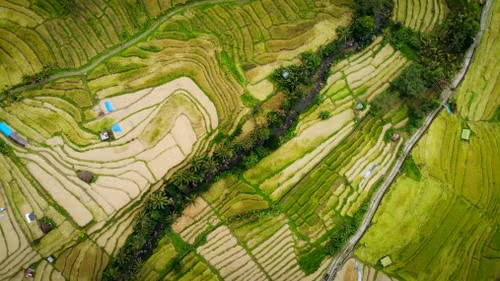
According to company disclosures, Zixin Group currently operates more than 300 mu (approximately 20 hectares) of high-quality sweet potato seedling cultivation base, along with over 8,200 mu (approximately 547 hectares) of pesticide-free sweet potato farmland. At its agricultural base in Liancheng, Fujian, the company uses virus-free seedling propagation and sweet potato-rice rotation to reduce continuous cropping obstacles and pest risks, while improving land-use efficiency.
These investments may not translate directly into short-term profits, but they determine whether an agricultural company can sustain product quality and stable production capacity over the long run.
The Yardstick for Agriculture Is Being Redefined
In the past, the market evaluated agricultural companies primarily by land area, planting scale, and annual output. But as land, labor, water, and compliance costs continue to rise, the growth model that relies simply on expanding planted area and increasing input usage is hitting clear limits.
Liang Chengwang noted: “For an agricultural company, the measure used to be scale — how many mu you plant, how many tonnes you produce. What matters more going forward is whether the company can produce safe, high-quality products consistently over the long term. This kind of capability cannot be built in a single year. It depends on soil health, seed technology, cultivation management, and the integrity of the industrial chain.”
This shift is driving a repricing of agricultural assets. Healthy soil, quality seed sources, standardized cultivation, traceability systems, warehousing and processing facilities, and stable distribution channels, once treated as costs, are becoming core assets that define competitiveness. Two companies with the same land area may differ in long-term value based on soil health, yield stability, safety standards, and supply chain strength.
Rising global population, growing health awareness among urban consumers, and stricter food safety requirements are expanding the market for quality agricultural products. At the same time, however, the aging of the rural workforce, rising labor costs, and the long cycles required for land restoration are making it more expensive to produce high-quality food.
In the past, some low-priced agricultural products were built on the underpricing of land resources, the undercounting of farmers’ labor costs, and the externalization of environmental costs. As these implicit costs gradually surface, the pricing system for agricultural products will inevitably adjust.