






















(Singapore, 10.09.2026)Singapore households are paying substantially more for electricity this quarter, after the regulated tariff jumped 17% for the July-to-September period as higher global natural gas prices pushed up power generation costs. The increase has brought renewed attention to how exposed household energy bills remain to developments beyond Singapore’s shores, and whether rooftop solar can provide homeowners with a greater degree of protection against future price volatility.
The regulated household electricity tariff now stands at 31.91 cents per kilowatt-hour (kWh) before GST, or 34.78 cents including GST. According to SP Group, the increase reflects higher energy costs, with the tariff for each quarter taking into account natural gas prices during the first two and a half months of the preceding quarter.
For 9 Solar FinTech CEO Kerr Sun, the latest increase is a reminder that the case for residential solar should not be built around predicting whether electricity prices will rise or fall next quarter but around managing uncertainty over a much longer period.
“Solar is not a prediction that electricity prices will keep going up. It is a hedge against not knowing where electricity prices will go,” Sun said.
Homeowners have little control over global gas prices, geopolitical developments or future electricity tariffs, he noted, but rooftop solar allows a household to generate part of the electricity it consumes from an asset installed on its own property. When grid prices are lower, solar-generated electricity can still deliver savings, while higher tariffs increase the value of each unit of solar power that replaces electricity that would otherwise have been purchased from the grid.
That makes rooftop solar not only a clean-energy option, Sun said, but increasingly a tool for longer-term household energy planning.
Solar Reduces Exposure, It Doesn’t Eliminate It
Singapore’s exposure to global energy prices reflects the structure of its power system. Around 95% of the country’s electricity is generated using imported natural gas, meaning changes in global fuel prices can eventually feed through to local electricity costs.
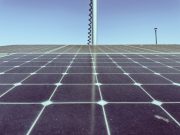
Rooftop solar cannot remove that exposure completely, but it can reduce the amount of electricity a household needs to purchase from the grid. During daylight hours, electricity generated and consumed directly within the home replaces power that would otherwise have to be bought externally, giving homeowners a partial buffer when grid electricity prices rise.
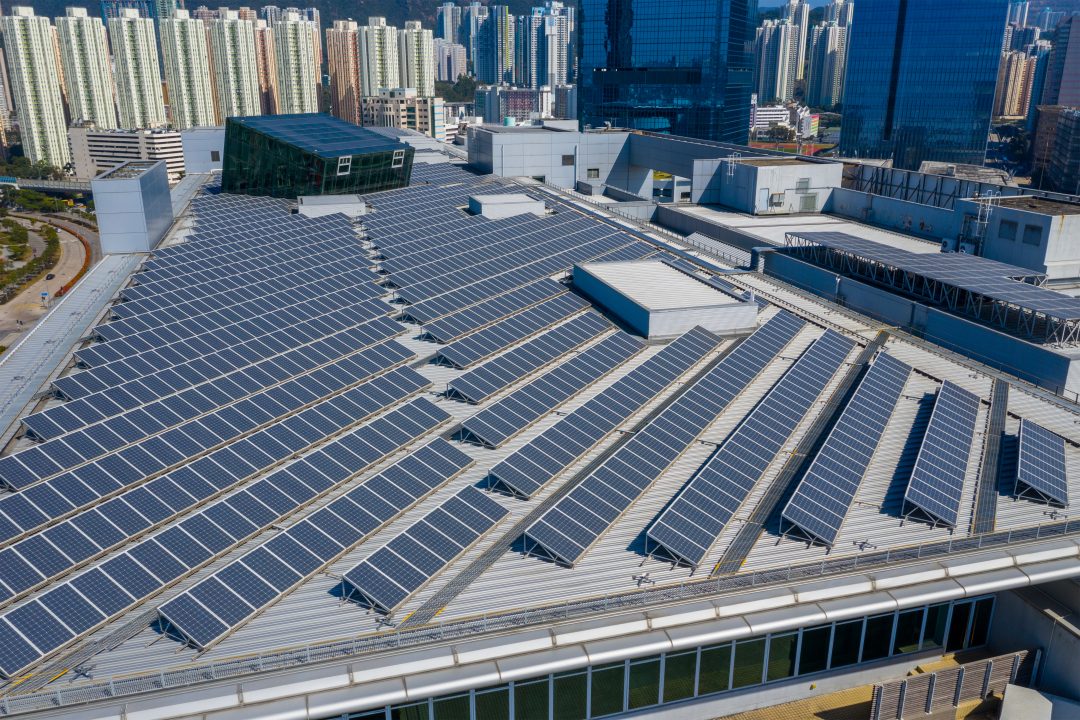
“A homeowner with solar effectively creates a small power station on his or her own roof,” Sun said. “So I would describe solar as reducing exposure rather than eliminating exposure.”
The distinction is important because rooftop solar does not make a home independent of the national electricity grid. Solar generation varies with weather conditions and stops at night, while household consumption does not necessarily coincide with the hours when panels are producing the most electricity. Without battery storage, a household will continue relying on grid electricity whenever its consumption exceeds the solar power available at that time.
How much protection solar provides against higher electricity costs depends partly on self-consumption, which refers to the proportion of electricity generated by a rooftop system that is used directly by the household.
Every kilowatt-hour generated and consumed at home is effectively a kilowatt-hour that does not need to be purchased from the grid. As grid electricity becomes more expensive, the economic value of that self-generated electricity generally rises as well.
Homes with significant daytime consumption can therefore be particularly well positioned to use their solar generation directly. Air conditioning, swimming-pool pumps, home offices, appliances and daytime EV charging can all increase the amount of electricity consumed while panels are generating power.
Excess electricity can still be exported under applicable arrangements, but Sun said the economics of exporting solar power can differ from consuming it directly, making it important to understand each household’s usage pattern before determining the appropriate system size.
This is also why installing the maximum number of panels that can physically fit on a roof is not necessarily the best approach. The system design should instead take into account available roof space, current electricity consumption and how the household’s energy needs may evolve over time.
“Good solar is not about maximum panels. It is about maximum useful energy and maximum long-term value,” Sun said.
From Electricity Consumer to Energy Manager
Rooftop solar also does not have to be viewed as an alternative to other ways of managing electricity costs. Homeowners in Singapore can choose from different electricity retail arrangements, including plans designed to provide greater price certainty or time-of-use options that encourage consumption during lower-cost periods.
Sun sees these options as complementary rather than competing strategies. A fixed-price plan can provide a degree of certainty for electricity that still needs to be purchased from the grid, while a time-of-use arrangement can encourage households to shift some consumption to cheaper periods. Solar addresses a different part of the equation by reducing the amount of electricity that needs to be purchased in the first place.
Combining these approaches could allow households to generate solar power during the day, adjust when certain appliances or EV chargers consume electricity and select an electricity plan that works for their remaining grid demand. As batteries, smart EV charging and home energy-management systems become more widely adopted, the relationship between generation and consumption could become increasingly sophisticated.
“I think the household of the future will not simply be an electricity consumer. It will become a small energy manager, generating, consuming, storing and optimising its own electricity,” Sun said.
That shift could also change how homeowners evaluate the economics of rooftop solar. The traditional question of how much money a system can save remains important, but Sun expects households to pay increasing attention to another consideration: how much control they can gain over an operating cost that will continue for decades.
No one can say with certainty where natural gas prices, electricity tariffs or geopolitical conditions will stand five, 10 or 15 years from now. Solar cannot remove all that uncertainty, nor can it replace the role of a reliable national electricity grid, but it can reduce the amount of electricity a household needs to buy at prices determined by external energy markets.
For Singapore, which remains highly dependent on imported fuel, expanding locally generated solar power across rooftops, buildings and other available spaces could help reduce exposure to global energy price volatility. At the household level, rooftop solar offers homeowners a practical way to generate more of their own electricity, use it directly where possible and reduce their reliance on grid power whose future cost remains beyond their control.