




















(Singapore, 23.09.2026) Can artificial intelligence (AI) formulate a herbal prescription that has never existed before?
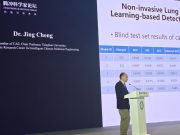
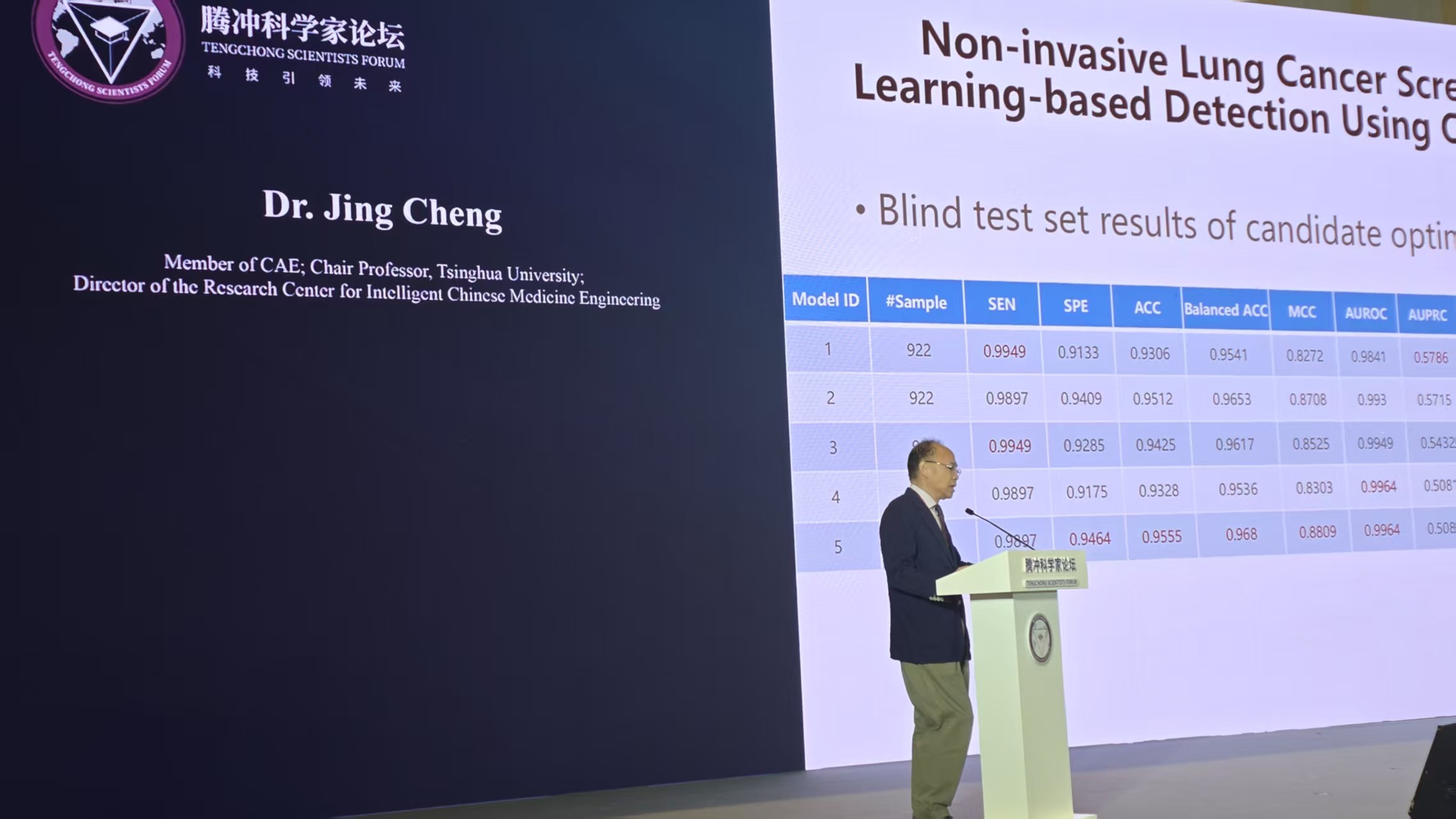
Professor CHENG Jing, director of the Intelligent Chinese Medicine Engineering Research Centre and professor at Tsinghua University’s School of Biomedical engineering, believes it can. But he says that is not the most important question. The harder question is: where does an AI-generated prescription come from, and how can researchers show that it is safe and actually works?
The question matters because AI is already being used to study traditional Chinese medicine (TCM). Large volumes of ancient medical texts, physicians’ case records and existing prescriptions can be digitised and analysed in seconds. AI can then identify which medicinal substances are commonly used for a specific disease, which tend to be prescribed together, and what dosages have historically been prescribed.
Cheng’s team is taking a more radical approach. Instead of asking AI to find patterns in prescriptions that already exist, they begin with the disease itself.
They first look at what has gone wrong in the body — at the level of genes, cells, and biological signalling — and then use experimental data and computation to search for combinations of natural medicinal substances that might push those abnormal biological changes back towards a healthier state.
In other words, the researchers are not asking: “What did doctors traditionally prescribe for this disease?” They are asking: “What is happening biologically, and which combination of medicinal substances might change it?”
That shift is at the heart of Cheng’s recent work on what he calls “Molecular Materia Medica” and AI-assisted formulation. It also points to a potentially new role for AI in traditional medicine: not merely analysing human-developed inherited prescriptions , but participating in the process of formulating new ones.
The problem with simply asking AI to read the past
TCM has accumulated thousands of years of experience with medicinal substances. That accumulated knowledge is valuable, but Cheng says it should not automatically be treated as scientific fact.
One increasingly common use of AI in TCM is to mine this historical knowledge.
Suppose researchers want to study a particular disease. They can feed thousands of prescriptions and clinical records into a computer. AI can then identify recurring patterns: which medicines were frequently used, which were paired together, and how their use varied between patients.
This is essentially research based on prior knowledge — knowledge that already exists. Cheng sees value in it, but also a basic weakness.
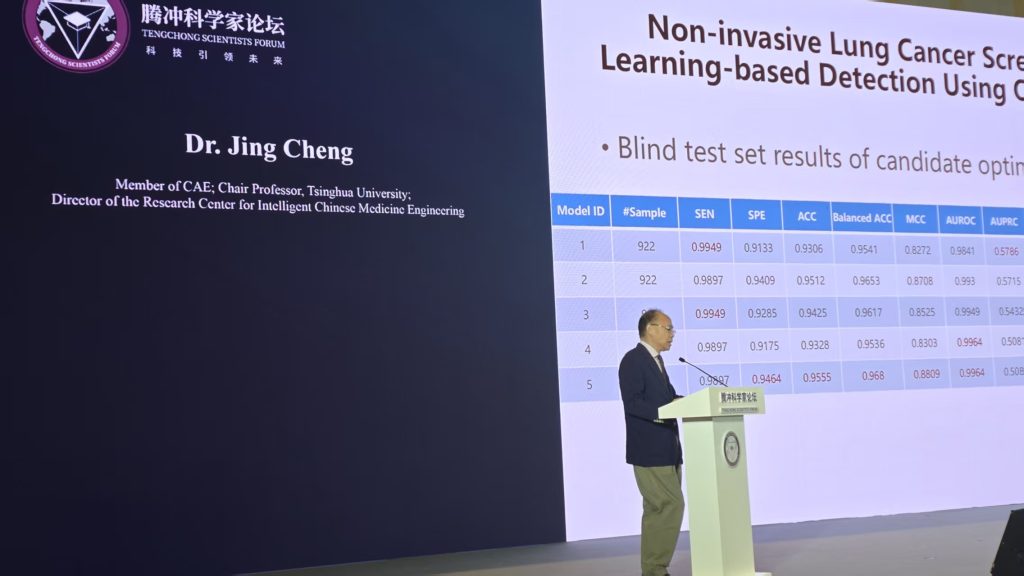
“If something reported in the historical literature is wrong, the system will follow that error,” he told Fortune Times during an interview at the 2026 Tengchong Scientists Forum hosted in Bangkok, in September.
AI can process the vast body of human knowledge, much of it unverified, much faster than humans. But it cannot determine whether every piece of it is correct.
That is why Cheng’s team starts somewhere else.
Start with the disease, not the prescription
The first step is to understand a disease.
Modern biomedical research has already identified many genes, proteins, and signalling pathways associated with different diseases. A signalling pathway is, in simple terms, a chain of biological signals through which cells communicate and respond to changes.
Researchers can compare these processes in healthy and diseased states. What is normal? What has changed? Which genes have become more or less active? Which biological signals have become disrupted?
The logic is straightforward: if a disease is associated with an abnormal biological state, an effective treatment should, at least in some way, be capable of moving that state back towards normal.
The next question is much harder. Among thousands of natural medicinal substances, which ones might do that? To answer it, Cheng’s team has spent about a decade building experimental data.
Researchers expose cells to extracts from different natural medicinal substances and observe the resulting changes in gene expression — essentially, which genes become more or less active after treatment.
The team has accumulated about 1.5 billion data points. That database is important because AI cannot meaningfully formulate a prescription from nothing. It needs something to calculate.
The computer begins to “choose”
Once the biological effects of large numbers of medicinal substances have been measured, researchers can begin asking the computer to search for combinations.
Cheng compares the process to playing mahjong. “You draw a tile. If it improves your hand, you discard a weaker one. Then you draw another, compare again, and keep adjusting until you arrive at the best possible combination.” Formulating a herbal prescription can be approached in a similar way.
The computer selects a combination, calculates its predicted biological effect, removes or replaces weaker components and tries again. With thousands of substances and countless possible combinations, no human researcher could manually test every possibility.
This is where AI becomes useful. But Cheng is careful about what this means. AI is not sitting alone in a laboratory and mysteriously inventing a prescription.
The biological problem comes from biomedical research. The information about medicinal substances comes from experiments. Genetic changes are measured through genomics and other “omics” technologies, while biological effects can also be examined through imaging and other laboratory methods.
AI sits on top of these foundations and performs the large-scale search that humans cannot practically perform themselves.
“AI is a tool,” Cheng repeatedly emphasises.
That may sound like a modest description. In this context, however, it defines a significant change. AI is no longer being used only to read the accumulated history of traditional prescriptions. It is being used to search the space of possible new combinations.
A new formula is only the beginning
Suppose the computer produces a combination of medicinal substances that has never previously been prescribed.
It is still nowhere near being a treatment. The first question is safety.
Cheng’s team can build safety requirements into the search process from the beginning. For example, researchers can prioritize substances traditionally used as both food and medicine, or substances listed in pharmacopoeias with relatively well-established safety profiles, while excluding materials associated with significant toxicity.
In research on chronic heart failure, the team has examined not only whether a treatment produces a therapeutic effect, but also indicators such as liver and kidney function after treatment.
This is important because an AI-generated formula cannot be considered successful simply because it appears to produce the desired biological change .It must also avoid causing serious or disproportionate unintended harm.
And there is another limitation.
AI can only calculate from the scientific knowledge available to it. If researchers do not yet understand the disease correctly, an algorithm may produce a highly sophisticated answer to the wrong question.
Cheng gives an analogy. Imagine that the enemy is actually behind you, but all the intelligence available to you says the enemy is in front. No matter how quickly or accurately you calculate, you will still fire in the wrong direction.
The lesson is simple: AI can amplify knowledge, but it can also amplify the blind spots in existing knowledge. This is particularly relevant for diseases whose mechanisms remain poorly understood.
From a fixed prescription to a changing one
There is another aspect of Cheng’s work that may be even more consequential.
Traditional prescriptions are often discussed as combinations designed to address a particular pattern of symptoms or illness. But what happens if the biological condition itself changes during treatment?
Cheng points to the team’s research on intervention in colorectal adenoma as an example.
The formula used for a patient does not necessarily have to remain fixed throughout treatment. If the patient’s biological state changes, the researchers can potentially recalculate what the next intervention should target.
He compares it to putting out a house fire. When the building is burning, the immediate priority is to extinguish the flames. Once the fire has been put out, however, the objective changes. The focus may shift to preventing another fire and repairing the wider damage. The same logic can be applied to treatment.
At one stage, a formula may focus more directly on abnormal cells. At another, as the biological condition changes, it may place greater emphasis on regulating the immunity system or restoring broader physiological functions.
“It addresses both the local and the whole,” Cheng says.
This is significant because one of the long-standing difficulties in studying TCM scientifically has been its holistic approach, which views the body as an interconnected system and makes claims that do not always fit neatly into the way modern science isolates and tests individual biological mechanisms.
Historically, it has been difficult to measure the whole in a way that can be tested systematically.
But if researchers can simultaneously collect information at different biological scales — from molecular changes, to cellular responses, to effects across the body or wider biological system— the effects of a treatment can increasingly be observed and compared through measurable biological changes.
That does not mean scientific research will confirm every theory or claim in traditional medicine.
Some traditional observations may be supported by experimental evidence. Others may require reinterpretation. Still others may fail to withstand testing. That is precisely what makes the approach scientific: the claims become testable or falsifiable, rather than being accepted simply because they have been passed down.
The same method could use Southeast Asia’s own medicines
This approach also opens another possibility beyond China.
Thailand, Indonesia and other Southeast Asian countries have their own traditional medical systems and extensive natural medicinal resources. If Chinese healthcare companies and researchers work with these countries, Cheng says the starting point should not be to export a fixed Chinese prescription. It should begin with specific health problems.
If a particular disease is common in Thailand and existing treatments do not adequately address it, researchers from both sides could start there.
The question would not be: “What medicines does China have?” It would be: “What disease does the local population most urgently need to address?” The medicinal substances would not necessarily have to come from China either.
If Thailand or Indonesia has a natural substance that is not found in China, researchers could study its molecular effects, add the resulting data to the database, and allow it to become part of the same computational search.
For the same disease, the computer could then potentially generate candidate combinations using locally available medicinal resources.
That could change how countries cooperate on traditional medicine.
China would contribute research platforms, experimental methods, and computational capabilities. Southeast Asian partners could contribute local disease data, medicinal resources and traditional knowledge.
Neither side would simply be a supplier or customer. The two sides could test candidate treatments together. In time, this could become a broader cross-border research model for natural medicines.
Speed is useful but not enough
AI’s appeal in this field is obvious.
Data analysis that once required substantial human effort can now be performed in seconds. Combinations of medicinal substances that would have been practically impossible for researchers to test one by one can be screened computationally.
But Cheng cautions that processing medical information quickly is not the same as discovering a treatment that is safe and effective. If it is eventually developed into a product, it must also navigate drug or medical-device regulation, pricing, insurance and public healthcare coverage, and the wider healthcare system.
Cheng compares medical innovation to a cart with two wheels. One is technology.
The other is policy. “If only one wheel is turning, the cart simply spins in place. Only when both wheels turn together can it move forward.”
That is why the most important change described by Cheng is not that AI can produce a prescription in seconds. It is that AI may now become part of the formulation process itself.
In the past, the starting point was largely human experience: a physician observed symptoms, drew on accumulated knowledge, and selected a combination of medicinal substances.
A newer approach begins with measurable biological changes, uses experimental data to understand how medicinal substances affect those changes, and then allows AI to search among an enormous number of possible combinations.
The prescription is no longer necessarily something that already exists in an ancient text.
It can become a testable hypothesis generated from biology and data.
That does not make the computer a doctor. Nor does it make an AI-generated formula a medicine. Between a computer-generated combination and a treatment that patients can safely use lies a long chain of experiments, clinical evidence, and regulatory scrutiny.
But the boundary has nevertheless shifted.
AI is moving from the role of finding patterns in what traditional medicine has already prescribed to helping researchers ask a more ambitious question: Given what we now know about a disease and how medicinal substances affect the body, what combination should we test next?
That is a much bigger change than simply making an old prescription easier to find.
For centuries, physicians such as Li Shizhen gathered, tested and refined the knowledge behind herbal medicine. Now, AI is beginning to enter that creative process itself—not simply reading
the prescriptions left by earlier generations, but helping devise new ones.