



























(Singapore, 17.09.2026)The Federal Reserve has raised interest rates for the first time in more than three years, pushing back against President Donald Trump’s calls for sharply lower borrowing costs as war, tariffs and strong investment keep inflation above the central bank’s target.
The Federal Open Market Committee voted unanimously on Wednesday to raise the benchmark federal funds rate by a quarter percentage point to a range of 3.75% to 4%, its first increase since July 2023. The Fed said economic activity was expanding at a solid pace, while inflation remained elevated and domestic spending resilient.
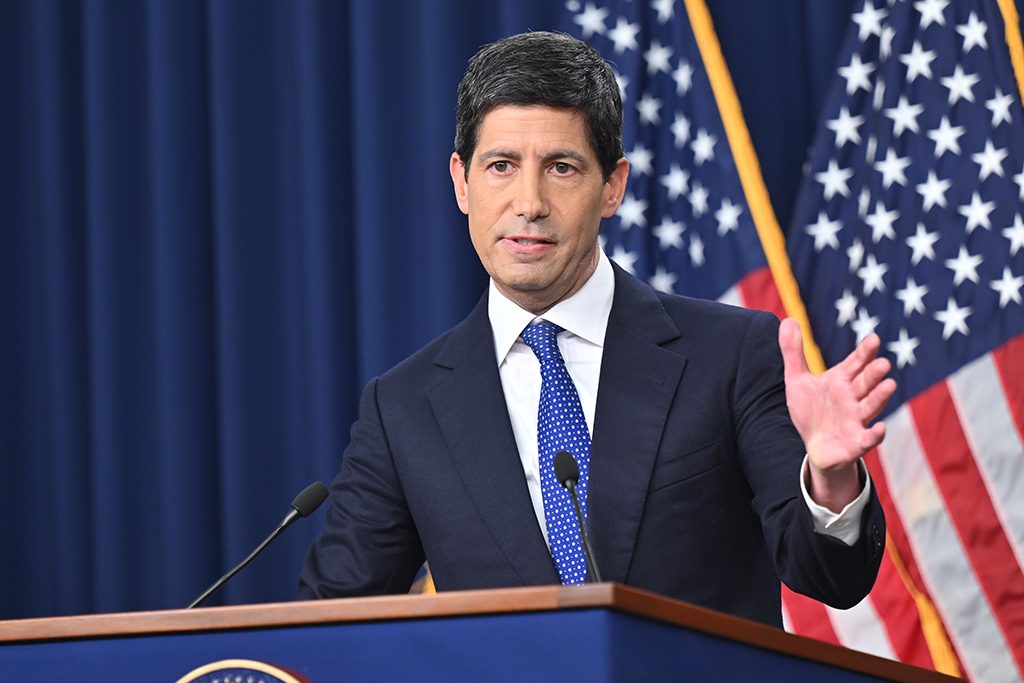
The decision marks an important test for Fed Chair Kevin Warsh, who took over the central bank earlier this year after being selected by Trump. Before taking the job, Warsh had argued that interest rates were too high and that advances in technology could help the economy grow faster without necessarily creating more inflation.
The economic picture has since become more complicated. Higher energy prices linked to the US-Israeli war with Iran, tariffs and heavy investment in artificial intelligence have added to inflationary pressures, while the US economy and labour market have remained relatively resilient. Reuters reported that the Fed now sees inflation as broader than simply the effects of energy and import prices.
“The plain fact is that inflation is too high and has been for too long,” Warsh told reporters after the decision, according to Bloomberg.
Trump Wants Rates at 1% or Lower
The rate increase puts the Fed on a different path from Trump, who has repeatedly pushed for cheaper borrowing.
Hours after the decision, Trump said US interest rates should be reduced to 1% or lower and called for cuts to come quickly. He later told reporters that he still had confidence in Warsh and said he had spoken with the Fed chairman, while directing his criticism at what he described as a “very hostile” and “very political” Fed board.
That response was notably less confrontational than Trump’s repeated criticism of former Fed Chair Jerome Powell. Warsh, meanwhile, has stressed the central bank’s commitment to bringing inflation back towards its 2% target.
Investors interpreted the latest decision as evidence that the Fed remains willing to tighten policy despite political pressure.
Two-year Treasury yields, which are particularly sensitive to expectations for Fed policy, climbed to around 4.74%, their highest level since 2024. The 10-year Treasury yield also moved above 5% during Warsh’s press conference, while US stocks initially fell following the decision.
The reaction in longer-dated bonds was more measured, suggesting investors believed tighter monetary policy could help contain inflation over time. Long-term inflation expectations also eased, as the Fed’s decision reinforced confidence that policymakers remain committed to bringing price pressures under control, even if that means keeping borrowing costs higher for longer.
Another Rate Hike Could Be Coming
The Fed’s updated projections suggest Wednesday’s increase may not be the last.
The median projection among policymakers puts the federal funds rate at 4.1% at the end of 2026, up from 3.8% previously. Sixteen of the 18 officials who submitted rate forecasts expect at least one more increase before the end of the year.
That represents a significant shift from earlier expectations that the Fed could leave rates unchanged while waiting for inflation to gradually return towards its target.
The change followed stronger-than-expected inflation data for August. Policymakers had already become increasingly concerned that price pressures were spreading beyond areas directly affected by tariffs and higher energy costs, while strong capital spending and a resilient labour market gave the economy greater capacity to absorb higher rates.
Warsh said the American economy appeared to be strengthening, with robust capital investment and productivity growth. The Fed’s official statement similarly noted that job gains had kept pace with the workforce and unemployment had changed little.
The central bank has also pushed back the point at which it expects inflation to return to its 2% target, with policymakers now projecting that this will not happen until 2029.
Not everyone is convinced that further rate increases would be the right response. Bloomberg Economics economists Anna Wong, Andrew Sacher and Eliza Winger argued that higher interest rates may do relatively little to address inflation caused by supply disruptions, while increasing risks for financial conditions and the labour market. They expect September’s increase to be the only hike this year.
The next Fed meeting in October could prove even more closely watched because it falls just days before the US midterm elections. With Trump continuing to demand substantially lower borrowing costs and most Fed policymakers signalling that another increase may be necessary, incoming inflation, employment and energy-price data will play a major role in determining whether the central bank moves again before the end of the year.