


























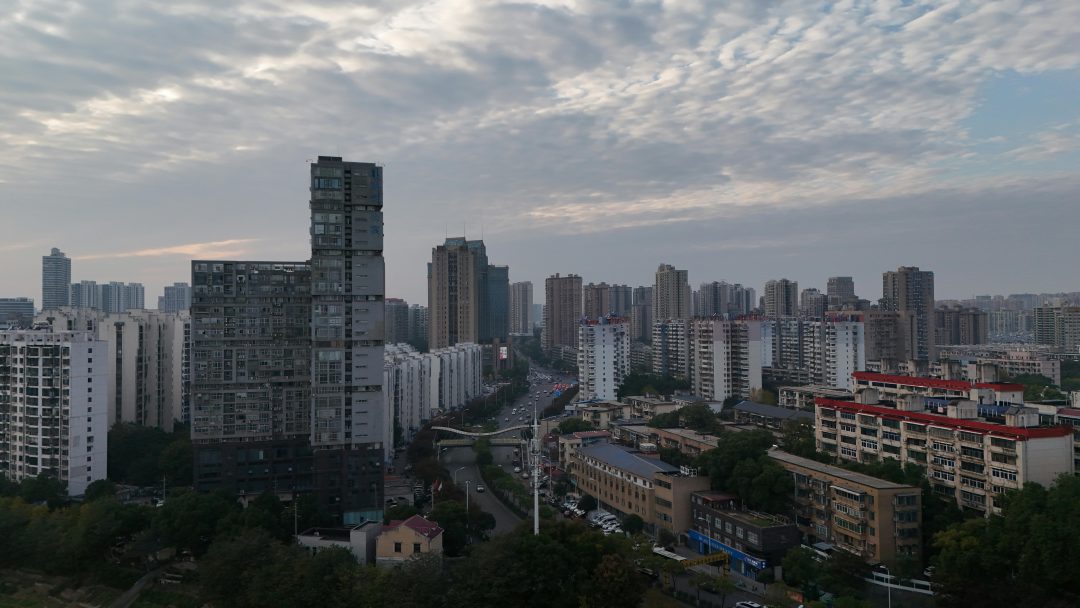
(Singapore, 07.04.2026)China’s prolonged property downturn is creating a new challenge for its financial system, as a growing number of homeowners now owe more on their mortgages than their homes are worth. With negative equity becoming more widespread, banks, courts and regulators are adopting increasingly flexible measures to prevent a surge in defaults that could further destabilize the economy.
After years of rapid growth fueled by debt, China’s property market has been in decline for nearly five years. Prices in major cities such as Beijing and Shanghai have dropped sharply from their peaks, with some estimates suggesting declines of more than one-third. In smaller or less developed areas, the fall has been even steeper.
This has left many homeowners in difficult positions. When property values fall below outstanding loan amounts, borrowers are effectively trapped, as selling the home would not fully repay the mortgage. This “underwater” situation is becoming increasingly common across the country.
Estimates suggest that mortgages worth hundreds of billions of yuan could now be in negative equity. By 2027, around 3.3 million homes may fall into this category, potentially resulting in losses of more than 200 billion yuan (around S$37.38 billion). While still relatively small compared with China’s total loan market, the scale is unprecedented domestically.
Banks and courts step in to contain risks
Rather than pushing borrowers into default, Chinese banks are taking a more cautious and pragmatic approach, according to a report by Bloomberg News.
Some state-owned lenders have begun offering relief measures such as allowing borrowers to pay only interest for up to two years, significantly reducing monthly repayment burdens. In certain cases, borrowers are even granted temporary suspensions on both principal and interest payments.
Banks are also working with distressed homeowners to find buyers for their properties, instead of immediately initiating foreclosure proceedings. Internally, some lenders have introduced monitoring systems that flag missed payments early, prompting staff to engage borrowers and negotiate solutions such as extending loan tenures or restructuring repayment plans.
China’s judicial system is also playing a role in stabilizing the situation. In several regions, courts have slowed the acceptance of mortgage default cases or limited the number of lawsuits banks can file. This effectively reduces the number of properties entering foreclosure and being sold at auctions.
The impact is reflected in market data, with the number of foreclosed homes peaking at nearly 800,000 in 2023 before declining in subsequent years. Even so, demand remains weak, with fewer than a quarter of auctioned homes successfully sold last year.
For banks, this creates a dilemma, as seizing homes does not guarantee recovery of funds, especially in a weak market. As a result, many lenders prefer to give borrowers more time rather than flooding the market with distressed properties.
Risks remain despite temporary relief
Unlike in the United States during the 2008 financial crisis, large-scale mortgage walkaways are less likely in China due to institutional differences.
China does not have a comprehensive personal bankruptcy system. If a foreclosed property is sold for less than the outstanding loan, the borrower remains liable for the remaining debt. This could require using personal savings or future income to repay the shortfall. In addition, defaults severely damage credit records, limiting access to future financing.
These factors discourage borrowers from abandoning their homes. However, they also complicate the banks’ position. Aggressive debt collection could worsen household financial stress and have broader economic consequences, particularly if done on a large scale. State-owned banks therefore tend to balance financial discipline with social stability.
According to a report by Bloomberg News, individual cases highlight the pressure faced by homeowners. A borrower in Chengdu, for example, struggled to keep up with monthly mortgage payments after losing her business income. Her bank offered temporary relief, including interest-only payments and a short-term suspension of repayments. While these measures eased immediate stress, uncertainty about the future remains.
In Qingdao, another borrower was offered a one-year interest holiday and a reduced mortgage rate, provided she settled overdue payments. She has yet to decide whether to continue servicing the loan, highlighting the difficult choices many households now face.
These flexible measures have helped contain risks within the banking system for now. Official data shows that non-performing mortgage ratios at major banks remain around 1%, although smaller regional lenders have seen sharper increases.
However, analysts warn that such policies may only delay the recognition of losses rather than eliminate them. By restructuring loans and postponing repayments, banks can keep bad loan ratios low on paper, even as underlying risks continue to build.
At the same time, China’s property market remains under pressure from weak demand and a large inventory of unsold and foreclosed homes. In some areas, distressed properties account for a significant share of total housing supply, adding further downward pressure on prices.
For now, China’s approach centers on slowing defaults, limiting forced sales and buying time as authorities wait for market conditions to stabilize. The deeper challenges in the property sector, however, continue to linger in the background.