





















(Singapore, 19.05.2026) A prolonged standoff between FIFA and China’s state broadcaster China Media Group ( 中央广播电视总台 ) —the parent of CCTV (中央电视台) —has finally come to an end after months of back-and-forth driven by a wide pricing gap, softer advertising returns, and economic headwinds. In the end, both sides managed to strike a last-minute deal on the 2026 World Cup broadcasting rights.
According to Chinese media reports, this drawn-out, last-minute settlement over the FIFA World Cup broadcast rights reflects a broader shift in global sports media economics. On the one hand, FIFA’s long-standing ability to steadily push up rights fees is running into resistance in major markets like China. Meanwhile slower economic momentum, weaker advertising demand, and more disciplined return-on-investment (ROI) calculations are making broadcasters far less willing to simply accept benchmark global prices.
The episode also highlights how the traditional ad-driven model for mega sporting events is under increasing pressure. Fragmented viewing habits, combined with unfavourable time zones for live sports, are making returns less predictable—even for marquee tournaments like the World Cup.
Still, the eventual agreement also shows structural resilience in the system. Because FIFA, broadcasters, and sponsors are deeply interdependent, negotiations can drag on and prices can be heavily contested, but major markets are ultimately too important for either side to risk a complete breakdown.
On May 15, China’s CMG officially announced via CCTV News that it had reached a new-cycle media rights agreement with FIFA, the international governing body for association football and organizer of World Cup. The deal covers four major tournaments: the 2026 men’s World Cup, the 2030 World Cup, the 2027 Women’s World Cup, and the 2031 Women’s World Cup. CMG confirmed it has secured exclusive multi-platform rights in China, along with sublicensing rights. Matches from 11 June to 19 July will be broadcast on CCTV, its domestic television arm.
In the end, a deal was stitched. Reports suggested the rights for the upcoming cycle were settled at about US$60 million. China’s tech giant Lenovo (联想)—an official sponsor for the tournament —reportedly played a behind-the-scenes coordinating role and is said to have contributed significant advertising commitments that helped support the deal. Broader media estimates suggest that the combined value of two men’s World Cup cycles is around US$110 million, with additional pricing allocated to Women’s World Cups and sublicensing.
Since last year, negotiations between FIFA and CCTV have been one of the most closely watched storylines in Chinese sports media. At the outset, FIFA reportedly quoted around US$300 million (S$385 million), while CCTV’s internal budget ceiling was closer to US$60 million—creating a threefold gap. At one point, rumours circulated that Chinese viewers might end up without any official live broadcast of the tournament at all.
When the outcome was still uncertain, some commenters joked that the tournament risked becoming a “pirated-streaming and meme-driven World Cup” if no deal was reached. Others quipped that even China’s zero qualification prospects would somehow strengthen CCTV’s negotiating position, emboldening it to hold the line more firmly.
CCTV reportedly generated gross margins of about 5.17 billion yuan (S$930 million) and 5.99 billion yuan from the previous two World Cup broadcasts. With rights costs now falling sharply—from around 1 billion yuan to roughly 400 million yuan—industry analysts estimate that profitability can still be maintained. Even with late-night viewing disadvantages due to time zone differences, major sponsors such as Wanda Group (万达), Lenovo, Hisense (海信), and Mengniu Dairy (蒙牛)—which collectively invested over US$500 million—are expected to help sustain returns. Including sublicensing revenue from new media platforms, gross profit could still exceed 4 billion yuan, according to analysis cited by a column in the Chinese tech outlet 36Kr.
For comparison, in Hong Kong, rights for the 2026 World Cup were reportedly acquired by PCCW, one of the city’s main telecom providers, for about US$25 million. This led some commenters in mainland China to accuse FIFA of “discriminatory pricing” and to argue that CCTV should have refused to pay.
India experienced a similar deadlock. Reliance Industries, working alongside its media partner Disney, initially tried to cut its bid from about US$60 million in the previous cycle to around US$20 million. FIFA rejected the offer. Even after bundling two cycles, FIFA still demanded about US$35 million—above India’s willingness to pay—and the deal remains unresolved.
On a per-capita basis, Hong Kong’s agreement works out to about US$3.3 per person. In mainland China, FIFA’s lower pricing would translate to just US$0.18 per person across a population of 1.4 billion. That may look extremely cheap at scale, but compared with India’s offer, China’s implied per-capita payment would be around 17 times higher, fuelling accusations that FIFA prices China as a premium market despite its classification as a developing economy alongside India, according to the column Yulezibenlun (娱乐资本论).
This 2026 negotiation may be the most intense since CCTV first began broadcasting the World Cup in 1982. In the early 2000s, FIFA’s commercialisation accelerated sharply. Germany’s Kirch Media acquired global rights for the 2002 and 2006 tournaments for £2.5 billion (about S$3.65 billion), after which CCTV had to negotiate strenuously. It ultimately paid about US$24.98 million to secure both tournaments in a bundled deal.
At that time, China’s qualification for the 2002 World Cup made the broadcast politically compulsory and commercially viable. Combined with favourable time zones in Japan and South Korea, there was strong domestic pressure that the rights “must not be lost,” even if budgets were stretched. In later cycles, costs rose steadily, eventually reaching around US$300 million for bundled rights across 2018 and 2022.
CCTV’s revenue model has historically relied mainly on advertising and sublicensing. For the 2018 World Cup, it began sublicensing rights to digital platforms such as Migu ( 咪咕 )and Youku (优酷), each paying about 1 to 1.6 billion yuan. In 2022, platforms including Migu and Douyin (抖音) reportedly paid over 1 billion yuan each. This structure generally allows CCTV to break even or even profit at moderate rights costs—but it would come under severe pressure if FIFA’s higher-end pricing (such as US$800 million across cycles) were applied.
One key challenge for 2026 is scheduling: because the tournament will be held across the US, Canada, and Mexico, the 12 to 13 hour time difference means most matches in China will air late at night or in the early morning. In today’s fragmented media environment, sustaining live viewing engagement is much harder than in earlier decades, according to sports commentaries.
Another factor is that China did not qualify for the tournament, removing any “home team effect” that would normally boost domestic attention. At the same time, FIFA’s expansion of the World Cup to 48 teams introduces debutants such as Cape Verde, Jordan, and Uzbekistan, raising questions about uneven match quality in the group stage.
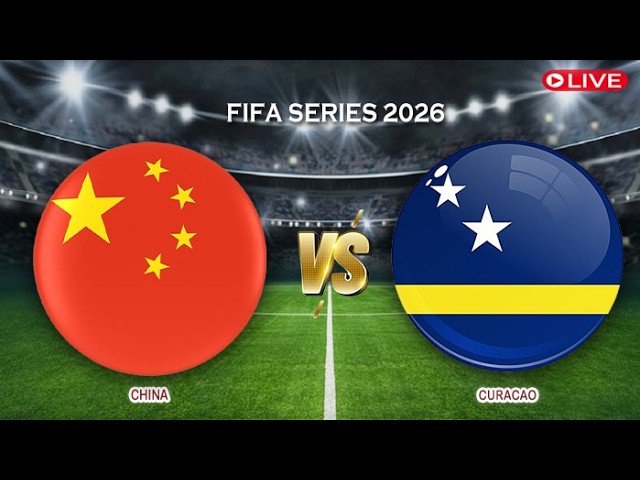
In March 2026, China’s 2–0 win over Curaçao—a Caribbean side from a nation of about 150,000, the smallest among World Cup qualifiers—briefly fuelled online cynicism in China. Some joked that the World Cup had become little more than a “geography lesson,” given Curaçao’s obscurity. Curaçao is a constituent country of the Kingdom of the Netherlands.
Despite the rhetoric, all sides had strong incentives to reach a deal. A breakdown would have meant major losses, especially for sponsors. Without broadcast coverage, the investments of companies like Lenovo would lose much of their visibility value, particularly given the heavy reliance on in-stadium digital advertising boards integrated into global broadcast feeds. In 2022, China accounted for the largest sponsor group globally, with about US$1.4 billion in total spending, though participation is expected to be narrower in 2026.
China’s media structure also plays a role. Because CCTV acts as a centralised national buyer for major sports rights, it effectively represents a single market of 1.4 billion viewers. That gives China unusual negotiating leverage, but it also creates high-stakes, all-or-nothing dynamics where failure could mean a total blackout.
At the same time, broader economic conditions are making large fixed-cost media rights harder to justify. With China’s growth slower than in the 2000s–2010s boom years, broadcasters are more cautious about rising costs for content whose live viewership is increasingly uncertain.
In that sense, the final settlement is more than just a commercial deal. It signals a structural adjustment: FIFA still has pricing power, but it is no longer unlimited; China remains a critical market, but a more price-sensitive one; and the ad-supported sports broadcasting model is under sustained pressure from changing viewing habits and economic reality.