























(Singapore, 26.04.2026)Singapore’s yachting scene is set to see a notable milestone with the launch of a locally designed and built chase boat — a specialized support vessel that accompanies a mother yacht at sea.
Designed to reduce the burden on the main yacht while offering logistical support and backup amenities, chase boats are a rarity in Singapore waters and are more commonly seen alongside visiting superyachts from overseas. The roll-out of a home-made chase boat marks a significant step forward in the city-state’s maritime innovation.
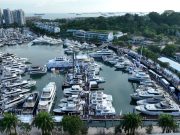
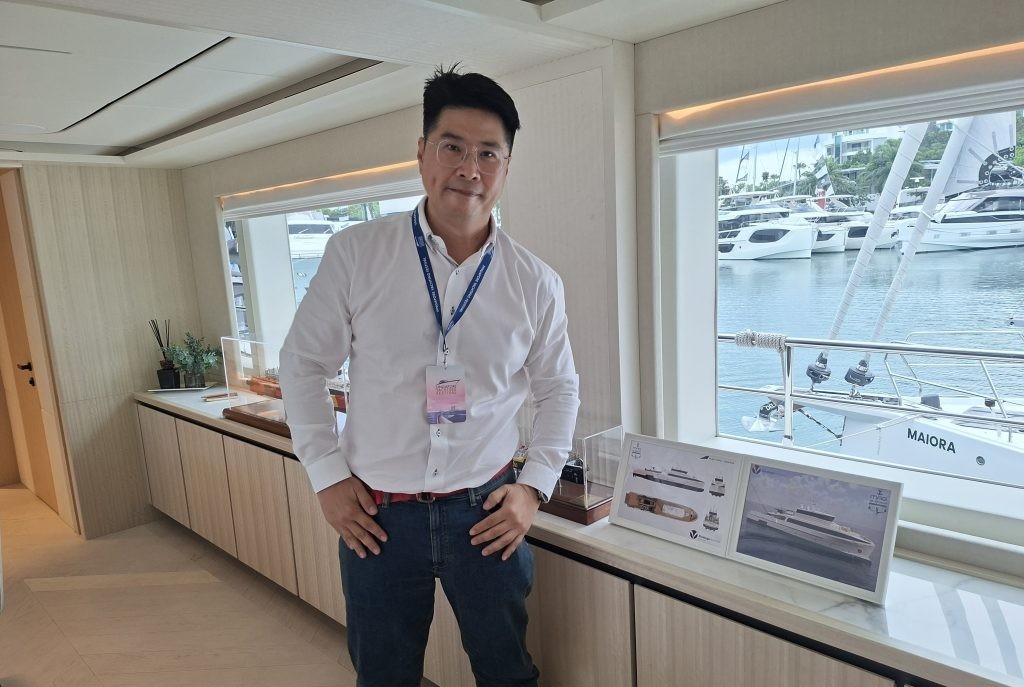
“We anticipate a sizeable market for chaser and shadow yachts — this represents the next frontier in yachting. We are proud that ours will be entirely made in Singapore,” said Alvin Chua, managing director of MAG Subsea, speaking to Fortune Times aboard the superyacht Nomad 101 during the Singapore Yachting Festival. The event, held at ONE°15 Marina at Sentosa Cove, showcased around 70 vessels over four days, ending today, and has drawn strong interest from both yacht enthusiasts and casual visitors alike.
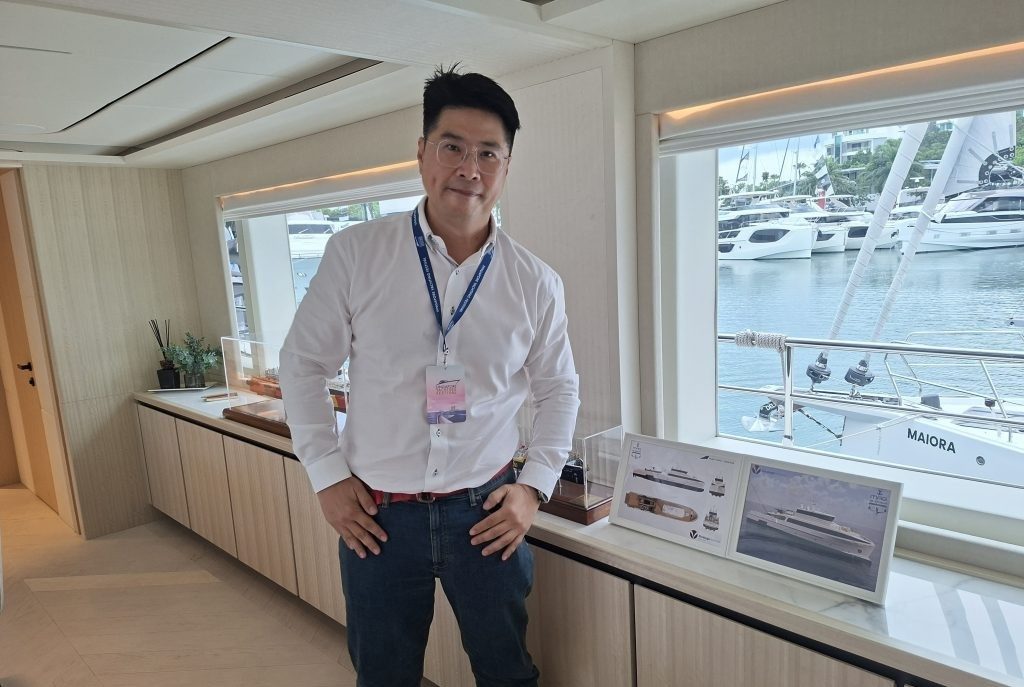
Mr Chua revealed that the chaser boat, which is designed with his input and will be owned by MAG Subsea upon completion by a collaborating shipyard, is currently about 80% finished. It is now undergoing “soft finishing” works. The company is actively seeking a buyer, and once a purchase is secured, final touch-up is expected to take about three months.
With about 30 years of experience in yacht building and subsea engineering, Mr Chua helped establish the upcoming chaser boat as a new industry model and a source of national pride. MAG Subsea, founded in 2013, specializes in subsea support services, and this project that he helps oversee is yet another integrated maritime solution driven by local expertise.
He described a chaser boat as a protective escort vessel that operates alongside a mother yacht, offering it additional security and providing it more maneuvering room. One of its primary roles is to serve as a refueling and supply platform, minimizing risks like fuel contamination when the main yacht replenishes at remote locations.
“A chaser boat also helps relieve the mothership of extra burdens, whether it’s too many people or too much equipment on board,” Mr Chua explained. “Heavy logistical tasks can be handled by the chaser boat, allowing the mothership to comfortably accommodate the owner and his guests.”
In addition, the vessel can act as a forward deployment unit, arriving before the main yacht to set up a destination and handle logistics. In emergencies, it can also transport guests or owners to safety.
Mr Chua highlighted the integration of advanced technology on the vessel, including Starlink connectivity and onboard camera systems. “The owner on the mothership can log in on his iPad and watch the two boats cruise together,” he said, underscoring the ease of real-time monitoring.
At the festival, MAG Subsea also showcased two vessels — the Nomad 101 and the Majesty 62 — both built by the United Arab Emirates’ Gulf Craft. The company handled the sales and promotion of the two luxury boats, the former classified as a superyacht and the other close to superyacht category.
Although MAG Subsea is not a shipbuilder, it provides engineering consultancy for vessel design and construction. Its core business remains subsea engineering, including inspection, maintenance, and intervention services for the offshore oil and gas sector. These operations often involve remotely operated vehicles (ROVs) and diving work to service underwater infrastructure.
Mr Chua emphasized that his shipbuilding philosophy is to build robust, ocean-going vessels rather than fanciful luxury yachts. He pointed out that many of the vessels he has worked on are designed with naval engineering principles, prioritizing durability, serviceability, and performance at sea.
“Each project starts with constructing a scale model of the ship followed by towing tests to study its motion and how it responds to various sea conditions,” he said. He contrasted this with what he described as superficial luxury yacht designs, stressing instead the importance of functional engineering and long-term maintainability.
He also expressed concern about the declining number of naval architects in Singapore, estimating there may only be a handful remaining. Despite this, he reaffirmed his commitment to the profession, saying with a smile that he intends to remain a naval architect for the foreseeable future.
Separately, Olivier Besson, CEO of Asia Yachting — a Hong Kong-based yacht dealership and brokerage — offered insights into shifting buyer preferences in the region. Speaking to Fortune Times, he observed that earlier Chinese generations tended to view yacht ownership as a status symbol, while younger ones are increasingly motivated by lifestyle and connection to the sea.
“I believe the new generation of Chinese are more internationalized and understand what real enjoyment is, which means to be connected to the sea and generally to nature,” Mr Besson said.
He added that cultural preferences also shape yacht design choices. Chinese buyers, he noted, often prefer larger interior spaces for social gatherings and enclosed, air-conditioned comfort. In contrast, Western clients are typically more open to outdoor living and exposure to the sun.
Asia Yachting currently represents brands such as Prestige, Fountaine Pajot, and Nautique. Mr Besson highlighted that French yacht designs tend to lean towards minimalistic luxury and practical functionality rather than flamboyant styling. Among its offerings, Prestige, despite being French, has proven particularly popular among Chinese clients due to its spacious layouts and design approach.
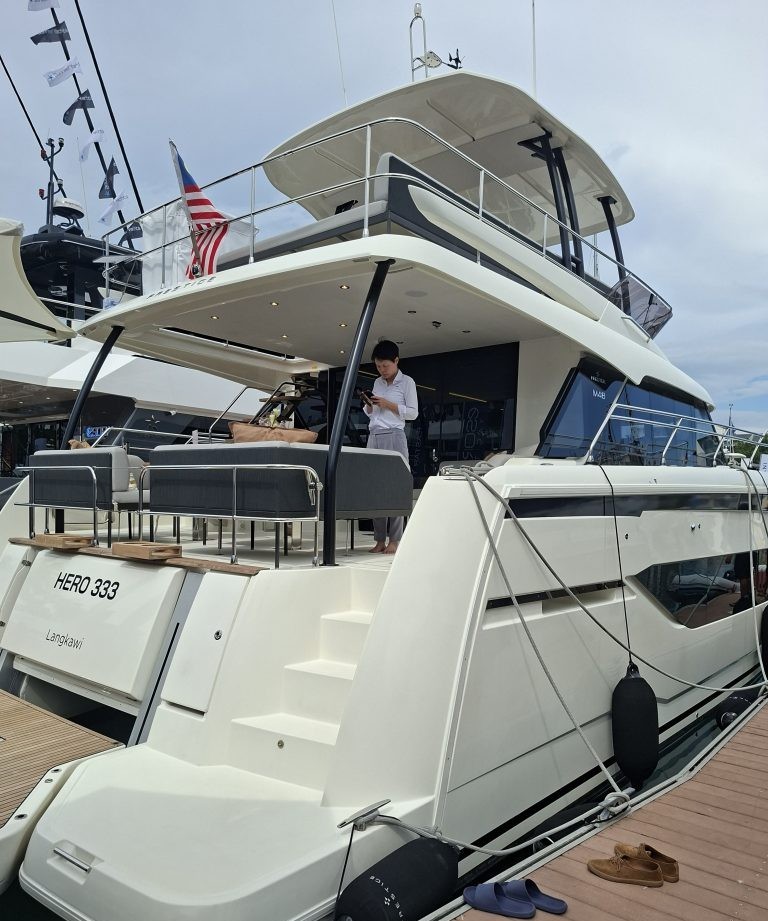
The company, which has maintained a strong presence at the annual Singapore Yachting Festival, is expanding across Southeast Asia. It already operates an office in Phuket serving Singapore, Thailand, Malaysia, and the Philippines, and may establish a permanent office in Singapore if demand continues to rise.
While Asia Yachting is not currently entering mainland China directly due to high import tariffs, it is actively targeting Chinese buyers based overseas. Mr Besson added, however, that the firm’s strategy remains regional rather than China-centric.
The 2026 Singapore Yachting Festival, which ran from Thursday to Sunday, featured around 70 yachts and was expected to have attracted about 13,000 visitors — about 1,000 more than last year — reflecting the growing interest in luxury marine leisure in Singapore and the region.