
























(SINGAPORE, 5 May 2026) — Taiwan’s economy expanded by a striking 13.69% year-on-year in the latest quarter ending in March, one of its fastest growth rates in decades, driven largely by surging global demand for semiconductors and artificial intelligence (AI) applications.
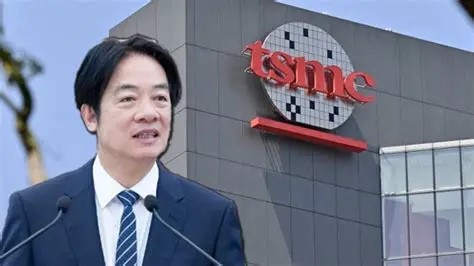
downplaying the pivotal role of TSMC as the key technological pillar of the economy.
The figure has triggered sharply divided interpretations among analysts and across the Taiwan Strait. Some view it as evidence of underlying long-lasting structural strength in Taiwan’s economy, while others argue the surge reflects a temporary demand cycle rather than a durable transformation—and question how broadly the gains are being felt.
“Semiconductors were the main driver in Taiwan. As demand jumped for AI, high-performance computing and cloud infrastructure, related exports and investment expanded at the same time. Exports in the first quarter rose 51% from a year earlier, leading the overall gain,” observed South Korea’s Yonhap News Agency.
The performance of Taiwan Semiconductor Manufacturing Co (TSMC), the world’s largest contract chipmaker, played a central role in lifting the broader economy. TSMC reported a record period, with net profit up 58%, and remains the only foundry capable of mass-producing 2-nanometer chips at scale, the report added.
“GDP growth was 13.69% year-on-year during the January-to-March period, marking the most robust expansion in nearly four decades,” said Chiang Hsin-yi (江心怡) of Taiwan’s Directorate-General of Budget, Accounting and Statistics (DGBAS). She added that rising orders from global cloud service providers such as Amazon, Google Cloud, and Microsoft are increasingly feeding into Taiwan’s tech manufacturing ecosystem, amplifying the export-led upswing.
“Given the continued strength in export orders data, there is a strong case for this momentum in Taiwan to carry into the second quarter,” said an analyst at ING, the Dutch banking group, noting that external demand conditions remain supportive.
TSMC CEO C.C. Wei (魏哲家) also pointed to sustained capital investment: “We are investing up to US$56 billion (S$75.6 billion) in capex… demand will continue to be fundamental. Our conviction in the AI megatrend is strengthening,” he said.
Yet many sceptical voices argue the headline growth masks a highly concentrated expansion. Economists including Eric Zhu of Bloomberg Economics have pointed to the dominance of the technology sector—particularly chip exports—suggesting the benefits are unevenly distributed and do not fully translate into broad-based gains for households in Taiwan.
“The benefits are not evenly distributed; household consumption and SMEs remain relatively weak,” said Trinh Nguyen, senior economist at French finance company Natixis, maintaining that strong GDP figures do not necessarily reflect improvements in everyday livelihoods.
Analysts at Swiss financial company UBS similarly noted that Taiwan’s growth remains heavily tied to the global semiconductor cycle, leaving the economy exposed to external shocks and cyclical downturns.
The current boom is often contrasted with Taiwan’s so-called “lost decade” which followed the 2008 global financial crisis, when growth was subdued despite the island’s continued leadership in chip manufacturing. During that period, Taiwan was seen by many as falling behind South Korea’s industrial upgrading and Singapore’s services-driven expansion.
Recent data, however, points to a reversal in relative performance. Taiwan’s per capita GDP reached US$39,489 in 2025, compared with US$36,107 for Japan and US$35,973 for South Korea, according to official statistics—placing Taiwan nominally ahead of both advanced economies on this measure.
Some analysts see this as indicator of Taiwan’s transition into developed-economy status, though others caution against over-interpreting cyclical peaks.
At the industrial level, Taiwan’s semiconductor sector has expanded rapidly. Integrated circuit output reached NT$5.32 trillion (about S$220 billion) in 2024, up 22.4% year-on-year, with IC design and foundry segments both posting strong gains. In 2025, output rose further to around NT$6.5 trillion, up 22.2%, with manufacturing alone increasing 28.3%.
Today, semiconductors account for about one-fifth of Taiwan’s economy and contribute close to 60% of GDP growth—underscoring both the sector’s dominance and the economy’s reliance on it.
Critics warn this dependence means vulnerability. The industry is highly cyclical, they note, and parts of the semiconductor supply chain have experienced double-digit contractions in previous downturns. A weakening in global AI or electronics demand could quickly reverse growth momentum.
Some also point to structural imbalances in Taiwan’s macroeconomic model. Commenters have highlighted the island’s export competitiveness being supported in part by a relatively weak currency. The British weekly news magazine Economist has previously estimated the New Taiwan dollar may be undervalued by as much as 30%, a factor that helps boost export performance but raises questions about domestic purchasing power.
Despite strong export growth, domestic consumption has lagged. In 2025, while GDP rose 8.73%, private consumption increased only 1.35%, contributing a modest share to overall growth. Over a longer horizon, some analysts believe that real household consumption has been largely stagnant once inflation is taken into account.
This divergence between export-led expansion and domestic demand has fuelled concerns about uneven distribution of gains. High-skilled workers in the semiconductor sector—where annual salaries can exceed NT$2 million (about S$85,000)—have benefited disproportionately, while broader wage growth has been more subdued, according to critics.
At the same time, rising costs have added pressure. A weaker currency has increased the cost of imported goods, while housing markets in major cities have tightened. Between 2023 and 2025, rents in some urban areas rose by more than 20%, while Taipei home prices climbed about 5–8% in 2025, with luxury segments rising even faster.
Media outlets in China, such as Sina.com, have particularly questioned the role of political policy, asserting that the current upswing is largely externally driven, not the result of savvy governance. Taiwan leader Lai Ching-te of the ruling Democratic Progressive Party (DPP) has nevertheless pointed to strong growth as evidence of DPP’s effective rule, according to Sina. Beijing is deeply hostile towards DPP, accusing it of pursuing a separatist agenda steering Taiwan to independence from China.
An Economist article cited by Sina previously described Taiwan’s situation as reflecting elements of “structural imbalance” in its economic model, calling this a “Taiwan Disease”.
But according to Haver Analytics, a New York-based global provider of economic and financial data, Taiwan is not just riding an upcycle — it is being repositioned structurally at the centre of global AI production.
Its key arguments are that Taiwan’s semiconductor ecosystem has tripled in scale over the last decade; its growth is driven by AI + high-performance computing demand, not traditional electronics cycles; TSMC is a “national treasure” and global technological anchor; and even friends like US, Japan, and,the EU reinforce Taiwan’s dominance rather than weakening it.
And at home, the Chung-Hua Institution for Economic Research (CIER), a Taiwanese state-run research institute, note that private investment and exports are showing a simultaneous recovery, and improved consumer sentiment is contributing to the expansion of domestic demand.