



























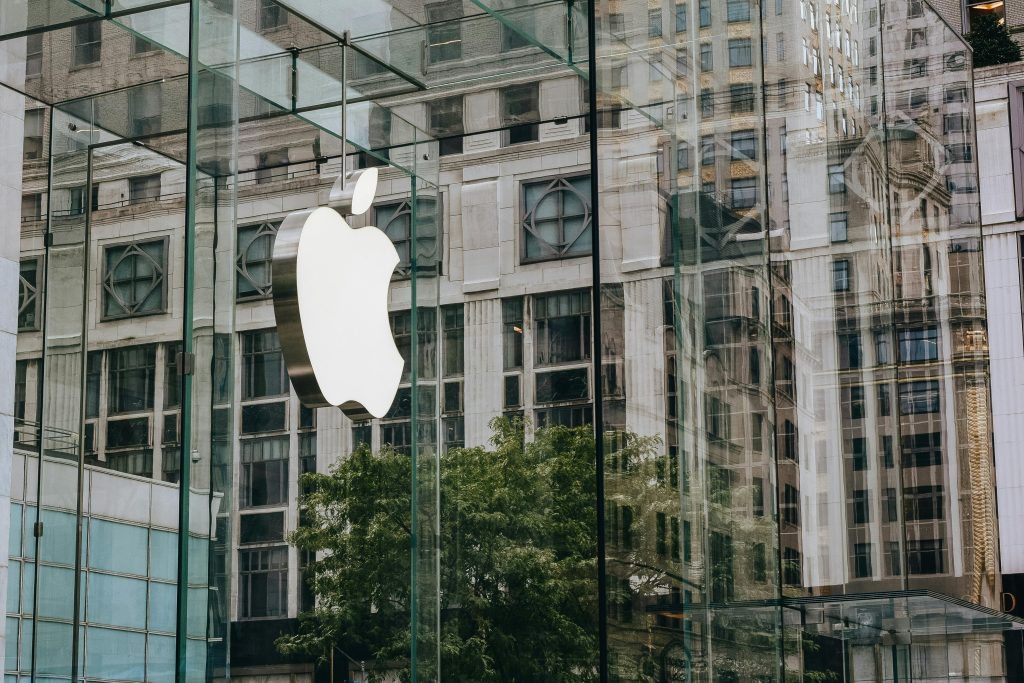
(Singapore, 05.05.2026)Apple Inc. is quietly exploring new ways to secure the chips that power its most important devices, holding early discussions with both Intel and Samsung Electronics about producing processors in the United States. The move signals a potential shift in strategy for the iPhone maker, which has long depended almost entirely on Taiwan Semiconductor Manufacturing Co. for its most advanced chips.
According to people familiar with the matter, cited by Bloomberg, Apple has had preliminary talks with Intel about using its manufacturing services, while company executives have also visited Samsung’s new chip facility under construction in Texas. These discussions remain at an early stage, and no production orders have been placed so far.
Apple’s exploration reflects growing concern over supply chain risks at a time when global demand for advanced semiconductors is surging. The boom in artificial intelligence (AI), particularly the rapid buildout of data centers, has intensified competition for cutting-edge chips. At the same time, Apple has seen stronger-than-expected demand for Macs capable of running AI applications locally, adding further pressure on supply.
During a recent earnings call, Apple Chief Executive Officer Tim Cook acknowledged the challenge, noting that chip shortages are currently limiting the company’s ability to meet demand. He said Apple is experiencing less flexibility in its supply chain than usual, particularly when it comes to securing advanced processors.
For more than a decade, Apple has designed its own system-on-a-chip (SoC) processors, the central components that power devices like the iPhone, iPad and Mac, while relying on TSMC to manufacture them using industry-leading technology. The latest generation of Apple devices uses chips built on a 3-nanometer process, one of the most advanced production nodes available.
However, relying heavily on a single supplier and a single geographic region has become increasingly risky. Taiwan, where most of TSMC’s production is based, faces ongoing geopolitical tensions, particularly with China. Apple executives have long been aware of these risks, and Cook has previously emphasized the importance of diversifying production locations.
Apple has already taken steps in that direction by working with TSMC to expand manufacturing in Arizona. The company expects to source around 100 million chips from US-based facilities by 2026. Still, that represents only a small portion of Apple’s overall needs, given the scale of its global device shipments.
Bringing in additional partners like Intel or Samsung could provide Apple with greater flexibility and bargaining power, while also reducing exposure to potential disruptions. It would also align with broader US efforts to rebuild domestic semiconductor manufacturing capacity.
For Intel, securing Apple as a customer would be a major milestone. Under CEO Lip-Bu Tan, the company is attempting a turnaround by expanding its contract manufacturing business, known as its foundry division. Intel has struggled in the past to attract large external clients, but recent momentum, driven in part by strong AI-related demand, suggests the strategy may be gaining traction.
The US government has also thrown its weight behind Intel’s revival. A major investment deal announced last year has seen the value of the government’s stake in the company rise significantly, reflecting renewed investor confidence. Intel’s shares have surged sharply in 2026, supported by stronger-than-expected revenue forecasts and growing demand for its processors used in AI systems.
Samsung, meanwhile, is already an established player in the contract chipmaking space, though it remains behind TSMC in terms of technological leadership and scale. Winning Apple’s business would be a significant endorsement for Samsung’s foundry capabilities, even as the two companies continue to compete fiercely in the global smartphone market.
Apple and Samsung also share a long history of collaboration. More than a decade ago, Samsung manufactured chips for Apple’s iPhones, and the two companies continue to work together on certain components, including power management chips.
Despite these possibilities, shifting away from TSMC will not be easy. Both Intel and Samsung still face challenges in matching the reliability, yield and scale that TSMC offers. Apple is known for its exacting standards, and any new manufacturing partner would need to meet strict performance and quality requirements.
People familiar with the discussions say Apple remains cautious about adopting non-TSMC technologies and may ultimately decide not to proceed with either Intel or Samsung. For now, the talks remain exploratory rather than definitive.
Beyond supply concerns, there may also be political considerations. A partnership with Intel could strengthen Apple’s relationship with the US government, particularly under policies aimed at boosting domestic manufacturing. The White House has positioned Intel as a key national champion in the semiconductor industry, and closer ties between the two companies could carry strategic benefits.
In the near term, Apple continues to face supply constraints affecting several product lines. The company has indicated that shortages of advanced processors, rather than memory chips, are the primary bottleneck. These constraints have already impacted products such as the Mac mini and Mac Studio, and have also affected the rollout of the iPhone 17 Pro.
Cook said it could take several months for supply and demand to return to balance. Until then, Apple’s operations teams are working to prevent shortages from spreading further across its product lineup.
As the global race for advanced chips intensifies, Apple’s exploration of new manufacturing partners underscores a broader shift in the tech industry. Even the most powerful companies are being forced to rethink their supply chains in an increasingly uncertain world.