






















(Singapore,22.05.2026) When Green Gorilla was launched in April this year, the eco-conscious platform set out with a clear premise: to reconnect consumers with the origins of what they eat by shortening the distance between farms and tables. Today, that proposition is taking shape in Singapore, where the platform is introducing a curated selection of premium Japanese seasonal fruits delivered within days of harvest.
Founded by Mitsuharu Fujinuma, Richie Oi, and Yuya Yoshikawa, Green Gorilla was conceived as more than a fruit distribution business. It is structured as a platform that combines agricultural sourcing, logistics, and technology to create a more direct relationship between farmers and consumers. Backed by Zenova Ventures Group, the team brings together expertise across agriculture, branding, IT systems, and cross-border operations.
The Singapore market marks an important step in the platform’s regional expansion. Here, demand for premium produce has been steadily rising, alongside a growing awareness of food provenance, quality, and sustainability. Against this backdrop, Green Gorilla’s entry is not positioned as a mass-market offering, but as a carefully managed supply of seasonal fruits that reflects the natural rhythm of Japanese agriculture.
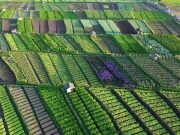
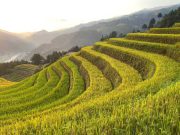
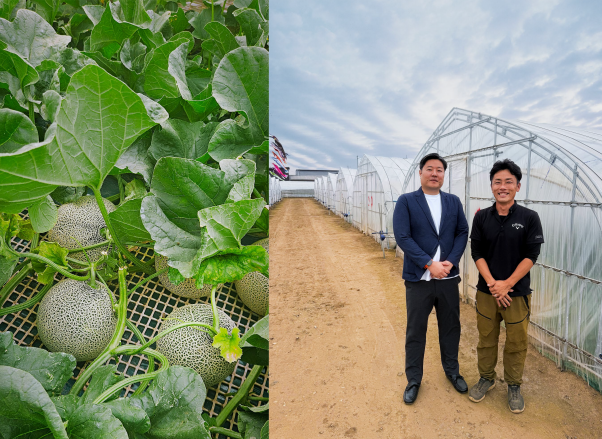
At the centre of the platform is its sourcing network across Japan. The fruits are cultivated by a relatively small group of specialised farmers, many of whom rely on traditional, labour-intensive techniques refined over generations. These methods place emphasis on precision, consistency, and the gradual development of flavour, rather than volume.
Harvesting is timed to peak maturity, after which the fruits are shipped within three to five days. This window is critical. It allows the produce to reach consumers at a stage where texture, aroma, and sweetness are fully developed, offering an experience that is closer to what would be found locally in Japan.
Quality control is a defining part of the process. Each fruit is evaluated according to multiple criteria, including Brix level (a measure of sugar content), visual appearance, colour uniformity, shape, and overall freshness. Only produce that meets these standards is selected for distribution.
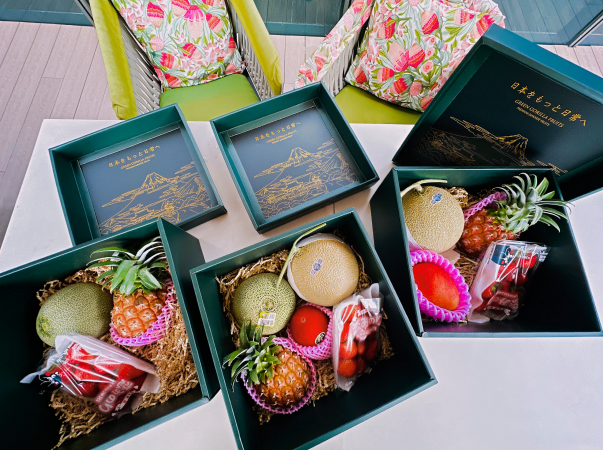
The current selection reflects both geographic diversity and seasonal variation. Among the featured fruits are Shizuoka Crown Melons, known for their symmetrical shape and concentrated sweetness, achieved through the “one vine, one fruit” cultivation method. Strawberries from Tokushima and Saga are included for their balance of size, fragrance, and delicate sweetness, while Miyazaki mangoes—often referred to as “Egg of the Sun”—are recognised for their smooth, fibre-free texture and deep, honeyed flavour.
Other offerings extend to Sun Fuji apples from Aomori, dekopon oranges from Kumamoto, and Okinawa peach pineapples, which are distinguished by their pale flesh and subtle floral aroma. Each fruit is tied to a specific region and growing condition, reflecting the diversity of Japan’s agricultural landscape.
Rather than maintaining a fixed catalogue, Green Gorilla structures its offerings around Japan’s harvest calendar. Availability changes throughout the year, with different fruits introduced as they reach peak condition. This approach reinforces the idea that quality is closely linked to seasonality, and that the experience of fruit consumption is shaped by timing as much as by origin.
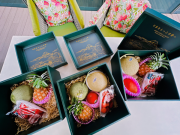
The platform is delivered through a combination of tasting boxes and subscription plans, allowing consumers to engage with the produce at different levels. These formats are designed not only for convenience, but also to create a sense of anticipation, as each delivery reflects a specific moment in the agricultural cycle.
Beyond sourcing and distribution, Green Gorilla is also working with its farming partners to introduce technology into the cultivation process. Sensor systems are used to monitor temperature and humidity, while AI-driven analysis supports decision-making around energy use and environmental control. In parallel, predictive systems help farmers anticipate weather patterns, contributing to consistency in both yield and quality.
These initiatives are part of a broader effort to address structural challenges within Japanese agriculture, including an ageing workforce and the need to sustain traditional farming practices in a modern context. By integrating technology without displacing craftsmanship, the platform aims to support both productivity and continuity.
In Singapore, the experience extends beyond the fruit itself. Deliveries are packaged in recyclable, temperature-controlled boxes, designed to preserve quality during transit. Each box includes detailed information about the fruits and their growers, offering context on origin, cultivation methods, and seasonality.
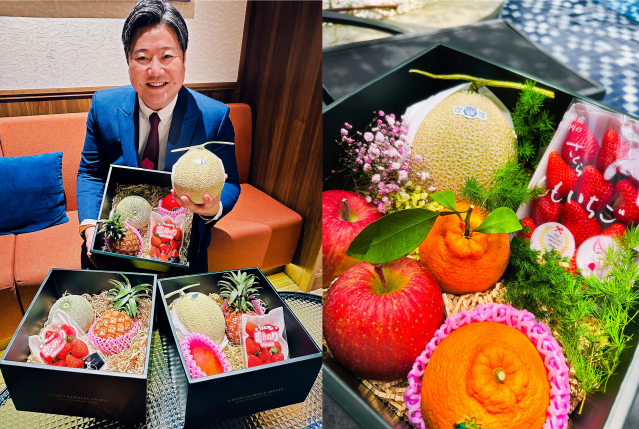
Since its launch, the platform has also attracted attention from local consumers and public figures, reflecting a broader interest in premium produce that combines quality with traceability.
As Green Gorilla expands its presence in the region, its positioning remains anchored in a simple but increasingly relevant idea: that food is not only about consumption, but also about connection—between land, producer, and consumer. Through its farm-to-table model, the platform brings that connection closer to everyday life in Singapore.