
























(SINGAPORE 2026.7.9) Indonesia’s efforts to deepen cooperation with India in its strategic nickel industry reflect Jakarta’s desire to reduce its dependence on China, but whether New Delhi can match Beijing’s technological, financial and industrial capabilities remains uncertain, according to Chinese technology commentary outlet Redian Weiping (热点微评).
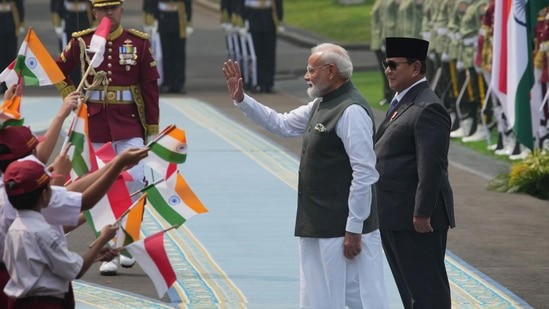
The assessment followed Indian Prime Minister Narendra Modi’s visit to Indonesia this week, during which the two countries signed 16 agreements, including one on critical minerals.
Under the deal, the two sides plan to establish joint ventures in Indonesia to process critical minerals, including nickel, with much of the output destined for the Indian market.
Redian viewed the initiative as part of Indonesia’s broader effort to rebalance its strategic partnerships rather than relying heavily on China, which has underpinned the country’s nickel processing industry over the past decade.
China’s role
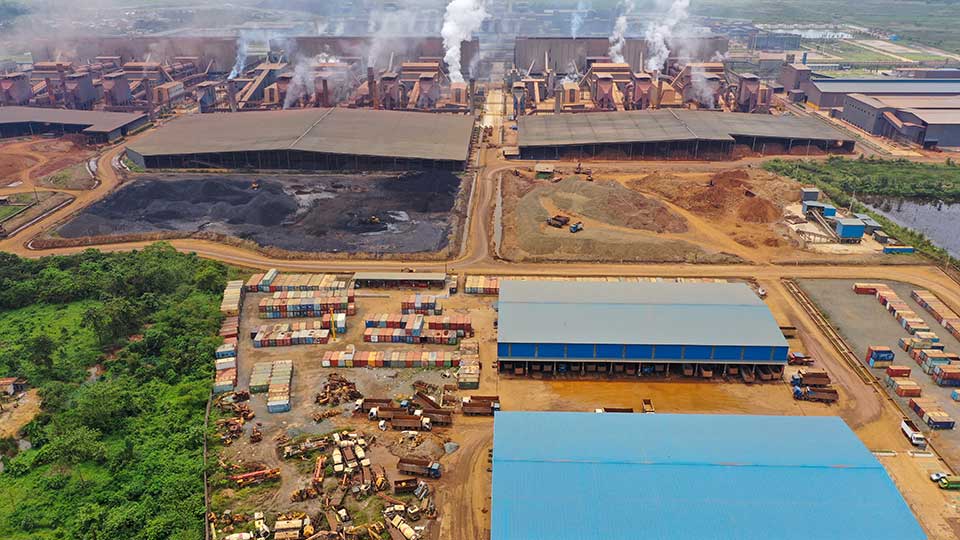
Redian argued that Indonesia’s rise as the world’s leading nickel producer was built largely on Chinese capital and technology.
Although Indonesia possesses some of the world’s largest nickel reserves, many of these are low-grade laterite long regarded as uneconomical to process. Western miners were generally unwilling to invest because commercially viable refining technologies were lacking.
The turning point came after Jakarta banned exports of unprocessed nickel ore and introduced incentives such as tax holidays, land concessions and long-term mining rights to encourage downstream processing. Chinese firms—including Tsingshan Holding Group (青山控股), Huayou Cobalt (华友钴业 ),and Brunp Recycling (邦普循环 )—responded with billions of dollars of investment.
Over the past decade, they have reportedly invested more than US$14 billion (S$18.1 billion) in smelters, industrial parks, ports, power plants and related infrastructure, creating an integrated production chain generating products such as ferronickel, nickel matte, and battery-grade precursor materials.
In Redian’s view, this industrial ecosystem laid the foundation for Indonesia’s dominance in the global nickel market.
Regulatory changes
But now relations between Jakarta and some Chinese investors have become increasingly strained, Redian noted.
Since President Prabowo Subianto took office in late 2024, mining quotas at several Chinese-operated projects—including the vast Weda Bay (韦达湾 )in North Maluku—have reportedly been reduced. Revised pricing mechanisms for nickel by-products which the Chinese investors could sell to earn bonuses, together with higher royalties and export duties, have also pushed up production costs.
The outlet said the tougher operating environment has prompted several companies to scale back activity, citing reduced production at Huayou Cobalt’s Huafei project (华飞项目), a suspension of new investment by GEM (格林美), and partial cutbacks by Tsingshan.
It further contended that Indonesia’s nickel industry remains deeply dependent on Chinese engineering expertise, technical services and supply chains, making any large-scale replacement of Chinese operators a difficult undertaking.
Ore shortage
Redian also pointed to structural challenges within Indonesia’s nickel industry, particularly insufficient ore for processing due to limitation by policy.
It estimated that domestic smelters require about 340 million tonnes of nickel ore annually to operate at full capacity, compared with the approved mining quotas of only around 250 million tonnes. The resulting supply gap has reportedly forced some smelters to operate below capacity, while smaller facilities have suspended production.
According to the publication, the shortfall underscores the importance of allowing stable investments by existing operators.
India engagement
Against this backdrop, Redian viewed Indonesia’s outreach to India as part of an effort to diversify its industrial partnerships.
India offers an attractive long-term market, driven by rising demand for stainless steel and electric vehicle batteries. With a population of about 1.4 billion and ambitious manufacturing plans, the country is expected to become an increasingly important consumer of nickel. Major industrial groups, including Tata and Vedanta, have also expressed interest in expanding into critical minerals.
Nevertheless, the publication questioned whether India currently possesses the technological capabilities needed to take over China’s role in Indonesia’s nickel industry.
It pointed out that India’s nickel resources are themselves largely low-grade, while its refining sector remains relatively underdeveloped. Not least India has yet to prove it could deploy High Pressure Acid Leach (HPAL) technology commercially at a large scale – the know-how to convert low-grade laterite ore into battery-grade nickel products.
By contrast, Redian described China as having developed the world’s most mature and cost-effective HPAL ecosystem. As a result, it suggested that major Indian investments in Indonesian nickel processing would still likely rely on Chinese technology, equipment or supply chains.
Conclusion
Looking ahead, Redian observed that China is continuing to expand its investments in critical minerals across Africa and South America, potentially reducing Indonesia’s strategic importance as alternative nickel sources emerge.
It characterized Indonesia’s engagement with India as a pragmatic attempt to diversify investment sources and strengthen Jakarta’s bargaining position.
Even so, it concluded that replacing China’s role would prove difficult. Beyond factories and smelters, industrial competitiveness hinges on engineering expertise, integrated supply chains and proprietary processing technologies—capabilities that take years to build.
Frequent policy shifts affecting foreign investors could also weigh on Indonesia’s investment appeal, it warned, as large-scale industrial projects are sustainable only with regulatory stability and contractual certainty.
Whether India can ultimately emerge as a genuine alternative to China in Indonesia’s nickel industry therefore remains an open question, given the technological, financial and industrial advantages Beijing has built up over the past decade.