


























(SINGAPORE 2026.7.14) When the European Union imposed anti-subsidy tariffs of up to 45.3% on Chinese electric vehicle (EV) imports late last year, many expected China’s automotive push into Europe to slow dramatically. Yet just over a year later, the market has delivered an unexpected outcome.
According to data from the European Automobile Manufacturers’ Association (ACEA), five Chinese automakers — BYD (比亚迪), SAIC (上汽), Geely (吉利, Chery (奇瑞), and Leapmotor (零跑) — sold a combined total of 138,400 vehicles across 31 major European markets in May, up 65% from a year earlier.
Over the same period, six Japanese brands — Toyota, Honda, Nissan, Suzuki, Mazda, and Mitsubishi — sold around 130,000 vehicles, down 3% year-on-year. It was the first month on record in which Chinese passenger car brands outsold their Japanese counterparts in Europe.
This is more than just a sales milestone. It signals a profound reconfiguration of the global automotive industry as the rise of electric vehicles reshapes the competitive landscape, remarked coollabs (酷玩实验室), a column published by the Chinese tech-focused outlet 36 Kr.
Tariffs Failed to Stop China’s Momentum
After the EU introduced anti-subsidy duties on China-made battery electric vehicles (BEVs) in late 2024, some brands faced combined tariffs ranging from 27% to as high as 45.3%. By contrast, Japanese-built vehicles continued to enjoy relatively low tariffs, which have fallen further under the EU-Japan Economic Partnership Agreement.
Moreover, Japanese automakers have spent decades building extensive manufacturing operations across Europe. Toyota alone has annual production capacity of around 700,000 vehicles in the region, giving it a substantial localisation advantage.
Yet Chinese brands have continued to grow against the odds, coollabs pointed out.
A key reason is their cost advantage. The International Energy Agency (IEA) estimates that producing a small electric SUV in China costs at least 30% less than in advanced economies, thanks to the country’s integrated battery supply chain, a comprehensive parts ecosystem, and large-scale manufacturing.
That advantage remains strong enough to offset much of the impact of tariffs.
Coollabs cited the BYD Seagull (海鸥) — marketed in Europe as the Dolphin Surf — as an example. Priced at around €20,000 (about S$29,468), the model has been widely praised by European media for offering exceptional interior space, generous equipment levels, and high build quality. Comparable European models typically cost significantly more, while Japanese cars in the same price range tend to be smaller city cars with fewer features.
At the same time, Chinese automakers have swiftly adjusted their product strategy by shifting towards plug-in hybrid electric vehicles (PHEVs), which are currently exempt from the EU’s additional tariffs.
In May, PHEVs accounted for around 60% of BYD’s European sales, with the Seal U DM-i becoming one of Europe’s best-selling plug-in hybrids. Chery’s Jaecoo 7 (捷途 7) PHEV has also recorded strong sales, helping offset the pressure on its fully electric models.
More importantly, coollabs noted, Chinese manufacturers are moving beyond exporting vehicles from China to manufacturing them in Europe. BYD’s factory in Hungary is expected to begin production this year, while Geely, Chery, and Leapmotor are leveraging existing European manufacturing capacity. Chinese battery makers including CATL (宁德时代), Gotion High-Tech (国轩高科), and EVE Energy (亿纬锂能)are also building factories across Europe, further reducing the impact of trade barriers.
The Real Competitive Edge Lies Beyond the Car
Price competitiveness is only part of China’s success. Its greater advantage lies in the strength of its entire industrial ecosystem, coollabs emphasized.
In a recent visit to several car factories in Beijing and Hefei, the BBC found that Chinese automakers not only operate highly automated production lines but have also developed exceptionally fast software capabilities.
Xiaomi’s (小米) Beijing factory reportedly produces one vehicle every 76 seconds on average, while some Nio (蔚来)production lines are approaching full automation — manufacturing efficiencies that have surprised many global competitors.
Honda President Toshihiro Mibe, after visiting highly automated Chinese factories, admitted: “We simply have no chance.”
Ford CEO Jim Farley has similarly warned that Chinese competitors pose “an existential threat” to Western automakers.
The challenge extends well beyond technologies specific to vehicles, coollabs observed.
Compared with traditional carmakers, Chinese manufacturers increasingly resemble technology companies. Firms such as Xiaomi, Huawei, and Alibaba have entered the automotive sector, integrating smartphones, smart homes and vehicles into unified digital ecosystems while updating software far faster than traditional automotive development cycles.
Automotive analyst Bill Russo contends that Chinese companies are “no longer competing with the West—they’re competing with each other.” Intense domestic competition is accelerating innovation and product iteration at an unprecedented pace.
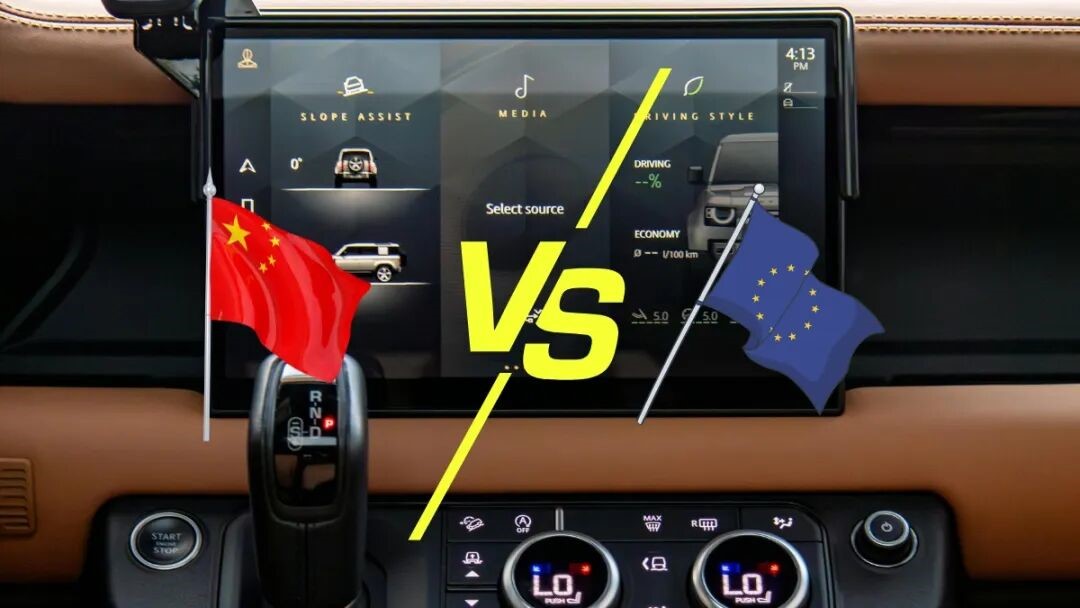
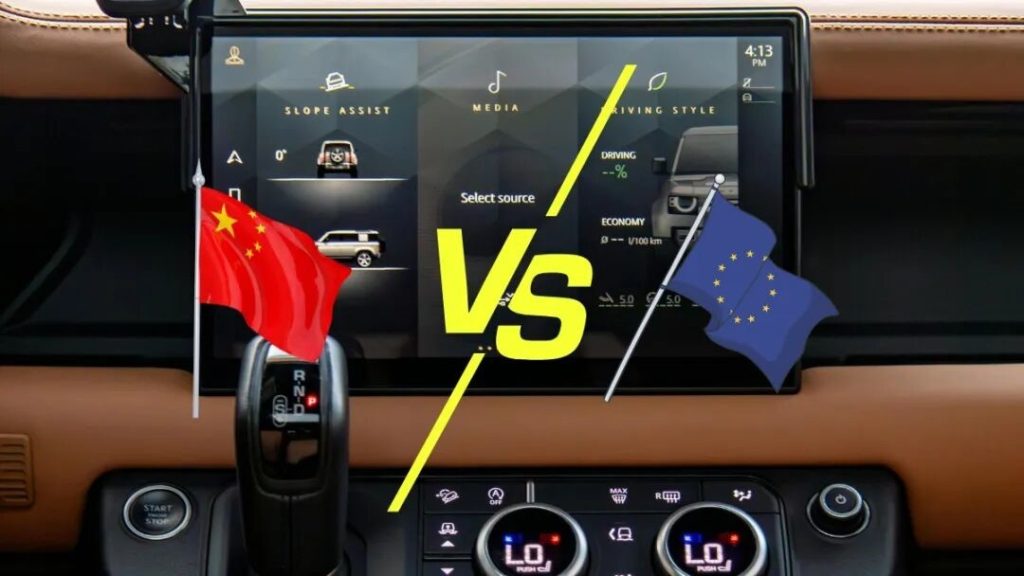
European reviewers have noticed the difference as well. Many found that Chinese in-car operating systems now outperform traditional European brands in terms of responsiveness, interface design and entertainment features. While many European manufacturers still rely heavily on Apple CarPlay and Android Auto, Chinese brands have developed their own comprehensive smart cockpit platforms.
Battery and charging technologies also remain areas of Chinese leadership. BYD’s ultra-fast charging system can add about 400 kilometres of driving range in around five minutes. Many Chinese manufacturers have already commercialised charging systems rated at 5C (meaning 1/5 of an hour) or above, while some Western brands still lag behind with slower charging capabilities.
European Consumers Still Have Reservations
Chinese brands nevertheless face significant challenges, coollabs conceded.
European consumers increasingly recognise Chinese vehicles for their advanced technology, long driving range, generous safety features and strong value for money. In recent years, numerous Chinese models have earned five-star ratings in Euro NCAP (New Car Assessment Program ) crash tests, demonstrating substantial improvements in overall quality.
However, after-sales service remains the biggest concern, coollabs lamented.
Compared with Toyota and Honda, which have spent decades establishing extensive dealer and service networks across Europe, Chinese automakers still have relatively limited sales and maintenance coverage. Many buyers worry that if the Chinese manufacturers alter their European strategy in the future, vehicle servicing, spare parts supply and software support could suffer.
These concerns are also reflected in the used-car market. According to Germany’s DAT automotive valuation agency, Chinese electric and plug-in hybrid models generally depreciate faster than their mainstream rivals because buyers remain uncertain about the availability of long-term servicing, while their relatively short track record makes residual values more difficult to predict. All this have made leasing companies and corporate fleet operators more cautious.
European media have also pointed out that some Chinese vehicles still require refinement in driving dynamics. Because the domestic Chinese market places greater emphasis on ride comfort and active safety intervention, lane-keeping assistance systems on some models can be overly intrusive on Europe’s narrow rural roads. High-speed stability, steering feel and driving engagement also remain key priorities for European buyers.
A Global Industry Undergoing a Fundamental Reset
Chinese brands surpassing Japanese brands in Europe is merely the most visible sign of a much deeper transformation: the balance of power in the global automotive industry is adjusting.
For decades, international automakers exported brands and technologies to China, while China provided manufacturing capacity and a vast consumer market. That relationship is now beginning to reverse.
Volkswagen has invested in Xpeng’s (小鹏) software architecture and intelligent driving technologies. Stellantis has expanded cooperation with Dongfeng (东风) and plans to export China-developed models overseas. Toyota, Ford, Hyundai, and Nissan are all increasing research and development investment in China to tap into the country’s rapidly evolving new energy vehicle ecosystem and accelerate their own transition.
According to Bill Russo, the biggest misconception among developed economies is viewing this as merely an electric vehicle race. The real competition is about who will define the next generation of mobility — encompassing software, artificial intelligence, batteries, autonomous driving and the broader digital ecosystem.
Europe remains strategically important precisely because of this, noted coollabs and BCC. It has the world’s most stringent emissions regulations, one of the most sophisticated automotive engineering traditions, strong consumer purchasing power and globally influential brands. If Chinese manufacturers can firmly establish themselves in Europe, it will signify not only higher sales but also recognition that their products, technologies and brands meet the world’s highest standards.
China’s first-ever monthly sales victory over Japanese brands in Europe does not mark the end of the contest, coollabs concluded. Rather, it signals the beginning of a new phase in the global automotive race — one in which the competitive focus is pivoting from traditional manufacturing prowess to software, supply chains and innovation ecosystems. And the finish line remains a long way off.