























(Singapore, 25.07.2026)The shipping halt in the Strait of Hormuz cutting off fertilizer supplies, the ongoing Russia-Ukraine conflict disrupting Black Sea grain shipments, and the El Niño phenomenon threatening harvests in major production regions —in 2026, global grain markets are unprecedentedly under multiple pressures.
“The next food crisis is approaching,” warned Maximo Torero, Chief Economist of the Food and Agriculture Organization (FAO).
Fertilizer Price Surge Tests Industrial Chain Resilience
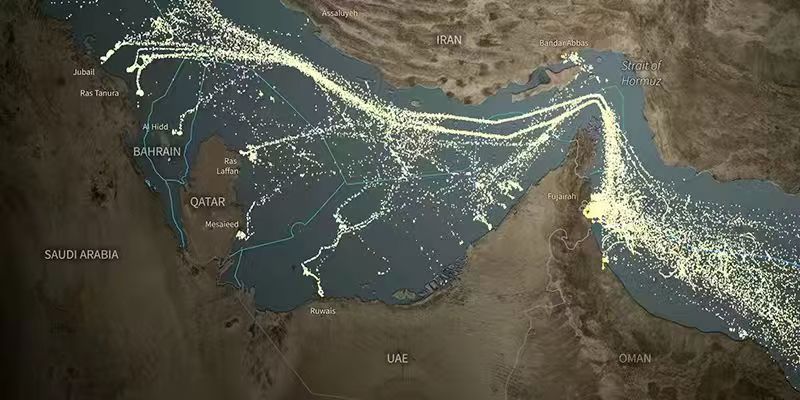
The Strait of Hormuz is one of the world’s most critical energy and fertilizer transport routes. In 2024, approximately 18.5 million tonnes of urea passed through the strait, accounting for 34% of global urea trade. The Gulf region also accounts for 23% of global ammonia trade and 18% of phosphate fertilizer trade, with nearly 50% of sulfur — a key raw material for phosphate fertilizer production — also shipped via this route.
Since the outbreak of hostilities in the Middle East in late February, fertilizer shipments passing through the strait have come to a near halt. Hundreds of vessels have remained stranded in the Gulf region due to security risks, bringing commercial shipping to a virtual standstill. Natural gas facilities in the region have been partially shut down, fertilizer plants have suspended production, and some installations have also been attacked.
The fertilizer supply crunch has quickly fueled agricultural input and energy prices. FAO data shows that since the conflict began, international urea prices have surged 55%, oil prices 50%, natural gas prices 25%, while freight rates and fuel costs have risen approximately 43% and 58%, respectively. U.S. government data indicates that global fertilizer prices rose more than 20% year-on-year in June 2026, with nitrogen fertilizer prices jumping 46%.
However, the deeper impact of the fertilizer shortage will be felt with a lag. Fertilizer must be applied at specific stages of crop growth cycles; once delivery is delayed, this year’s inputs will directly affect grain production over the following several growing seasons.
A Goldman Sachs research report notes that fertilizer accounts for approximately 20% of grain production costs, and rising costs will directly squeeze farm profitability. Some farmers have begun reducing fertilizer applications, adjusting crop mixes, or even reducing planted acreage — some Australian farmers have indicated they are considering reducing next season’s planted area, as wheat prices struggle to cover the rising costs of fertilizer.
This means risks are gradually spreading from trade disruptions to the agricultural side. At the national level, some countries have begun implementing export restrictions or import subsidies, which could further push up international fertilizer prices in the short term and intensify supply tightness.
The International Food Policy Research Institute notes that fertilizer supply chains are even more fragile than grain trade itself — once upstream disruption persists, its impact will gradually cascade throughout the agricultural value chain and ultimately transmit to global food prices.
Meanwhile, the Black Sea situation and extreme heat are tightening global grain supply from other fronts. More than a quarter of global wheat exports originate from the Black Sea region, and Ukraine’s capacity to export grain through Black Sea ports has fallen by approximately one-third.
Heatwaves have continuously hit France, the European Union’s largest agricultural producer, with the French Ministry of Agriculture projecting 2026 soft wheat production to fall 4% from 2025. U.S. wheat planted area has contracted 6% year-on-year, marking the lowest level since 1970. For consumers, this means rising grain prices; but for agricultural companies, what deserves greater attention is that these risks are redefining the way agricultural businesses operate.
A growing number of analyses suggest that the challenge facing agriculture in the future has evolved from managing price volatility to safeguarding the stability of the entire supply chain.
The Corporate Focus: From Cost to Risk
Liang Chengwang, Executive Chairman of Zixin Group Holdings, who has been deeply engaged in agriculture for seventeen years, said that the frequent disruptions to global supply chains from geopolitics, climate change, and energy price volatility in recent years have forced agricultural companies to rethink how they operate.
“In the past, we focused more on production, quality, and markets; today, we are more focused on the stability of the entire industrial chain.” Liang believes that the risks facing agricultural companies have shifted from single stages to systemic challenges spanning breeding, planting, processing, warehousing, logistics, and markets. A disruption in any one link can affect the ultimate ability to maintain stable supply. An agricultural company cannot focus solely on a single season’s harvest; it must build a more resilient industrial system.
Liang pointed out that increasing per-unit yields remains important, but if agricultural development pursues only short-term output while neglecting constructing industrial supply chain, high yields may not be sustainable when the external conditions change.
“The true measure of an agricultural company’s competitiveness is not how much it can produce in a bumper year, but whether it can maintain stable supply when the supply chain comes under shock.”
In his view, the future development of modern agriculture should center on continued investment in industrial supply chain resilience, including developing stress-tolerant crop varieties, contract farming, warehousing and preservation, agricultural processing, and reliable market access.
By coordinating risk management across upstream and downstream value chains, the industry can enhance its long-term supply resilience. From fertilizer supply disruptions to the Black Sea situation to extreme weather, these three pressures are simultaneously constraining global grain supplies, posing sustained risks to the stability of agricultural production and the smooth flow of international trade. Many analysts believe that the key to future global food security lies in whether we can build a more resilient agricultural production and supply system capable of withstanding increasingly frequent external shocks.