







(Singapore, 24.07.2026)Singapore is facing a new 12.5% US tariff on part of its exports after Washington introduced fresh trade measures targeting economies it says have failed to prevent goods produced with forced labour from entering global supply chains.
The tariffs, which took effect on Friday, affect about one-third of Singapore’s domestic exports to the United States, according to the Ministry of Trade and Industry (MTI). While the measures are expected to have a limited impact on several key export sectors that remain exempt, they add another layer of uncertainty for businesses already navigating higher energy prices and slowing global trade.
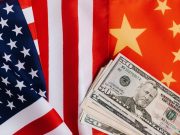
The new duties are part of the Trump administration’s latest effort to rebuild its global tariff regime after the US Supreme Court earlier this year struck down the administration’s previous reciprocal tariffs.
Instead of using emergency powers, Washington has now invoked Section 301 of the US Trade Act, arguing that around 60 trading partners have failed to adequately restrict imports linked to forced labour. Countries deemed to have insufficient enforcement now face tariffs of between 10% and 12.5%, depending on their regulatory framework.
Singapore has been placed in the 12.5% category alongside economies including Australia, China, Japan, South Korea and Switzerland, while Malaysia, Britain, Canada and India are among countries subject to a 10% tariff under the new regime.
The Singapore government has strongly rejected the basis for the move. Foreign Minister Vivian Balakrishnan said earlier this week that Singapore had informed the United States there was “no technical or economic basis” for imposing tariffs on the Republic, noting that the US continues to enjoy a trade surplus with Singapore.
He added that Singapore’s objective is to ensure it does not become “collateral damage” as Washington expands tariffs across multiple trading partners.
MTI reiterated that Singapore does not condone forced labour and has a comprehensive domestic enforcement framework to tackle such practices.
The ministry said forced labour within increasingly complex global supply chains is a transnational issue that is most effectively addressed through international cooperation and action at the source, rather than broad trade restrictions. It added that Singapore will continue engaging the Office of the United States Trade Representative (USTR) on the issue while consulting businesses through the Singapore Economic Resilience Taskforce.
Although the tariffs cover a significant portion of Singapore’s exports, several important sectors remain excluded.
Products already subject to separate US national security tariffs, including steel and aluminium, are exempt. Energy products, pharmaceuticals, semiconductor-related products, selected electronics, aerospace products and certain precious metals are also excluded from the latest measures.
That means some of Singapore’s key export industries are unlikely to experience an immediate impact. Business groups are nevertheless urging companies to review their exposure.
The Singapore Business Federation (SBF) said exporters should determine whether their products fall within the tariff scope, engage customers early and assess any implications for pricing, contracts and supply chain arrangements.
SBF Chairman Mark Lee said businesses would benefit from clear implementation guidance and sufficient transition periods to adapt to the new rules.
Globally, the latest tariffs represent the Trump administration’s broadest trade action since its earlier reciprocal tariffs were struck down by the courts.
According to Bloomberg, the United States will now collect duties of between 10% and 12.5% on imports from most major trading partners under the new Section 301 framework. While many governments criticised the move as unjustified, most have stopped short of announcing retaliatory measures.
The White House said the new tariffs are intended to strengthen enforcement against goods linked to forced labour while ensuring there is no gap following the expiry of the temporary 10% global tariff introduced earlier this year.
A number of products, including oil and gas, fertilisers, selected food items, automobiles, steel, aluminium and goods already covered under other tariff regimes, remain exempt.
Analysts said the overall economic impact may be less dramatic than headline tariff rates suggest because of the extensive exemptions and because many countries had anticipated the move.
However, they warned that uncertainty surrounding US trade policy is unlikely to disappear.
Bloomberg reported that the Trump administration is still reviewing another Section 301 investigation into excess manufacturing capacity involving several major economies. Any future tariffs arising from that probe could be imposed in addition to the latest forced labour duties, potentially increasing costs for global manufacturers and exporters.
For Singapore, the immediate priority remains maintaining open trade while protecting its position as a trusted global trading hub.
With one-third of domestic exports to the US now affected, businesses will be closely watching whether Washington grants additional exemptions or whether future negotiations can ease the latest trade barriers. At the same time, policymakers are expected to continue engaging US counterparts while helping companies adjust to an increasingly fragmented global trading environment.