

























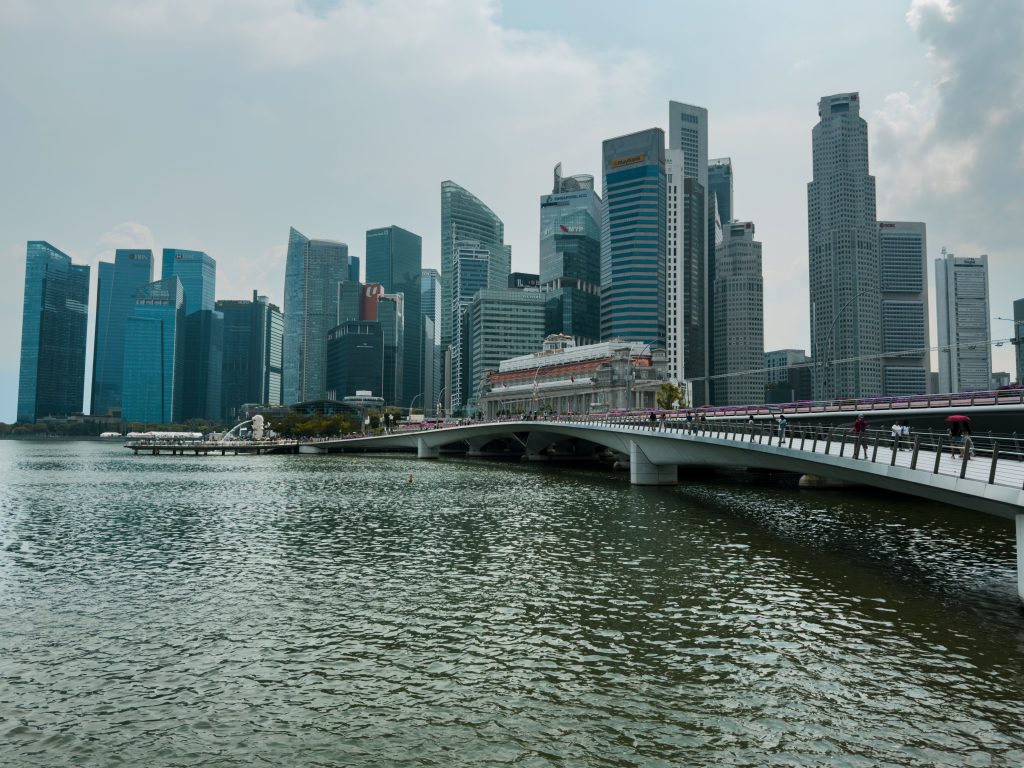
(Singapore, 27.07.2026)Singapore’s central bank unexpectedly tightened monetary policy for a second consecutive time on Monday, signalling that it is taking a more proactive stance against mounting inflation risks as higher energy prices and global geopolitical tensions threaten to push up consumer costs in the months ahead.
The Monetary Authority of Singapore (MAS) announced a slight increase in the rate of appreciation of its Singapore dollar nominal effective exchange rate (S$NEER) policy band, while leaving the width and midpoint of the band unchanged. The move surprised most economists, with only four of the 18 analysts surveyed by Bloomberg predicting further tightening ahead of the policy review.
The decision comes just three months after MAS tightened policy in April following a surge in global oil prices, marking back-to-back policy adjustments rarely seen outside periods of heightened inflationary pressure.
In its policy statement, MAS said the latest move reflects an environment of “continued heightened uncertainty” and builds on the tightening implemented earlier this year.
The central bank also reiterated that it remains prepared to curb excessive volatility in the Singapore dollar if market conditions become more unstable.
The Singapore dollar strengthened about 0.15% against the US dollar immediately after the announcement, extending its position as Southeast Asia’s best-performing currency since renewed conflict in the Middle East triggered higher oil prices earlier this year.
Inflation expected to pick up
While Singapore’s inflation has remained relatively contained compared with many advanced economies, policymakers believe the current calm may not last.
Core inflation, which excludes accommodation and private transport costs, rose to 1.6% in June from 1.4% in May. Although still at the lower end of MAS’ full-year forecast range of 1.5% to 2.5%, the central bank expects price pressures to strengthen from July onwards as higher global energy costs filter through the economy.
MAS warned that external price pressures are likely to become more widespread, gradually feeding into domestic consumer prices over the coming months.
Recent developments in the Middle East have added to those concerns. Renewed attacks in the Red Sea and escalating tensions involving Iran have pushed Brent crude oil prices back above US$90 a barrel after briefly easing in June.
Singapore, which imports almost all its energy needs, is particularly vulnerable to prolonged increases in global fuel prices.
Adding to inflationary pressures, electricity tariffs rose by a record 17% this month after reflecting higher energy costs from the previous quarter. Economists have also warned that a potential return of severe El Niño conditions could disrupt agricultural production and drive food prices higher later this year.
Barnabas Gan, Group Chief Economist at RHB Bank, said inflation risks in the second half of the year are likely to be driven by elevated oil prices, higher electricity tariffs and the possibility that worsening weather conditions could push up food costs.
Growth remains resilient
Despite rising external risks, Singapore’s economy has continued to outperform expectations.
Gross domestic product expanded 5.7% year-on-year in the second quarter, exceeding economists’ forecasts and putting the economy on track to surpass the government’s full-year growth projection of between 2% and 4%.
The strong performance has largely been supported by robust demand for artificial intelligence-related electronics, benefiting semiconductor manufacturers and exporters across the city-state.
MAS said the economy is expected to operate further above its long-term trend this year as growth continues to outperform expectations.
The stronger economy provides policymakers with greater room to focus on containing inflation before price pressures become more entrenched.
Selena Ling, Chief Economist at OCBC, said the second consecutive tightening shows MAS remains highly vigilant against imported inflation and is unwilling to become complacent despite inflation remaining relatively moderate so far.
Trade uncertainty adds another challenge
The policy move also comes as Singapore faces renewed uncertainty in global trade.
Last week, the United States imposed a 12.5% tariff on selected exports from Singapore under new trade measures linked to forced labour, although key products such as semiconductors and pharmaceuticals remain exempt.
The latest US action adds another layer of uncertainty for Singapore’s trade-dependent economy, which has already been navigating geopolitical tensions and slowing global demand.
Unlike many central banks that rely on interest rates, MAS manages inflation by guiding the Singapore dollar against a basket of currencies from its major trading partners.
Because imports account for nearly 40% of domestic spending and Singapore’s total trade exceeds three times its gross domestic product, exchange rate movements have a much greater influence on inflation than changes in domestic borrowing costs.
A stronger Singapore dollar helps reduce the cost of imported goods and services, easing inflationary pressures across the economy. As geopolitical tensions, volatile energy prices and US trade policies continue to create uncertainty, analysts believe MAS is acting early to keep inflation under control and avoid more aggressive tightening later.
For businesses and consumers, the latest move signals that while Singapore’s economy remains resilient, policymakers see inflation risks becoming more persistent and are prepared to act before they become harder to contain.