

























(SINGAPORE 2026.7.28)The spectacular IPO of China’s ChangXin (长鑫) does not signify that the country has won the competition in the global memory industry; what it signifies is that China has finally earned the opportunity to compete in the global semiconductor race, where success will depend on building an entire domestic innovation ecosystem rather than merely creating one successful company, Chinese media reported.
At 9:30 am on Monday, the opening bell rang at the Shanghai Stock Exchange as ChangXin Technology, founded in 2016, officially debuted on Shanghai’s STAR Market (科创版).
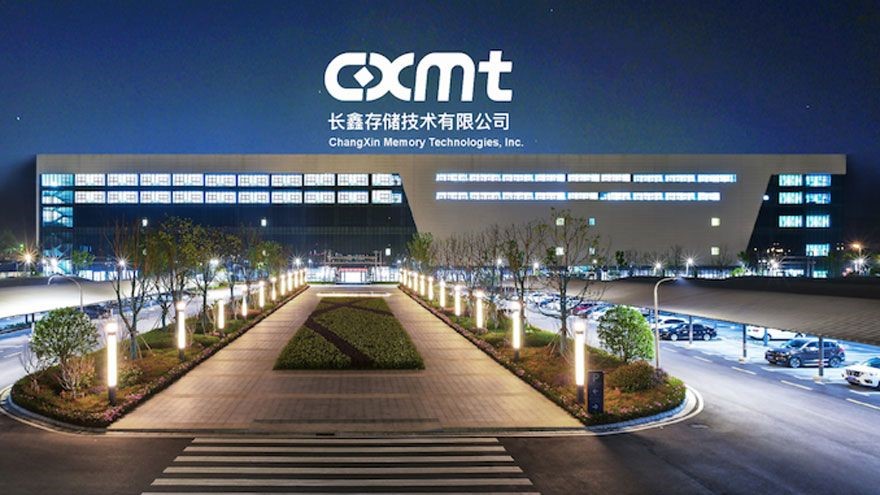
Chinese memory maker CXMT posted blistering 466% leap in Shanghai IPO, but bulk of its spending would be on DRAM production, no HBM yet in sight.
Priced at 8.66 yuan (about S$1.65) per share, the stock opened at 49.50 yuan and closed at 49.00 yuan, up 465.82% from its IPO price. Its market capitalization briefly exceeded 3.3 trillion yuan, surpassing Industrial and Commercial Bank of China to become the most valuable listed company in China’s A-share market.
The company also raised a record 57.9 billion yuan in its IPO—the largest on the STAR Market—while first-day turnover reached about 141.1 billion yuan, another record for an individual A-share stock.
The wondrous debut immediately thrust ChangXin into the national spotlight. Social media was flooded with phrases such as “China’s memory breakthrough,” “China’s Samsung,” and “China’s DRAM has finally arrived.” For a semiconductor industry that has long depended on imported memory chips, the listing undoubtedly marks a historic milestone.
Yet once the excitement surrounding the first-day share price fades, a more important question emerges: does ChangXin’s success mean China’s domestic memory industry has finally broken through the foreign stranglehold?
Probably not, remarked the Chinese technology-focused media platform TechVortex (科技漩涡).
ChangXin’s listing marks the moment China finally has a company capable of joining the world’s top tier of DRAM (Dynamic Random-Access Memory) manufacturers. TechVortex added that while the company is already successful, its true historical legacy will be determined by whether it can become the anchor enterprise that reshapes China’s domestic memory ecosystem.”
In other words, the hardest challenge is no longer going from zero to one—it is going from one company to an entire industrial ecosystem.
From “No DRAM” to the World’s Fourth-Largest Player
For decades, China was the world’s largest electronics manufacturing base but lacked a domestic producer capable of manufacturing DRAM at commercial scale.
DRAM is an essential component in smartphones, PCs, servers, and AI computing systems. For years, the market has been dominated by Samsung Electronics, SK hynix, and Micron Technology, which together control more than 90% of global market share.
ChangXin changed that landscape.
In 2019, it launched China’s first domestically designed 8Gb DDR4 chip for mass production. It later expanded into DDR5, LPDDR4X, LPDDR5 and LPDDR5X products serving smartphones, servers, PCs, and smart vehicles.
By the end of 2025, ChangXin operated three 12-inch DRAM wafer fabs in Hefei city and Beijing. Based on fourth-quarter 2025 revenue, it held a 7.67% share of the global DRAM market, ranking fourth behind Samsung, SK hynix, and Micron.
Revenue reached 61.8 billion yuan in 2025, up 155.6% year on year. R&D spending totaled 9.59 billion yuan and its research workforce exceeded 6,200 people.
These figures show ChangXin has moved well beyond the laboratory stage to become a genuine global competitor. But securing a seat at the table only means the real competition has begun.
Why Capital Concentrated on One Company
According to startup database ITjuzi (IT桔子), China’s memory industry completed about 174 private financing rounds since 2020, raising a combined 91.87 billion yuan across roughly 75 companies.
Before its IPO, ChangXin alone had raised more than 66 billion yuan—nearly 70% of all private capital invested in China’s memory sector. Including IPO proceeds, its cumulative funding has now exceeded 124 billion yuan, far surpassing domestic peers such as Yangtze Memory Technologies (长江存储科技 ), Gigadevice (兆易创新科技), and Longsys Electronics ( 江波龙电子 ).
Although such pronounced concentration in ChangXin may appear excessive, it reflects the economics of the DRAM industry, commented ITjuzi.
Building an advanced DRAM fabrication plant requires investments measured in tens of billions of US dollars, while maintaining technological competitiveness demands continuous spending on research, manufacturing, and process upgrades. The dominance of Samsung, SK hynix, and Micron is therefore an outcome of an industry where capital naturally concentrates around a handful of players.
If China hopes to establish a meaningful presence in the global memory market, creating one internationally competitive platform is almost unavoidable, proclaimed ITjuzi.
That also means ChangXin now carries responsibilities extending beyond its own commercial success. Its future achievements must help strengthen China’s broader memory supply chain rather than benefiting only itself.
The Focus Has Shifted Upstream
One revealing development is that China’s National Integrated Circuit Industry Investment Fund ( 国家集成电路产业投资基金 ), or the “Big Fund,” has already shifted its priorities. The fund is a state-backed investment vehicle with a strategic mission to help China achieve semiconductor self-sufficiency.
The fund participated in ChangXin’s 15.65-billion-yuan financing round in late 2020—its largest single investment in a memory company. Since then, however, it has not joined ChangXin’s subsequent fundraising rounds or the IPO, while retaining its existing stake in the company.
Rather than signaling reduced confidence, the fund’s abstention suggests ChangXin has become capable of financing itself through private capital and public markets.
Instead, the Big Fund has steadily redirected investments toward upstream semiconductor technologies, including silicon wafers, quartz materials, sputtering targets, inspection equipment, and optical testing systems.
The pivot reflects a broader change in China’s semiconductor strategy.
The first challenge of the fund was proving China could manufacture advanced memory chips. The next challenge is ensuring those chips can be produced with domestically developed equipment, materials and supply chains.
ChangXin’s listing suggests the first objective has largely been achieved. The second is only beginning.
Why Investors Are Paying Such a Premium
ChangXin’s first-day valuation of more than 3.3 trillion yuan also reflects expectations rather than current earnings.
Only about 6.7% of its total shares were freely tradable at listing. But the combination of this limited float with the company’s status as China’s leading DRAM producer and strong optimism over AI-driven memory demand has fueled intense investor enthusiasm. As a result, TechVortex noted, the company’s valuation has become exaggerated.
Investors are effectively pricing in future gains in manufacturing technology, production capacity, import substitution, and eventual breakthroughs in high-bandwidth memory (HBM), rather than valuing ChangXin solely as a conventional DRAM manufacturer.
Those expectations are not without basis. China remains the world’s largest market for smartphones, PCs, cloud computing, servers, and new-energy vehicles, offering substantial room for domestic memory suppliers to expand, TechVortex pointed out.
Yet challenges remain substantial.
Memory chips are among the semiconductor industry’s most cyclical products. Profits can surge during periods of tight supply but contract just as quickly when prices fall.
More importantly, global competition has shifted toward HBM, the high-performance memory used in AI servers. Demand is growing rapidly and profit margins are significantly higher than those for conventional DRAM.
Samsung, SK hynix, and Micron are already racing to commercialize HBM3E and HBM4 products to secure orders from AI chipmakers such as NVIDIA, TechVortex stressed.
By comparison, ChangXin’s commercial portfolio remains centered on DDR and LPDDR products, while HBM is still being developed.
That gap illustrates why ChangXin’s listing should be viewed as the beginning of China’s next phase in memory development rather than its culmination, TechVortex summed up.
ChangXin’s IPO proves China has successfully built a domestic DRAM champion capable of competing internationally. It does not yet prove that China has achieved technological leadership across the industry’s most advanced segments, the two Chinese medias concluded.
Ultimately, ChangXin’s long-term significance will not be measured by the size of its IPO, its first-day share price or even its temporary position as China’s most valuable listed company, they elaborated.
Its true importance lies in whether it can catalyze a broader ecosystem of domestic equipment makers, materials suppliers, chip designers, and manufacturing partners capable of supporting sustained innovation.
Only when that ecosystem is firmly established will China have moved beyond producing one globally competitive memory company to building a genuinely self-sustaining semiconductor industry.
That, more than any single-day stock market performance, will determine whether ChangXin’s listing is a historic turning point for China’s semiconductor ambitions.