

























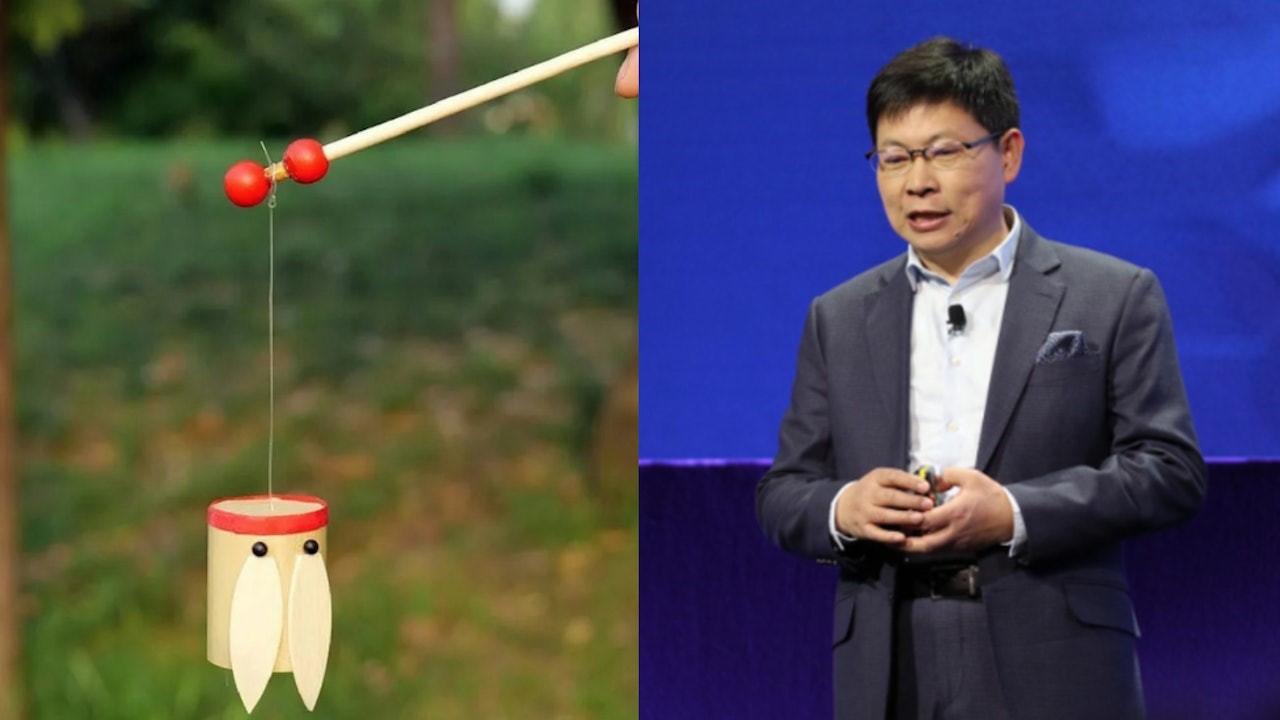
(SINGAPORE 2026.8.6) A traditional Chinese children’s toy known as the bamboo cicada (竹知了) emits a distinctive “wa wa wa” sound when whirled through the air, a feature that has turned it into an implicit jab at a high-profile corporate executive.
A veteran singer’s self-important appeal to Beijing residents to support a film prompted internet users to do something entirely unexpected: they began excavating years of old interviews, television appearances and news reports, collectively fact-checking an extraordinary catalogue of hyperbolic claims she had made about herself.
At first glance, the two incidents have nothing in common.
Yet over the past few weeks, both have come to embody two defining trends on China’s internet today: an increasingly relentless pursuit of truth and a growing hostility toward perceived attempts to restrict expression.
Whether the target is Huawei, one of China’s most powerful and state-supported technology companies, or singer Han Hong (韩红), one of the country’s most celebrated charity figures, online opinion has become strikingly iconoclastic. Few non-political institutions or public figures are now regarded as beyond challenge. In both cases, prestige no longer insulated authority from scrutiny.
The bamboo cicada becomes a symbol
The bamboo cicada is an ancient toy. Still sold outside schools and tourist attractions in China, it produces a buzzing sound when a thin strip of bamboo is spun through the air. For generations it was little more than a nostalgic curiosity.
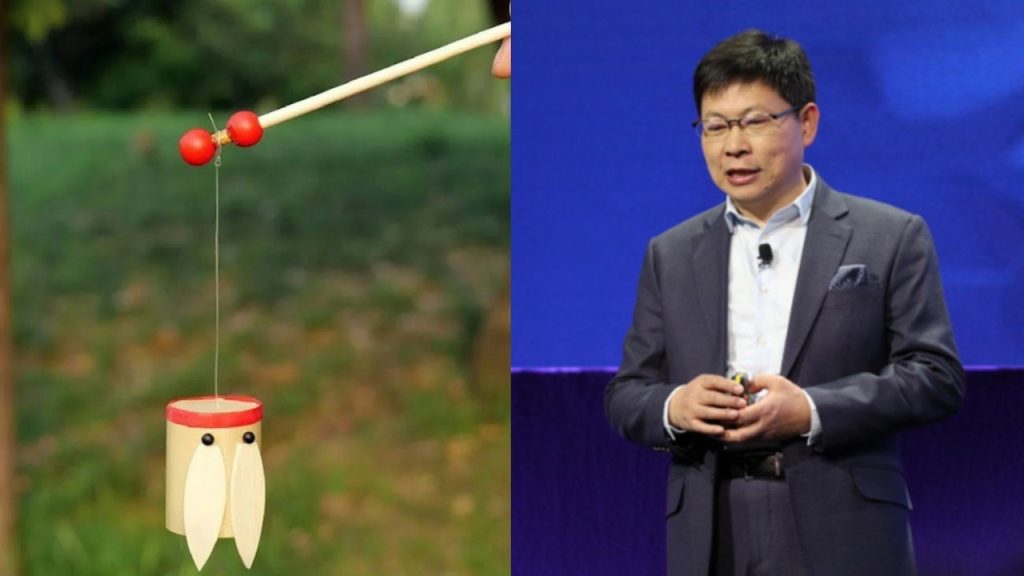
Then someone noticed that its sound resembles the chorus of the enthusiastic “wa wa wa!” cheers heard at Huawei product launches whenever executive Yu Chengdong (余承东) proclaimed a new product to be “peerlessly world-leading” (遥遥领先), the Chinese media reported. The “wa-wa-wa” sound has become a byword for ridicule following Huawei’s September 2023 unveiling of the revamped Aito M7 car, as buyers challenged many of its promotional claims.
The allusive bamboo cicada sound spread across social media almost overnight. Videos appeared of people spinning bamboo cicadas whenever Huawei products were mentioned. Others deliberately played with the toy outside Huawei stores. What had been an obscure children’s toy suddenly became an unmistakable satirical symbol.
Ordinarily such internet spoofs disappear within days.
Instead, reports began circulating that Huawei, its business partners or its supporters were filing complaints with online platforms. Videos vanished. Comments disappeared. Most strangely, customer reviews for bamboo cicadas on some e-commerce platforms reportedly were blocked from public view, Chinese media pointed out.
Whether every removal resulted directly from complaints is almost beside the point.
Many netizens concluded that someone powerful was attempting to put down an obviously harmless parody. That perception fundamentally transformed the story. The issue was no longer about a bamboo toy. It became a question of power.
Can a corporation effectively eliminate an ordinary sound? Can a centuries-old toy become sensitive simply because internet users assign it a symbolic meaning?
Ironically, many observers pointed out that the attempted suppression accomplished precisely what the original mockery never could. People who had never heard of the meme suddenly became curious. Sales of bamboo cicadas surged. Other objects have been repurposed to mimic the toy, including rattling a spoon in a glass or even the sound of a flushing toilet.
As so often happens online, attempts to shut down a meme merely amplified it.
Han Hong’s credibility under the microscope
The Han Hong controversy unfolded very differently but arrived at almost the same uproar. Its trigger was astonishingly mundane.


During the premiere of the film Catch the Spy (抓特务) in June, Han Hong, who served as the film’s music director, rallied Beijing audiences to “show some hometown support” (走个面儿) for the film’s box office using a common Beijing colloquial expression, Chinese media reported.
Ordinarily, nobody would have cared. But this time a single utterance became the first domino.
Some questioned whether someone whose public image rested on decades of charitable work should publicly urge support for a commercial film. Almost immediately, scrutiny spread far beyond the remark itself.
Old allegations concerning the Han Hong Charity Foundation resurfaced. Donation records were re-examined. Audit reports were recirculated. Screenshots highlighting purchases of Apple computers costing more than 10,000 yuan (about S$1900) spread widely online. Edited videos falsely alleged that ambulances donated to Xinjiang had never reached rural communities.
Within days, allegations overwhelmed explanations. But this was only the beginning.
Soon, netizens shifted their attention away from the foundation’s finances and to Han Hong herself. Thousands began systematically revisiting years of television interviews, variety-show appearances, and archived news reports, searching for inconsistencies in her own descriptions of her life.
What emerged was an extraordinary crowdsourced pile of hyperbolic claims.
Netizens compiled clips in which Han Hong apparently said she had once been enrolled by Harvard, possessed an “F1 racing licence”, could fly aircraft, knew do-re-mi at three years old, could speak multiple foreign languages, communicated smoothly with an autistic child, had written a book of 200,000 words, wrote many songs now discovered to have been first sung by others, and blah blah blah. She had even claimed multiple places as her childhood hometown, despite the timelines being impossible to reconcile.
Viewed individually, some remarks may have amounted to impulsive exaggeration, imprecise wording, humorous storytelling or comments taken out of context. Viewed collectively, however, they created a very different impression.
The internet began treating them as evidence of a public figure who habitually embellished her own achievements. Two claims quickly stood out as especially implausible.
One concerned her statement that she had been accepted by Harvard. Internet users searched extensively for evidence of an admission letter or attendance but found none publicly available.
The second involved her claim of possessing an “F1 racing licence.” Motorsport enthusiasts immediately pointed out that if she meant the FIA Super Licence required to compete in Formula One, there is no public record that she ever held such a qualification. Obtaining such a licence requires years of competition through junior formula series and accumulating the necessary qualifying points. Perhaps the most mind-boggling claim was that she had participated in the late stunt legend Ke Shouliang’s (柯受良) famous Yellow River car jump.
The internet turned the entire collection into a meme. Users quipped that Han Hong had apparently mastered every profession imaginable except becoming an astronaut, sarcastically asking: “What can’t Han Hong do?”
The incident was emblematic. Internet users transformed scattered interviews and remarks by Han into an investigative dossier, meticulously assembled piece by piece. One clip led to another. That work was once the domain of professional journalists.
Only after all these did the charity foundation issue lengthy point-by-point rebuttals to the allegations surrounding its finances. But by then public opinion had largely settled. The reputational damage had already been done.
To be objective, the foundation remains one of China’s highest-rated charitable organisations. Administrative expenses remain comfortably below legal limits. Programme expenditure exceeds statutory requirements. Its transparency ratings remain among the highest in the country.
None of those facts prevented public trust from eroding. Because the saga had ceased to concern financial ratios. It had become a question of credibility, the Shanghai-based digital media outlet The Paper(澎湃新闻)pointed out.
For more than two decades Han Hong herself served as the foundation’s greatest asset. People trusted the charity because they trusted the person. Once that personal credibility came under sustained attack, everything connected with it became open to question.
An internet that investigates everything
Seen together, the bamboo cicada and Han Hong controversies reveal the same underlying evolution in China’s online culture. Authority no longer enjoys the benefit of the doubt. Instead, authority itself has become the preferred object of investigation.
A decade ago, Chinese internet users often viewed major technology companies and nationally admired public figures as symbols of collective pride. Today they approach both with scepticism. Every inconsistency becomes evidence of deception. Every deleted post becomes proof of subjugation. Every public statement invites forensic examination.
This makeover has obvious virtues. Many genuine scandals have indeed been uncovered through collective online investigation. Consumer-rights campaigns have exposed defective products. Whistle-blowers have unveiled corruption. Citizen investigators frequently identify discrepancies overlooked by traditional media.
But once a story acquires momentum, corrections rarely travel as far as accusations. Both stories disclosed something deeper than simple outrage. They present an internet increasingly determined to construct its own version of reality, said The Paper. Powerful organisations know they are constantly watched. Public figures understand that carefully managed images no longer guarantee trust.
Transparency matters more than ever. The controversies were neither about bamboo cicadas nor hometown support. Both became referendums on trust.