























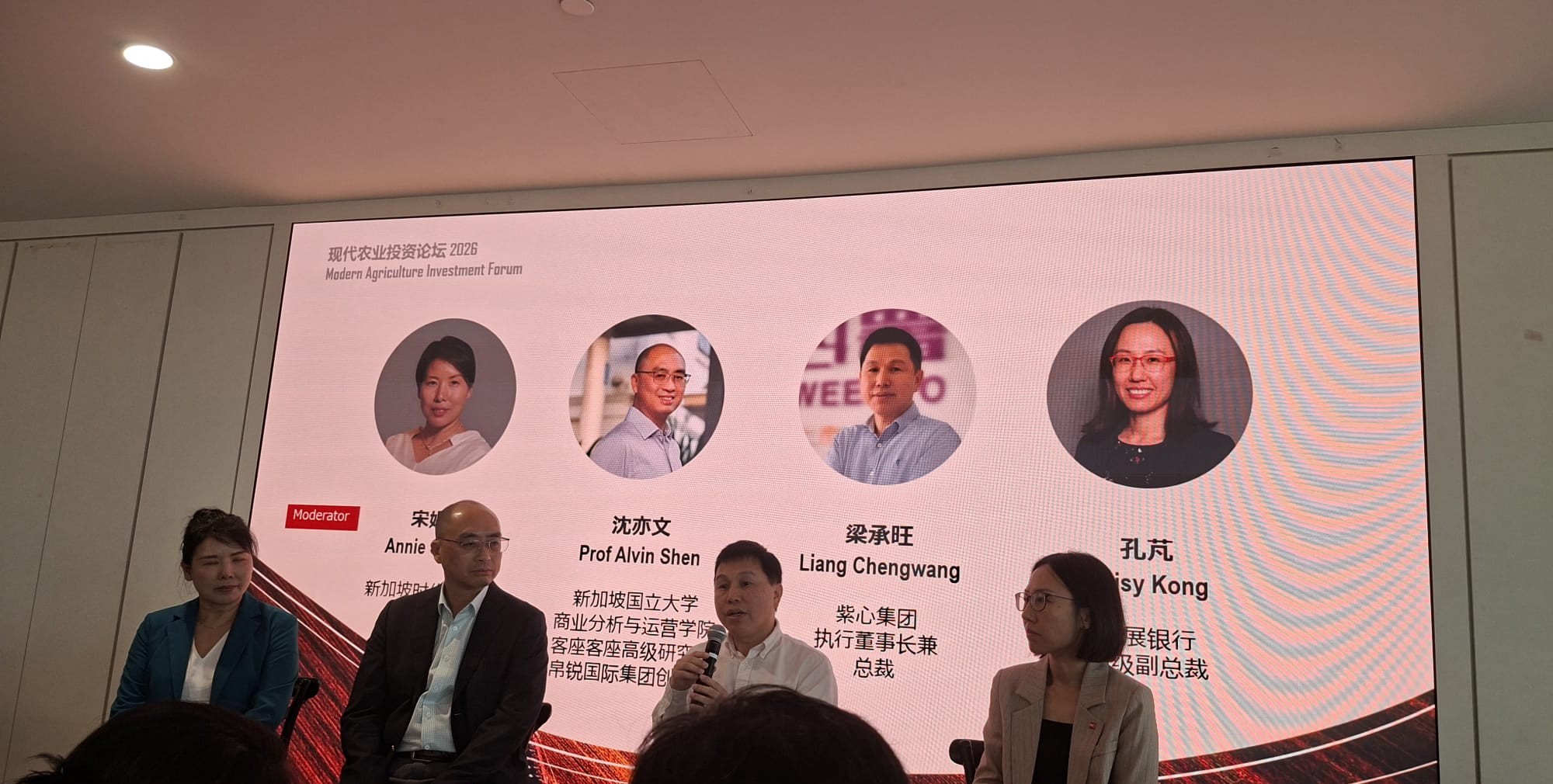
(Singapore, 05.08.2026) Singapore-listed Chinese agricultural company Zixin Group Holdings Limited (紫心集团) should move beyond being viewed simply as a sweet potato producer and instead position itself as the organizer of a global agricultural ecosystem built around supply chains, finance, technology, and international partnerships, industry experts said during a panel discussion in Singapore today.
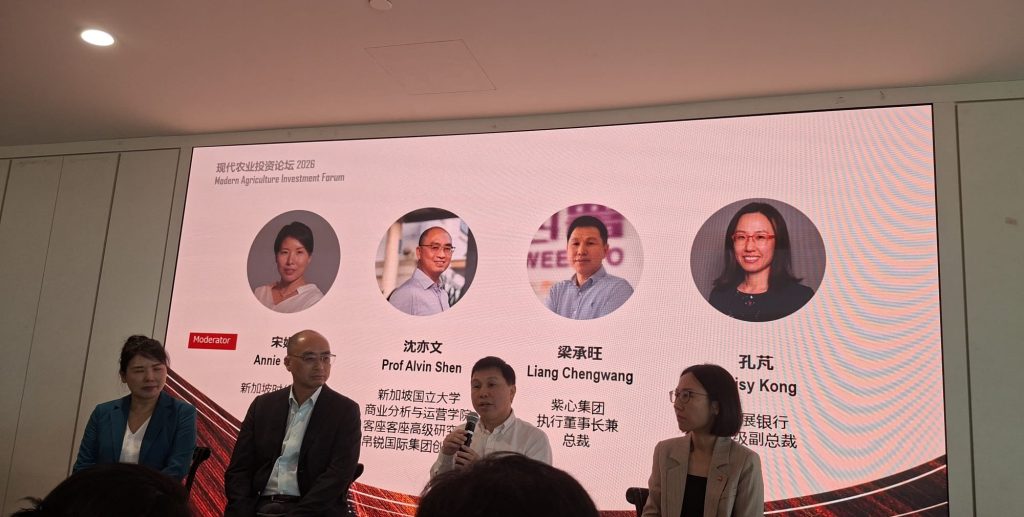
Speaking alongside supply-chain expert Professor Alvin Shen (沈亦文) and DBS senior executive Daisy Kong (孔芃), Zixin Executive chairman Liang Chengwang (梁承旺) stated that his company had never viewed itself merely as a farming enterprise. Instead, he defined its long-term ambition as building a global platform capable of connecting every participant across the sweet potato value chain.
Zixin is indeed currently building an integrated sweet potato ecosystem in China, spanning new variety development, cultivation, food processing, agricultural waste recycling, and biotechnology, while gradually expanding through selected strategic partnerships and industrial park projects. However, its relatively modest market valuation in Singapore suggests investors have yet to fully embrace the company’s long-term vision
Mr Liang highlighted that China’s traditional growth engines—urbanization and real-estate development—have largely peaked, with the country’s next phase expected to come from rural revitalization.
More than 2,800 county-level economies, most of them agriculture-based, are expected to become new drivers of growth, making agriculture one of China’s next vital industries.
Among China’s major crops, Mr Liang believes sweet potatoes have the greatest long-term potential because of their nutritional value, ability to thrive in diverse growing conditions, and suitability for the country’s predominantly small-scale farming structure.
For decades, sweet potatoes were viewed as “food for the poor”. However, modern consumers now recognize them as nutritious whole-food staples rich in dietary fibre and other health benefits.
Mr Liang said he believes sweet potatoes could become one of China’s flagship agricultural exports over the next two decades.
But the panel agreed that agricultural success would not come from farming alone.
Prof Shen, who taught supply chain management in the National University of Singapore, asserted that competition today is no longer between individual companies but between supply chains and industrial ecosystems.
“A fruit may be worth only two yuan at the farm, but 20 yuan by the time it reaches consumers,” he advised. Two yuan is equivalent to about S$ 0.37.
From cultivation and processing to logistics, distribution and retail, every link contributes to value creation.
Focusing only on production, he warned, ignored the most valuable parts of the agricultural value chain.
Instead of attempting to build every capability internally, companies should create ecosystems where multiple external partners contribute complementary strengths.
Prof Shen pointed to Zixin’s joint venture with ZTO Nongte (中通农特) at Shandong province’s Xinfa Group’s (信发集团) agricultural industrial park as an example of ecosystem building rather than conventional business expansion.
He also underlined Zixin’s “Shared Prosperity Plan”, complimenting it as an effort to create an industrial ecosystem in which every participant across the supply chain grows together.
“The strongest company in the future won’t necessarily be the one with the largest production capacity,” Prof Shen added.
“It will be the company best able to organise supply chains and empower an entire industry.”
That distinction, he argued, could transform how investors value Zixinĺ, suggesting that the company has yet to communicate its vision effectively to the market.
Companies perceived merely as agricultural manufacturers naturally face valuation ceilings because their growth remains largely linear through expanding acreage or processing capacity.
Platform companies, by contrast, organise entire industries and therefore possess exponential rather than incremental growth potential.
Mr Liang said Zixin chose to list on the Singapore Exchange in 2016 not because it offered the highest valuation, but because it provided an international platform.
Even then, the company had already decided it wanted to become a global agricultural company rather than remain focused solely on China’s domestic market.
Agriculture requires heavy investment, therfore access to capital markets is essential for long-term growth, Mr Liang stressed.
Looking ahead, he expects Chinese agriculture to follow the path of the country’s manufacturing sector by expanding overseas.
Prof Shen described Singapore as boosting China’s industrial depth with global connectivity.
Although sweet potatoes originated in South America before being introduced to China centuries ago, China has since developed world-leading expertise in sweet potato cultivation, processing and product development, he said.
The challenge now is exporting that expertise globally.
Singapore, with its international financial markets, logistics networks, and access to Southeast Asia and beyond, provides an ideal gateway.
Rather than growing crops locally, Singapore should serve as the centre for finance, research, technology, talent, and supply-chain management supporting global agricultural expansion.
DBS Bank echoed that view.
Ms Kong, who is the senior vice president of DBS’ Food & Agribusiness Industry Institutional Banking Group, noted that agriculture has evolved into one of the world’s strategic industries because of growing concerns over food security, supply-chain resilience, and sustainability.
Asia, home to more than half the world’s population, remains one of the fastest-growing markets for food production and consumption, prompting increased investment not only in agriculture itself but also in logistics, food processing, and retail.
The bank identified three characteristics shared by successful modern agricultural companies: resilience, innovation, and collaboration.
Businesses diversify geographically to reduce risks while embracing technology ranging from precision agriculture and data analytics to digital supply-chain management.
Equally important, they build ecosystems instead of operating independently.
Singapore’s mature financial system also enables companies to manage foreign exchange, commodity-price volatility, trade financing, and cross-border investments more effectively.
Prof Shen further expounded that finance is often overlooked when analyzing global agricultural leaders.
Referring to the world’s so-called ABCD agricultural giants—Archer Daniels Midland, Bunge, Cargill and Louis Dreyfus—he said they are fundamentally financial organizations as much as agricultural companies.
Without sophisticated financial capabilities, none could have achieved a global scale.
Operating from Singapore allows companies to access advanced financial expertise and institutions capable of supporting industrial transformation, he said.
The discussion also explored how digitalization and artificial intelligence will reshape agriculture.
Prof Shen summarized AI’s role in three principles: “See it. Control it. Make it resilient.”
Digital technologies should provide visibility across the entire supply chain, enabling companies to detect bottlenecks and coordinate responses.
AI and digital systems can also improve food safety, strengthen supply-chain management, and reduce operational risks.
Most importantly, companies must build resilience by preparing alternatives when disruptions occur.
“If shipments are interrupted, do you have another logistics plan? If inventory becomes stranded, do you have a financial backup plan?” he asked.
Mr Kong said future opportunities would centre on cross-border technology collaboration, transparent and traceable food supply chains, and sustainability initiatives requiring cooperation among businesses, governments, and financial institutions.
Rather than becoming the potato industry’s largest company, Mr Liang said Zixin hopes to become its principal connector.
“We hope every segment of the value chain will eventually include partners ten, one hundred or even one thousand times larger than ourselves,”
Since establishing its integrated sweet potato operations in Liancheng, Fujian province, in 2009, Zixin has expanded through a series of strategic partnerships and joint ventures.
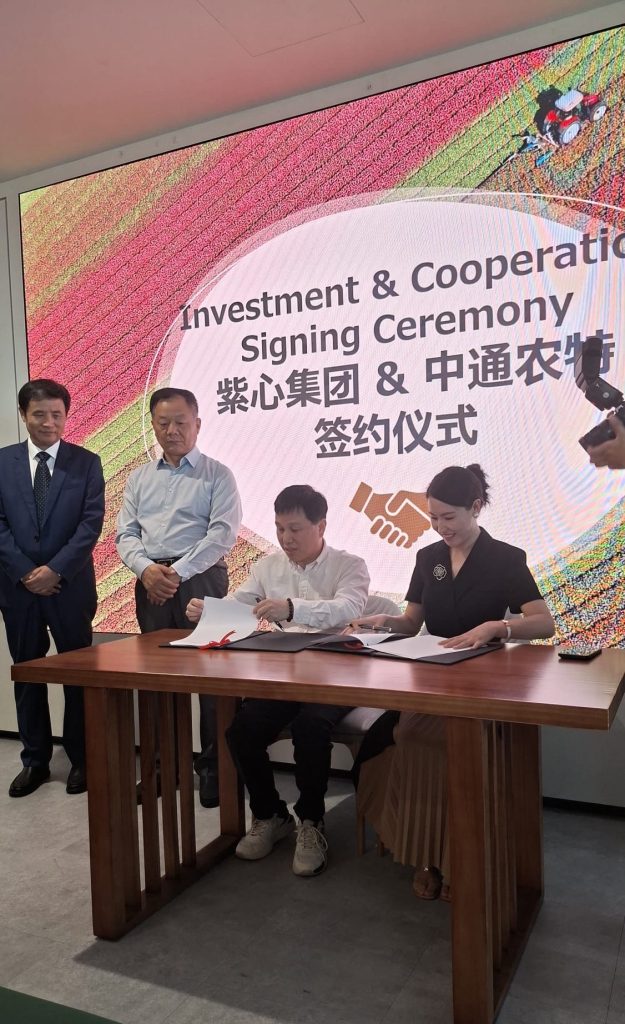
The partnership between Zixin and ZTO Nongte was announced on July 22, 2026. The event held in Singapore today was a formal signing and launch ceremony to mark the start of the collaboration. The panel discussion titled “Exploring Opportunities in China’s Modern Agriculture: Connecting Industry, Technology, and Capital” was held in conjunction with the event.
According to Zixin, it chose ZTO Nongte because it is part of the broader ZTO Express Group, one of China’s largest logistics and supply-chain operators. ZTO Nongte specializes in agricultural product processing, storage and distribution, bringing expertise that enhances Zixin’s strengths.
The Xinfa Agricultural Industrial Park in Shandong already features advanced agricultural infrastructure such as automated greenhouses, vertical farming systems, and smart agriculture technologies. It currently grows crops including cherries and strawberries, but not sweet potatoes. Zixin sees this as an opportunity to introduce its integrated sweet potato model into an established agricultural hub.